
 By
By Which Halls at the Luoyang White Horse Temple Reveal Its Buddhist Origins?
For visitors seeking to understand the deep history of Chinese Buddhism, a key question arises when planning a visit to the Luoyang White Horse Temple (Báimǎ Sì): among the sprawling complex of halls, pagodas, and statues, which structures genuinely connect to its foundational period? While celebrated as the cradle of Buddhism in China, the temple has undergone centuries of destruction and reconstruction, making a direct line to its Han Dynasty origins challenging to trace.
The answer lies not in a single, perfectly preserved building, but in understanding the temple’s layout, the stories told by its oldest relics, and the clear distinction between foundational legends and the observable architecture. The core north-south axis preserves the traditional layout, while specific artifacts offer tangible links to the past, even if the wooden halls housing them are from later dynasties. The original Luoyang White Horse Temple of the 1st century CE no longer stands, but its spirit and historical importance are embedded in the site’s most significant structures.
Myth vs. Masonry: Separating Temple Legend from Observable History
A common challenge for visitors is reconciling the temple’s powerful founding story with the physical evidence on site. The legend is a cornerstone of Chinese Buddhist history, but the buildings you walk through today are primarily from the Ming and Qing dynasties (14th to early 20th centuries). Understanding this boundary is crucial for a historically accurate interpretation of the site.
This separation does not diminish the temple’s importance; rather, it allows for a more nuanced appreciation of its long and layered history. Here is a direct comparison to help guide your visit:
| The Founding Legend (Traditional Story) | The Observable Reality (What Visitors Can Verify) |
|---|---|
| Emperor Ming of the Eastern Han Dynasty dreams of a golden figure, interpreted as the Buddha. He dispatches envoys to the West in 64 CE to seek Buddhist scriptures. | While the dream is a foundational myth, historical records from later periods corroborate the story. Visitors can see numerous artistic depictions of this narrative in murals and carvings created centuries later. |
| The envoys return with two Indian monks, Kasyapa Matanga and Dharmaratna, carrying scriptures and a statue on a white horse. | The tombs of the two monks are located within the temple grounds, marked by stone tablets. While the tombs themselves are revered historical sites, their current form dates to much later reconstructions. |
| The temple was established in 68 CE outside the walls of the then-capital, Luoyang, and named “White Horse Temple” in honor of the horse that carried the scriptures. | The current location is consistent with historical records. However, no building materials or structures survive from the original Han Dynasty temple. The architecture is characteristic of later imperial periods. |
| The first Buddhist sutras were translated into Chinese within the temple’s walls, making it the epicenter for the spread of Buddhism in China. | The “Cool and Clear Terrace” (Qingliang Terrace) behind the main halls is traditionally held to be the site of these translations. While the terrace’s foundation may be ancient, the structure on it today is a later addition. Its significance is more commemorative than archaeological. |
By using this framework, you can appreciate the powerful narrative of the temple’s origins while critically observing the historical layers present in the architecture and relics you see today.
The Core Axis: Tracing the Temple’s Historical Blueprint
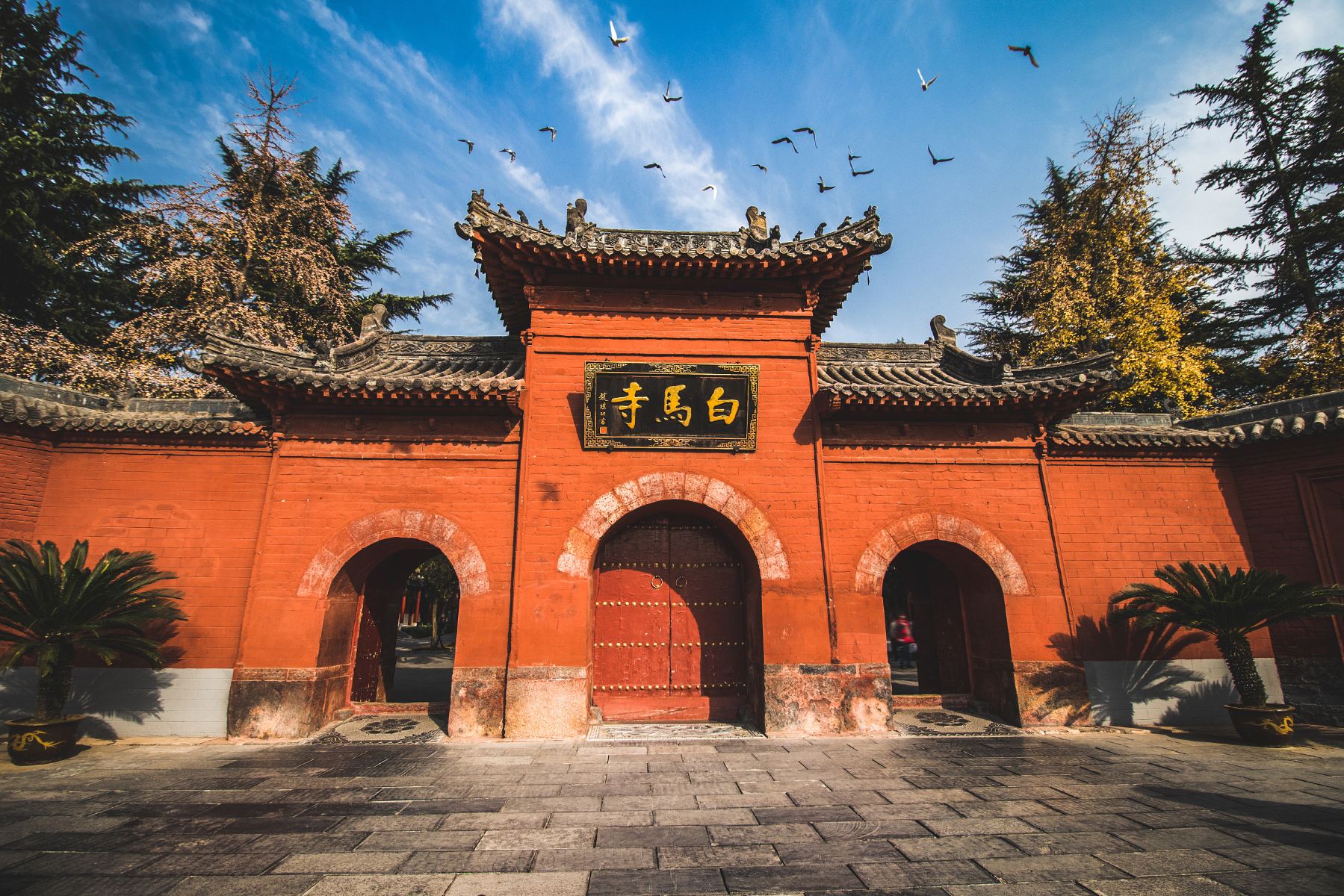
Despite numerous rebuilds, the central axis of the temple follows a traditional Chinese Buddhist monastery layout that reflects its ancient design principles. Walking this path from south to north is the most direct way to engage with the halls that represent the historic heart of the complex. These primary halls, though not original, stand on the footprints of their predecessors and house significant artifacts.
Here are the key structures along this central line and what they reveal about the temple’s heritage:
- Hall of Heavenly Kings (Tianwang Dian): This is the first main hall after the entrance gate. It houses the statues of the four Heavenly Kings, celestial guardians of the four cardinal directions. Its function as a protective entryway is a standard feature in Chinese temples, establishing the sacred space within. The smiling Maitreya Buddha at its center represents the future Buddha, a core Mahayana belief that would have been central to the temple’s teachings for centuries.
- Great Buddha Hall (Dofo Dian): As the main hall of the temple, this structure is the center of worship. It contains a large statue of Sakyamuni Buddha, flanked by his two main disciples, Ananda and Kasyapa. The scale and central placement of this hall underscore the primary importance of the historical Buddha in the temple’s tradition. Look for the large, ancient bell hanging outside, a Ming Dynasty artifact that provides a tangible link to the temple’s medieval period.
- Hall of Mahavira (Daxiong Dian): Often the grandest hall in a monastery, this building houses statues of the Buddhas of the Three Ages (past, present, and future). The iconography here is rich and complex, representing a fully developed theological understanding that evolved long after the temple’s initial founding. The intricate carvings and statues, though of a later vintage, demonstrate the artistic and religious traditions the temple has carried through history.
- Hall of Guidance (Jieyin Dian): The final main hall on the axis is dedicated to Amitabha Buddha, who guides the deceased to the Western Paradise. This focus on Pure Land Buddhism reflects a school of thought that became immensely popular in China and shows the temple’s evolution from a simple center of translation to a major religious institution embracing popular devotional practices.
While the wood and tiles are from the Ming and Qing eras, the sequence and function of these halls honor a blueprint that is centuries older. For those planning complex itineraries, arranging site visits with knowledgeable guides can unlock deeper insights into this historical layout.
A Visitor’s Checklist for Identifying Historical Clues
To move beyond a surface-level tour, visitors can actively look for specific features that serve as clues to the temple’s long history. Not all information is presented on plaques; much of it requires careful observation. Use this checklist to identify key historical markers throughout the Luoyang White Horse Temple complex.
- Examine the Steles and Inscriptions:
- What to look for: Stone tablets (steles) with carved inscriptions are scattered throughout the courtyards. These are some of the most reliable historical documents on site.
- Why it’s important: They record repairs, imperial patronage, and significant events in the temple’s own words. The calligraphy style and the dates mentioned can help place different periods of construction and renovation, offering more concrete evidence than the architecture alone. Some steles date back to the Tang and Song dynasties.
- Assess the Architectural Styles:
- What to look for: Pay attention to the rooflines, bracket systems (dougong), and decorative elements of the main halls versus the newer, international temples on the periphery.
- Why it’s important: The core halls exhibit classic Ming and Qing dynasty features. In contrast, the modern Thai, Indian, and Burmese sections have distinctly different architectural languages. Recognizing this difference is key to understanding the site’s timeline and separating the historic Chinese core from modern commemorative additions.
- Visit the Qiyun Pagoda (Qiyun Ta):
- What to look for: Located to the southeast of the main complex, this 13-story brick pagoda is architecturally distinct from the main halls.
- Why it’s important: This is the oldest surviving structure in the temple area, dating back to the Jin Dynasty in the 12th century. While not from the original Han period, its age and Tang-dynasty architectural style make it the most significant link to medieval Chinese Buddhism on the site. Its brick construction is a key reason for its survival compared to the wooden halls.
- Locate the Tombs of the Indian Monks:
- What to look for: Two small, enclosed courtyards on the east and west sides of the main axis contain the memorial tombs of Kasyapa Matanga and Dharmaratna.
- Why it’s important: These tombs directly connect the physical site to its founding legend. Even as reconstructions, they serve as powerful commemorative sites that have been revered for centuries, anchoring the story of the temple’s origin to a specific, venerated place. This is essential for anyone interested in Henan’s economic significance and its role as a historical hub.
Successfully navigating business culture in China often involves appreciating the nation’s deep historical roots. A thoughtful visit to a site like this offers valuable context.
By focusing on these elements, you can piece together a more accurate and satisfying history of the Luoyang White Horse Temple, appreciating it as a living document that has been written and rewritten over nearly two millennia.
For specialized support in planning culturally significant itineraries for business delegations, please contact our team for expert guidance.
