
Blog
A Guide to the Longmen Grottoes for Art History Fans

What Art History Buffs Should See at the Longmen Grottoes
For anyone with an interest in art history, visiting the Longmen Grottoes is not just a tour; it’s a pilgrimage through centuries of evolving Chinese Buddhist art. With over 2,300 caves and niches carved into the limestone cliffs, the sheer scale can be overwhelming. A general visit might leave you impressed but exhausted. A focused visit, however, reveals the distinct stylistic shifts, theological developments, and political statements frozen in stone. The key is knowing where to look.
This guide is designed for the visitor who wants to move beyond the main attractions and understand the specific artistic treasures held within. We will bypass the general overview and instead pinpoint the exact caves that best exemplify the major artistic periods and themes. Whether your interest is in the austere elegance of the Northern Wei or the confident grandeur of the Tang, this framework will help you allocate your time to the works that matter most to you.
A Visitor’s Guide: Matching Caves to Art Historical Interests
The vast collection at the Longmen Grottoes can be categorized by specific artistic and historical themes. Rather than walking aimlessly from one cave to the next, you can structure your visit around your primary interests. The following guide matches key caves to specific areas of art historical study, helping you create a targeted and more meaningful itinerary.
Use this checklist to identify the caves that align with your focus:
-
For Students of Imperial Patronage and Tang Grandeur:
- Primary Site: Fengxian Temple (Ancestor Worshipping Temple). This is the undisputed climax of the Longmen Grottoes and the pinnacle of Tang dynasty sculpture.
- What to Look For: The central Vairocana Buddha, standing over 17 meters tall, is the main attraction. Its serene, powerful expression and realistic, full-bodied form represent a complete departure from earlier styles. Art historians widely believe its face was modeled on that of Empress Wu Zetian, the project’s imperial patron, making it a profound statement of political and religious authority. Observe the attendant bodhisattvas and celestial guardians; their dynamic poses and detailed expressions showcase the confidence and cosmopolitanism of the High Tang period.
-
For Scholars of Early Buddhist Iconography (Northern Wei):
- Primary Sites: The Binyang Caves (North, Middle, and South) and Guyang Cave. These caves predate the Tang masterpieces and offer a glimpse into a very different aesthetic.
- What to Look For: In the Central Binyang Cave, note the elongated figures, stylized linear drapery, and the characteristic serene, “archaic smile.” This style shows clear influences from earlier Buddhist art traditions transmitted via the Silk Road. Guyang Cave, one of the oldest, is a treasure trove of early votive niches sponsored by royalty and aristocrats. The figures here are more rigid and abstract, embodying a spiritual transcendence rather than worldly realism.
-
For Researchers of Calligraphy and Epigraphy:
- Primary Site: Guyang Cave (Old Sun Cave). While it contains important early sculptures, its greatest value for many scholars lies in its inscriptions.
- What to Look For: This cave houses a significant portion of the “Twenty Rivulets of Longmen” (龙门二十品), a collection of Northern Wei dynasty inscriptions considered a seminal milestone in the history of Chinese calligraphy. These carved dedications showcase the transition from clerical script to the more fluid regular script (kaishu). For a calligrapher, seeing these foundational works in their original context is an unparalleled experience.
-
For Those Interested in Lay Buddhism and Miniature Art:
- Primary Site: Wanfo Dong (Cave of Ten Thousand Buddhas). Carved during the Tang Dynasty, this cave offers a different perspective on religious practice.
- What to Look For: The cave’s name comes from the more than 15,000 tiny, exquisitely carved Buddhas that line its walls. These were not imperial commissions but votive offerings from a broader class of devotees, including palace ladies and monks. This site provides insight into the popularization of Buddhism during the Tang. The main Buddha figure at the back is also notable for its soft, naturalistic modeling.
Understanding the Two Major Dynasties: Northern Wei vs. Tang
The art of the Longmen Grottoes is not monolithic. It is primarily the product of two powerful and distinct dynasties: the Northern Wei (386–534 AD) and the Tang (618–907 AD). Recognizing the stylistic differences between these two eras is the single most important skill for appreciating the site. The Northern Wei rulers, of Tuoba Xianbei ethnicity, established the grottoes, bringing a style infused with foreign influences and intense piety. Centuries later, the native Chinese Tang dynasty, at the height of its power, sponsored works that projected imperial confidence and a worldly, humanistic vision of Buddhism.
This table breaks down the key artistic differences to help you identify the period of a sculpture on sight.
| Artistic Feature | Northern Wei Dynasty Style | Tang Dynasty Style |
|---|---|---|
| Figure Proportions | Slender, elongated bodies with large heads. Emphasis on spiritual essence over physical accuracy. | Naturalistic, full-bodied, and anatomically grounded. Figures have a tangible, powerful presence. |
| Facial Expression | Serene, introspective, and often featuring a subtle, mysterious “archaic smile.” Faces are flattened and abstract. | Expressive, emotive, and individualistic. Faces show confidence, compassion, or ferocity (in guardians). |
| Clothing & Drapery | Stylized, with sharp, linear folds that fall in a symmetrical, waterfall-like pattern. It conceals the body beneath. | Flowing and sensuous, revealing the form of the body underneath. The “wet drapery” style is common. |
| Overall Mood | Transcendent, otherworldly, and deeply spiritual. The focus is on escaping the mortal world. | Worldly, majestic, and humanistic. The divine is portrayed as accessible and relatable to the human form. |
| Key Example | Central Binyang Cave main figures. | Fengxian Temple colossal Vairocana Buddha group. |
Common Planning Pitfalls for a Focused Visit
An art-focused trip to the Longmen Grottoes requires more than just knowing which caves to see; it requires strategic planning to avoid common mistakes that can diminish the experience. Many visitors leave feeling rushed or having missed key details. Here is what to watch out for.
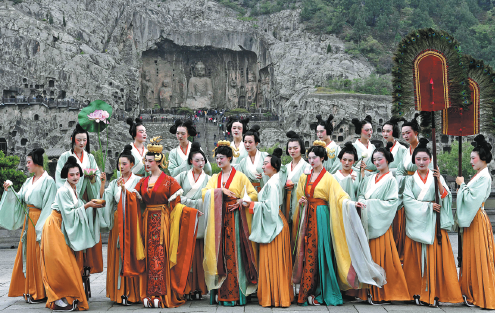
- Mistake 1: Underestimating the West Hill. The West Hill contains over 70% of the site’s caves and virtually all of the most famous masterpieces (Fengxian, Binyang, Guyang). Do not try to “see everything” in a single pass.
- Solution: Allocate at least 3-4 hours exclusively for the West Hill. Use the guide above to prioritize your “must-see” caves and visit them first, then explore surrounding niches as time allows.
- Mistake 2: Skipping the East Hill Entirely. After the density of the West Hill, many visitors are too tired to cross the river to the East Hill, which has far fewer caves. This is a significant error.
- Solution: The primary value of the East Hill is not its own caves, but the spectacular panoramic view it offers of the West Hill. The money shot of the Fengxian Temple that you see in books is taken from here. It’s the only way to appreciate the architectural scale of the main Buddha group in its landscape.
- Mistake 3: Ignoring the Details for the Colossi. It’s easy to be mesmerized by the giant Buddhas and overlook the smaller, equally significant art forms.
- Solution: Bring binoculars. They are invaluable for examining details on the upper portions of large statues and for appreciating the craftsmanship of the thousands of miniature Buddhas in caves like Wanfo Dong. They also help in reading the larger calligraphic inscriptions from a distance.
- Mistake 4: Visiting at Midday. The site is carved into a cliff face, offering little shade. Between 11:00 AM and 3:00 PM, the sun can be intense, the crowds are at their peak, and the direct overhead light is often poor for photography, creating harsh shadows.
- Solution: Start your visit right when the site opens in the morning. The early light is softer, the temperatures are cooler, and you will have the major caves largely to yourself for the first hour. Late afternoon is also a good alternative for warmer, angled light.
By approaching the Longmen Grottoes with a clear plan based on your art historical interests, you can transform a standard sightseeing trip into a deep, educational journey through one of the world’s most magnificent repositories of Buddhist art.
For specialist guidance in planning a detailed itinerary focused on art history, contact our team for selection advice.
