
Blog
Identify Longmen Caves China Carvings by Weathering Clues

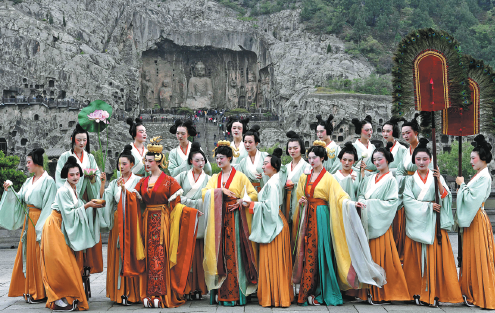
How Limestone Weathering Patterns Reveal the True Condition of Longmen Caves China Carvings
Why do some niches at a cliff carving site look crisp after a thousand years while others nearby have lost half their detail? That is the question most first-time visitors to Longmen Caves China actually want answered, even if they never phrase it that way. The short answer: it comes down to limestone chemistry, water movement, and how each niche sits relative to runoff paths on the cliff face. Understanding these patterns turns a casual walk-through into a genuinely informed visit — and it is useful knowledge for anyone researching stone conservation, art history, or site documentation before traveling.
Longmen Caves China, carved largely into limestone cliffs along the Yi River in Henan province, is one of the most heavily studied Buddhist rock-carving complexes in the world. Limestone is calcium carbonate, and calcium carbonate reacts with slightly acidic water — rain, groundwater, even condensation — in a slow but relentless process called weathering. Reading the visible traces of that process is how trained conservators, and attentive visitors, tell a well-preserved niche from one under active deterioration.
Why Visitors Often Misread Weathering Signs
Most people assume dark staining or a rough surface simply means “old.” That assumption misses the real story. Age alone does not cause the blotchy gray-black streaks you see below many niches — water does. A carving positioned under a natural overhang, where rain rarely touches the stone directly, can retain sharper facial features than a carving in open exposure carved only decades apart in date. The age of the carving and the condition of the carving are two separate variables, and conflating them is the single most common misunderstanding among casual visitors to Longmen Caves China.
Local sandstone and limestone cliffs along the Yi River also vary in density and porosity from one section to another, which means weathering rate is not uniform across the whole site. Two niches carved in the same century can show very different wear simply because of where they sit on the rock face.
How Water Runoff, Salt, and Surface Loss Alter the Carvings
This is the core mechanism worth understanding before you look at any niche. Three forces — water runoff, salt crystallization, and progressive surface loss — work together, usually in this order:
- Water enters the stone. Rain, melting snow, and groundwater seep into the limestone through small cracks and pore spaces. On a sloped or recessed cliff face, water tends to concentrate along specific channels rather than spreading evenly, which is why some niches show heavy damage while an adjacent one stays relatively intact.
- Dissolved minerals travel with the water. As water moves through the stone, it picks up calcium carbonate and other soluble salts. When that water reaches the surface and evaporates, it leaves mineral deposits behind — visible as pale crusts, drip-line stains, or a slightly powdery surface texture.
- Salt crystallization pushes the surface apart. Repeated wet-dry cycles cause dissolved salts to crystallize just beneath or at the stone surface. Crystal growth generates physical pressure inside the pore structure. Over many cycles, this pressure flakes off thin layers of stone — a process conservators call spalling.
- Carved detail is lost from the outside in. Because spalling removes the outermost layer first, fine details — fingers, facial features, drapery folds — disappear before the broader silhouette of a figure does. This is why many damaged niches at Longmen Caves China still show a recognizable seated Buddha outline even when all surface modeling is gone.
Visitors can recognize active conservation challenges by watching for these specific indicators rather than general “age”:
- Dark vertical streaks below a niche — indicates an active water runoff path, not simply dirt.
- Pale, chalky or crystalline buildup on the surface — a sign of salt efflorescence, often worse in niches exposed to direct rain.
- Rounded, “melted” facial features instead of sharp edges — indicates surface loss has already progressed past the fine-detail layer.
- Flaking or thin stone fragments near the base of a carving — physical evidence that spalling is currently removing material, not just historical wear.
- Greenish or black biological growth — points to persistent moisture retention, which accelerates all three processes above.
A Practical Field Checklist for Reading Weathering Clues On Site
Use this sequence when examining any niche at Longmen Caves China or in photographs from a research trip:
- Check the position relative to overhangs. Niches tucked under a rock ledge are typically better protected from direct rain. If a carving in a sheltered spot still shows heavy staining, suspect a groundwater source rather than rainfall.
- Trace staining patterns from top to bottom. Follow dark streaks upward to their origin point — usually a crack or joint in the cliff face above the niche. This tells you where water is entering, which is more informative than just noting that staining exists.
- Compare detail sharpness across similar features. Look at hands, facial features, or drapery on two or three nearby carvings. Significant differences in sharpness, despite similar carving dates, usually point to localized water exposure rather than uniform aging.
- Look for crust color and texture. White to pale-gray crusting suggests active salt deposition. A smoother, darker patina without crusting is more consistent with long-term but slower mineral staining.
- Note any recent flaking debris. Small stone chips or dust near the base of a niche indicate ongoing, not historical, deterioration — useful context if you are documenting site condition over multiple visits.
Common Mistakes When Assessing Carving Condition
- Assuming darker stone equals older carving. Staining reflects water exposure history, not carving date.
- Ignoring the cliff geometry above a niche. Most runoff damage originates from a crack or ledge several feet above the carving, not from the niche itself.
- Treating all weathering as irreversible decay. Some surface patina is stable and has not advanced in appearance for long periods; distinguishing stable patina from active spalling requires looking for loose material, not just discoloration.
- Overlooking biological growth as a minor cosmetic issue. Moss or lichen growth signals a moisture retention problem that will likely worsen other weathering mechanisms over time.
Comparing Weathering Types at a Glance
| Weathering Clue | Likely Cause | What It Tells You |
|---|---|---|
| Vertical dark streaking | Concentrated water runoff | Active moisture channel above the niche |
| Pale crust or powdery surface | Salt crystallization | Ongoing evaporation cycle, risk of spalling |
| Rounded, soft facial features | Cumulative surface loss | Fine detail layer already removed |
| Loose chips near base | Active spalling | Deterioration is currently progressing, not historic |
| Green or black growth | Persistent dampness | Moisture retention accelerating other damage types |
When Visual Inspection Is Enough — and When It Is Not
A visitor’s visual read works well for general orientation: identifying which sections of a site show heavier exposure damage, or understanding why two carvings of similar age look so different. This approach fits casual research, photography documentation, or preparing for an on-site visit.
It does not substitute for instrumented condition assessment. Moisture content below the surface, the depth of salt penetration, and the structural stability of a niche cannot be determined from appearance alone. Researchers and conservation teams rely on sampling and monitoring equipment for those questions. If your interest moves from general observation toward documentation for academic, journalistic, or heritage-management purposes, treat visual weathering clues as a starting point for further questions, not a final diagnosis.
The UNESCO World Heritage listing for the Longmen Grottoes includes ongoing conservation monitoring, which is a useful reference point if you want to compare informal field observations against documented site management practices.
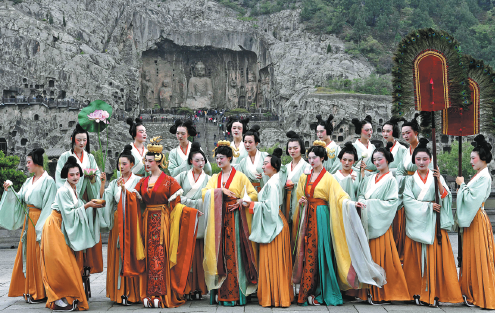
Approaching Longmen Caves China with this weathering framework changes what you notice on site. Instead of a blur of worn stone, you start seeing a legible record of water paths, mineral cycles, and surface history carved — quite literally — into the cliff itself.
If you are preparing a research visit or documentation project and want a structured condition-reading reference sheet to bring along, reach out and we can share a printable field checklist based on the categories above.
