By
By Why Is White Horse Temple Called China’s Oldest Temple?
Travelers planning a route through Luoyang often hit a wall of conflicting claims. They read one guide calling White Horse Temple the “cradle of Chinese Buddhism.” Another forum post insists a different mountain shrine is older. The confusion comes from mixing up three distinct ideas: the oldest continuously operating temple, the first imperially sponsored Buddhist site, and the oldest surviving physical building. White Horse Temple, or Baima Temple, holds a specific historical title. It is recognized as the first Buddhist temple established in China under imperial patronage, founded in 68 AD during the Eastern Han Dynasty. That distinction matters for historians and cultural travelers alike.
This article unpacks the evidence behind the claim, the difference between “first” and “oldest,” and what a visitor actually sees when walking the grounds today. The key is separating documentary history from architectural survival.
Clarifying “Oldest,” “First Buddhist Temple,” and Surviving Structures
The phrase oldest temple in china often gets thrown around loosely. It collapses three separate categories into one. That collapse creates the confusion. A site can be historically the first without being physically the oldest. A building can be physically ancient without being historically significant as a “first.”
Here is the breakdown:
- Oldest (Historical Foundation): Refers to the date of establishment, not the age of the current bricks. White Horse Temple wins here. Records date its founding to 68 AD.
- First Buddhist Temple (Imperial Patronage): This is the precise title. Emperor Ming of Han invited monks from the Western Regions and housed them here. It was the first government-sanctioned Buddhist site.
- Surviving Historic Structures (Physical Fabric): This is where White Horse Temple loses. The wooden halls from the Han Dynasty are gone. The oldest standing buildings on the site today date primarily from the Ming (1368–1644) and Qing (1644–1912) dynasties. Some stone elements are older, but the timber frames are not.
A comparison table helps clarify the distinction:
| Category | Definition | White Horse Temple Status | Example of a Different Winner |
|---|---|---|---|
| First Imperial Buddhist Temple | Earliest site established by state decree for Buddhism | Yes — 68 AD | N/A (White Horse is the standard answer) |
| Oldest Surviving Timber Hall | Physical building with oldest original wooden structure | No — current halls are much later | Nanchan Temple (782 AD, Tang Dynasty) |
| Oldest Continuous Worship Site | Unbroken lineage of religious use | Claimed, but interrupted by destruction and rebuilding | Difficult to verify for any single site |
So when a traveler asks, “Is this the oldest temple in China?” the honest answer is nuanced. It is the oldest Buddhist temple in China by historical record and continuous tradition. It is not the oldest building you can stand inside. That distinction shapes expectations before a visit.

The Historical Basis for the 68 AD Claim
The founding story comes from the Book of Later Han and later Buddhist chronicles. Emperor Ming (reigned 58–75 AD) reportedly dreamed of a golden figure flying through his palace. His advisers interpreted it as the Buddha from the West. The emperor sent envoys to the Western Regions. They returned with two monks, Kasyapa Matanga and Dharmaratna, carrying scriptures on white horses.
The temple name commemorates those animals. The horses became the symbol of the transmission of the Buddhist texts into Central China. The monks translated the Sutra of Forty-two Sections here, the first known Buddhist scripture rendered into Chinese.
The evidence chain is documentary, not archaeological. No Han Dynasty roof tiles sit in the current prayer halls. The claim rests on a consistent textual tradition. That tradition is strong enough that most academic sources accept White Horse Temple as the first established Buddhist monastery in China. The Encyclopaedia Britannica and standard Chinese historical references repeat this attribution without serious dispute.
Why does the distinction matter for a visitor? Because the site you walk through today is a palimpsest. It is a Ming-Qing reconstruction sitting on a Han Dynasty idea. The power of the place comes from the lineage, not the lumber.
What the Site Actually Contains Today
A cultural traveler arriving at White Horse Temple in Luoyang sees a sprawling complex. The layout follows the standard Chinese Buddhist courtyard plan: a central axis, side halls, and a pagoda. The scale is larger than most visitors expect, covering roughly 40,000 square meters.
The key structures include:
- Hall of Heavenly Kings: The entrance hall with the standard guardian statues. Built in the Ming Dynasty style.
- Great Buddha Hall: The main worship space. The current structure is a Qing Dynasty rebuild. The interior contains a large Shakyamuni statue.
- Hall of Mahavira: Another major hall with Ming-era stone foundations. The timber above is later.
- Cool and Clear Terrace: A brick platform associated with the original translation work. The current form is heavily restored.
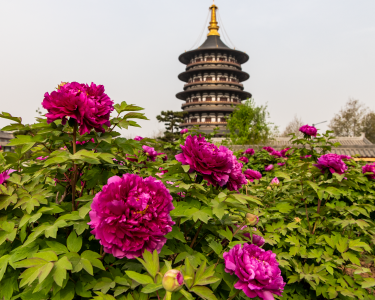
- Qiyun Pagoda: Located outside the main compound. A 13-story brick pagoda, rebuilt in the Jin Dynasty (1115–1234) and restored later. This is the oldest surviving structure on the broader site.
A visitor looking for “Han Dynasty ruins” will be disappointed. A visitor looking for a living, functioning monastery with deep historical roots will find it. The temple still operates as an active religious site. Monks chant in the halls. Incense smoke drifts across the courtyards. The historical claim enriches the experience, but the physical evidence requires a careful eye.
Common Mistakes When Researching Ancient Chinese Temples
Travelers and students make the same five errors when comparing ancient Chinese religious sites. These errors lead to bad itineraries and incorrect citations.
- Confusing “established” with “built.” A temple can be established in 68 AD and have no original walls left. The establishment date is a historical fact. The construction date of the current hall is an architectural fact. Both are true. Neither cancels the other.
- Equating “first” with “best preserved.” White Horse Temple is the first. It is not the best preserved. For physical preservation, look to sites like Nanchan Temple or Foguang Temple in Shanxi, which retain Tang Dynasty timber frames.
- Ignoring the difference between Buddhist and Daoist sites. The claim “oldest temple in China” often ignores that Daoist temples have their own separate lineage. White Horse Temple is specifically the oldest Buddhist temple. A Daoist site could have a different founding date.
- Trusting undated travel blogs over academic sources. Many blog posts repeat the “oldest temple” phrase without explaining the evidence. Cross-check against standard reference works or the temple’s own official signage.
- Assuming a straight line from Han to today. The temple was destroyed and rebuilt multiple times. Fires, wars, and political upheavals interrupted its history. The continuity is cultural and institutional, not architectural.
Avoiding these mistakes turns a vague “sightseeing stop” into a meaningful historical visit. The questions you ask change. Instead of “Is this the oldest building?” you ask “What does this site represent in the transmission of Buddhism?”
A Practical Decision Checklist for Cultural Travelers
If you are deciding whether to include White Horse Temple in a China itinerary, here is a concrete checklist. It separates the reasons to go from the reasons to skip it.
- Go if you are tracing Buddhist history. The site sits on the eastern end of the Silk Road transmission route. It pairs well with the Longmen Grottoes, also near Luoyang.
- Go if you want a functioning monastery, not a museum. The temple is alive. Morning chanting, resident monks, and active worship are part of the experience.
- Skip it if you want to see Han Dynasty architecture. Nothing from 68 AD stands above ground. The oldest visible masonry is the Jin Dynasty pagoda, and even that has been restored.
- Consider alternatives if you want Tang Dynasty timber. Nanchan Temple and Foguang Temple in Shanxi are the standard references for surviving early wooden architecture. They are harder to reach but architecturally more significant.
- Check current renovation status before going. The temple has undergone periodic restoration. Some halls may be scaffolded. A quick check with a local guide or recent visitor photos helps set expectations.
This checklist matters because the “oldest temple” label creates a specific mental image. That image is often wrong. The reality is a layered site where the idea is ancient and the buildings are relatively recent. Both facts deserve attention.
Why the Title Still Stands
The title “oldest temple in china” survives because no competing Buddhist site has a documented founding date earlier than 68 AD. Some local traditions claim earlier origins, but they lack the documentary record that White Horse Temple possesses. The Book of Later Han provides a datable anchor. That anchor is what separates White Horse Temple from regional legends.
The distinction is not academic hair-splitting. It affects how the site is managed, how it is marketed, and how visitors understand it. The Chinese government lists the temple as a nationally protected cultural heritage site. The historical narrative drives tourism to Luoyang. The “first” claim is the core of that narrative.
For a B2B export audience reading this in a professional context, the lesson transfers. Precise language matters. “Oldest” and “first” are not synonyms. A claim that holds up under scrutiny is more valuable than a vague superlative. White Horse Temple earns its title through documentation, not through the age of its current walls.
If you are planning a cultural heritage itinerary or researching Chinese architectural history for a publication, start with the primary distinction. Separate the founding date from the surviving fabric. Then the other pieces fall into place. For further guidance on structuring historical site visits or verifying cultural claims, contact our research team with your specific itinerary questions.