 By
By How Luoyang City Connected the Silk Road
How did luoyang city matter to the Silk Road when its famous western routes are often associated with desert crossings, Central Asian oasis towns, and long-distance caravans? The answer is that Luoyang was not simply a stop on a map. It was an imperial center where incoming goods, foreign ideas, diplomatic information, religious traditions, and administrative decisions could enter Chinese political life.
For history-focused travelers and researchers, the key is to view luoyang city as part of a connected system rather than as a collection of monuments. Its importance came from the relationship between roads, capitals, court institutions, and religious communities. Getting that framework right changes how visitors interpret temples, tombs, museum objects, and historic urban landscapes.
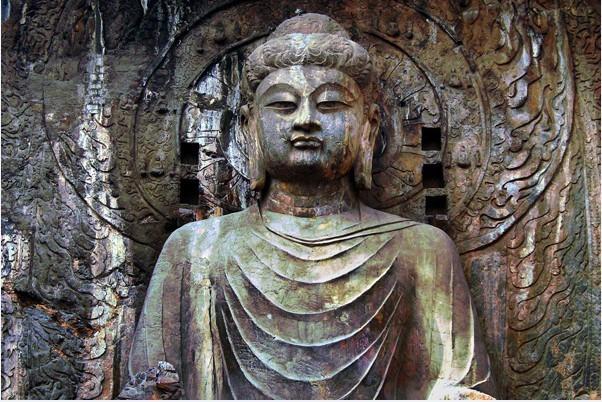
Luoyang City operated as an eastern Silk Road hub through trade, administration, and Buddhism
The most useful conclusion is this: luoyang city connected to Silk Road exchange because it could transform movement into influence. Goods and travelers might move through many places, but an imperial capital could record, regulate, display, redistribute, or politically interpret what arrived. This distinction matters when comparing Luoyang with frontier stations or commercial markets farther west.
During periods when Luoyang served as a major Han-era capital, routes linking the interior to western regions mattered not only for trade but also for diplomacy and state knowledge. Envoys, tribute missions, merchants, translators, monks, and valuable objects could move through overlapping networks. The city’s court institutions gave those movements wider consequences.
| Connection | What it affected in practice | Why it mattered in Luoyang | What a visitor or researcher may misunderstand |
|---|---|---|---|
| Han-era trade routes | Movement of goods, travelers, intelligence, and diplomatic gifts | Routes became meaningful at the eastern end when they connected with elite demand and state institutions | Assuming every imported object proves direct travel by one merchant from the western regions |
| Imperial administration | Official reception, documentation, taxation, diplomacy, court display, and transport priorities | The capital could turn external contact into government action and cultural prestige | Treating trade as separate from political power |
| Arrival of Buddhism | Translation, patronage, temple formation, artistic exchange, and new religious communities | Foreign religious ideas gained a durable setting within an important urban and political center | Reducing Buddhism’s transmission to a single road, person, or event |
The arrival of Buddhism is especially useful for understanding this process. Buddhist teaching did not travel as a sealed package. It depended on people who could carry texts, explain doctrines, support monastic communities, commission images, and adapt religious practice to local audiences. In luoyang city, an urban capital setting offered more opportunities for those activities than a remote transit point.
White Horse Temple is frequently associated with early Buddhist tradition in China. It should be approached as both a religious landmark and an interpretive case. The site helps visitors explore the cultural memory of Buddhism’s arrival, but it should not be treated as simple proof that transmission occurred through one linear, uncontested event. The better reading is broader: Luoyang became a place where transregional religious exchange could become visible, institutional, and memorable.
Read the city as a network rather than a single east-west road
A common mistake is to picture luoyang city as the final dot at the end of one uninterrupted caravan route. Silk Road exchange was more complex. It involved connected corridors, local markets, state roads, river transport, intermediaries, diplomatic missions, and changing political centers. A traveler might move only one segment, while a commodity or religious idea passed through several hands.
For early-stage research, the most reliable approach is to separate three questions. First, what was moving? Second, who could receive or reshape it? Third, what evidence survives? Those questions prevent a monument from being assigned a Silk Road role merely because it is old or visually striking.
- Ask whether an object signals movement or influence. Foreign-style motifs, unfamiliar materials, or imported forms may indicate contact, but they do not automatically identify a direct route. This approach fits museum research and artifact interpretation. It does not apply when the provenance record is missing or uncertain.
- Identify the institution behind the connection. A court, temple, workshop, archive, or market creates different kinds of evidence. This is most useful when studying how external exchange affected local society. It is less useful for proving the precise path taken by an individual traveler.
- Distinguish physical travel from cultural transmission. A monk, text, artistic style, or ritual could move through multiple regions over time. This matters when studying Buddhism in luoyang city. It does not justify claiming that every Buddhist site had the same foreign connection.
- Check the political period before drawing conclusions. Luoyang’s role changed when dynasties, capitals, and administrative priorities changed. This is essential for research spanning several centuries. It is not enough to label every period “Han” or every exchange “Silk Road.”
This network model is particularly valuable for travelers. Instead of asking only, “Which monument is on the Silk Road?” ask, “What function did this place serve within a system of movement and authority?” That question produces more defensible observations and better field notes.

Use a practical research route to test the connection
For a first visit, the best method is to pair imperial history with religious history. Begin with the city’s political role, then test how imported ideas could gain local support. This sequence fits researchers building a coherent argument and travelers who want more than a monument checklist. It does not replace specialist archaeological reading when a project requires artifact-level evidence.
- Set a narrow research question. Use a question such as: “How did imperial institutions shape the reception of foreign religions in luoyang city?” Avoid broad questions such as “What happened on the Silk Road?” because they mix too many regions and periods.
- Establish the relevant political period. Identify whether your site, object, or written source belongs to a period when Luoyang had major administrative importance. If the period is unclear, record that uncertainty rather than forcing a connection.
- Compare one imperial site with one Buddhist site. The comparison should examine function: administration on one side, religious transmission and patronage on the other. Do not compare sites only by age or fame.
- Collect evidence by category. Separate written records, archaeological remains, artistic motifs, religious tradition, and modern interpretation. Mixing categories can make a persuasive story look stronger than the evidence allows.
- Write one cautious finding. A defensible statement might be: “Luoyang’s status as an administrative center created conditions in which transregional exchange could be received and reshaped.” Avoid claiming that every feature of the city resulted directly from Silk Road commerce.
Consider a practical scenario. A researcher visits a Buddhist temple and notices an account linking the site to overseas or western transmission. The correct next step is not to declare that the temple marks a direct caravan route. Instead, compare the claim with the city’s imperial setting, the period of the tradition, and the kind of evidence presented. In luoyang city, this method reveals how an imported tradition could become embedded in a Chinese urban center.
Recognize the mistakes that weaken Silk Road interpretation
Travel writing and introductory research often make the same errors. Each one affects what a reader concludes about luoyang city and its place in wider Eurasian history.
| Common mistake | Why it leads to a weak conclusion | Better action |
|---|---|---|
| Calling Luoyang a caravan city without explaining its institutions | It ignores the role of the court, official reception, and capital networks | Explain how administrative power amplified long-distance exchange |
| Equating Silk Road history only with commercial goods | It leaves out diplomacy, religion, translation, artistic influence, and information flows | Use at least two categories of exchange when forming an interpretation |
| Using Buddhist tradition as unquestioned chronology | Religious memory and historical reconstruction may serve different purposes | Present tradition clearly, then identify what further evidence would be needed |
| Ignoring changes in capital status | It treats the city’s influence as fixed across all eras | Connect each claim to a defined political and cultural context |
The strongest interpretation of luoyang city is therefore not that it replaced western Silk Road centers. Its role was different. It functioned as an eastern urban and political node where long-distance movement could meet imperial authority and where Buddhist traditions could take root in a major Chinese setting.
For travelers, this means looking beyond famous monuments. For researchers, it means connecting material remains with institutions, religious history, and changing political geography. Read in that way, luoyang city becomes a crucial place for understanding how the Silk Road shaped cultural life far beyond the route itself.
Request selection advice for a focused Luoyang research itinerary or historical source list.