Plan a Longmen Grotto Route by Walking Time Before You Book
How long do you actually need to see the major sites without turning your visit into a rushed climb? That is the key question for first-time visitors planning a longmen grotto route. The site is extensive, the main carvings are spread along the riverbanks, and the walking experience includes paved paths, steps, viewpoints, cave entrances, and optional temple areas.
The longmen grotto complex is best planned as a route rather than a list of individual caves. A visitor with two hours needs a different plan from someone with a half day. The correct choice depends on available time, walking comfort, interest in Buddhist sculpture, and whether you want to include both the West Hill and East Hill sides of the river.
Longmen is recognised as a World Heritage site, so it deserves more than a quick photo stop. At the same time, trying to see every carving can create unnecessary fatigue. A practical route should prioritise the major cave groups, include time for elevation changes, and leave a margin for stops, crowds, and navigation.
Choose Your Route Length Before You Choose Individual Caves
The best starting point is not “Which cave is most famous?” It is “How much walking time can I comfortably manage?” A longmen grotto visit involves repeated stopping and starting. You may walk steadily between clusters, then spend several minutes looking upward at carvings or waiting for a clear viewpoint.
Use your available time as the first filter. This prevents a common planning mistake: building a full-site itinerary into a short afternoon slot.
| Available visit time | Best route scope | Recommended priorities | Best for | Limit |
|---|---|---|---|---|
| About 2 hours | Focused West Hill route | Guyang Cave, Binyang cave area, Wanfo Cave, Fengxian Temple | Visitors with a tight transport schedule | Do not add East Hill or temple detours unless you are willing to skip major stops |
| About 3 to 4 hours | West Hill highlights plus selected river views | Major West Hill caves, Fengxian Temple, riverside viewpoints | Most first-time visitors | Time can disappear quickly if you stop at every small niche |
| About 5 to 6 hours | Broad circuit across both sides | West Hill highlights, river crossing, East Hill exterior views, optional temple area | Visitors who want a fuller site experience | Requires sustained walking and a willingness to use steps |
| Most of a day | Flexible exploration route | Major caves, quieter sections, viewpoints, East Hill, temples, breaks | Visitors with a strong art, history, or photography interest | More time does not mean every area is equally valuable; retain a priority list |
Recommendation: For a first visit, plan for a West Hill-focused route if your schedule is uncertain. This is the strongest choice because the most widely recognised monumental carvings are concentrated there. It fits visitors arriving from Luoyang on a same-day schedule. It does not apply if your main goal is extended landscape walking, quieter paths, or temple visits; in that case, reserve a longer window.
Match a Cliffside Walking Route to Time, Elevation, and Key Cave Locations
A workable longmen grotto route should match three realities: the time you have, the amount of elevation you can handle, and the locations of the key cave groups. The cliffside setting is visually dramatic, but it also means route decisions affect energy levels. Do not treat every stop as if it sits on one flat promenade.
The practical approach is to build outward from the major West Hill sequence. Start with the caves you would regret missing, then add optional areas only if your walking pace remains comfortable.
| Route checkpoint | Why it matters | Walking and elevation consideration | Include it when | Skip or shorten it when |
|---|---|---|---|---|
| West Hill entrance and riverside approach | Sets the pace for the entire visit and helps you understand the site layout | Mostly orientation walking, but stopping often adds time | You need to identify the main directional flow before visiting caves | Never fully skip it; simply avoid lingering too long at the first viewpoints |
| Guyang Cave | One of the important early cave stops, with dense carved detail | Requires close looking and can slow the route | You are interested in inscriptions, smaller figures, and early cave work | You have a very short visit and need to prioritise monumental sculpture |
| Binyang cave area | Provides a useful transition between individual cave visits and larger-scale planning | Expect pauses for viewing and route checking | You have more than a minimal highlights window | Your group includes visitors who need a simpler, lower-effort route |
| Wanfo Cave | Offers a different visual experience through its concentration of small carved figures | Less about long detours, more about allowing enough viewing time | You want variety beyond the largest statues | You are behind schedule before reaching the major temple area |
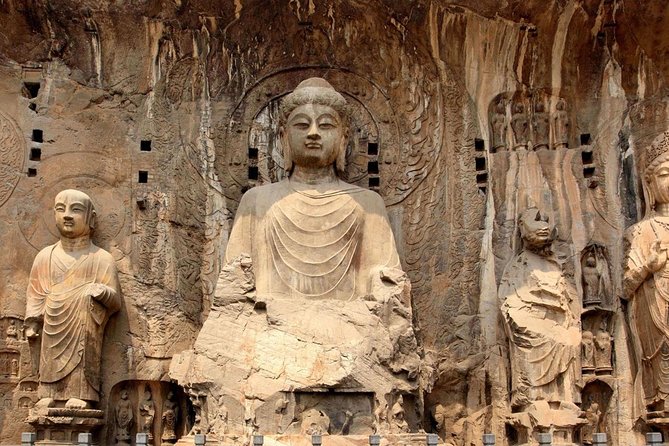
| Fengxian Temple | The central must-see stop for many first-time visitors because of its monumental open-air grouping | Allow time for steps, viewing angles, photographs, and rest | You visit only one major sculpture area | Do not skip it on a first visit unless access conditions require a route change |
| East Hill and opposite-bank views | Adds perspective across the river and broadens the visit beyond the main cliff face | Extends the route and adds further walking after West Hill fatigue | You have at least a half-day pace and still feel comfortable | You have a fixed departure time or limited mobility |
Conclusion: Put Fengxian Temple at the center of your plan, not at the end of an overloaded checklist. The reasoning is simple: it is the clearest priority for a first-time visit, while East Hill and secondary areas can be added only if time remains. This approach fits independent visitors who want confidence before booking transport. It does not suit visitors whose main purpose is detailed epigraphy or specialist study of smaller caves; those visitors should allocate more time to Guyang Cave and related sections.
Use this route-building sequence
- Set a firm exit time. Work backward from your train, hotel check-in, driver pickup, or evening plan. Do not use the final possible departure as your target; retain a buffer for finding exits and transport.
- Choose one route category. Select focused West Hill, extended West Hill, or full cross-river circuit. Mixing all three is the fastest way to lose track of time.
- Mark your non-negotiable stop. For most first-time visitors, that stop is Fengxian Temple. Build the route so you reach it before your energy and available time are depleted.
- Add two supporting cave areas. Guyang Cave, the Binyang area, and Wanfo Cave are sensible choices. Choose based on your interest in close detail versus broader monumental views.
- Decide on East Hill only after West Hill planning. Treat it as an addition, not an obligation. This keeps the route realistic.
- Check current access information before travel. Paths, entrances, ticket procedures, and site management arrangements can change. Use the official visitor information available when you book.

Build a Practical First-Visit Itinerary Around Your Pace
Walking time is not the same as visit time. A longmen grotto itinerary must include observation time. Visitors often underestimate how long they will spend at a major sculpture group because the experience is not simply passing from one entrance to another.
Use the following route models as planning frameworks, not guarantees. Weather, crowd levels, photo stops, physical condition, and current access arrangements can all change the pace.
Focused highlights route for a short visit
Choose this route when you have a narrow window and want a clear first impression. Enter, follow the West Hill sequence, see selected early cave areas, and make Fengxian Temple the principal stop. Then return by the most direct practical route rather than attempting to add East Hill.
- Best fit: A visitor arriving late in the day, connecting to another destination, or travelling with someone who prefers shorter walks.
- Reasoning: It protects the key visual experience and reduces the risk of missing a departure.
- Checkpoint: If you are not moving toward Fengxian Temple after your first cave stops, reduce time spent in secondary niches.
- Limit: You will not have a complete cross-river perspective or time for every important historical detail.
Balanced half-day route for most independent visitors
This is the most sensible longmen grotto option for travellers who want more than a highlights dash. Follow the main West Hill route at an unhurried pace, include Guyang Cave and at least one additional cave cluster, spend meaningful time at Fengxian Temple, then decide whether your remaining time supports riverside views or East Hill.
- Best fit: Visitors with a morning or afternoon dedicated to the site.
- Reasoning: It balances major monuments with enough flexibility to pause, rest, and absorb the setting.
- Checkpoint: Reassess your remaining time after Fengxian Temple. If you are tired or behind schedule, return rather than adding another long segment.
- Limit: It is not ideal for visitors seeking exhaustive documentation of cave inscriptions or lesser-known sections.
Extended route for visitors with a full exploration window
Take this option only when you have a broad time window and are comfortable with extended walking. Complete the West Hill priorities first, cross to East Hill if access and time allow, and include wider river views or temple areas as optional final elements.
- Best fit: Slow travellers, photographers, and visitors with a focused interest in the cultural landscape.
- Reasoning: The longer route makes sense only after the primary caves are secure in your itinerary.
- Checkpoint: Keep an exit plan. A full-site route should still have a clear point at which you stop adding destinations.
- Limit: More walking can reduce attention and enjoyment. A shorter, well-paced longmen grotto visit is often better than an exhausted full circuit.
Avoid the Planning Errors That Make the Walk Harder
The most common mistakes are not about choosing the wrong cave. They are about route order, unrealistic timing, and failing to account for physical effort. A better plan keeps major stops early enough to enjoy them.
- Trying to cover both hills in a short visit. This fails because the river crossing and additional walking consume time that could have been used at key carvings. Use a West Hill-only plan when your schedule is tight.
- Saving Fengxian Temple for last. This fails when crowds, fatigue, weather, or transport deadlines intervene. Visit it as the central milestone of your route.
- Counting only walking minutes. This fails because cave viewing, photography, stairs, navigation, and rest all add time. Build pauses into every section.
- Ignoring elevation and steps. This fails for visitors who assume the entire site is a flat riverside stroll. Select a shorter route if stairs or uneven pacing are a concern.
- Booking transport too tightly. This fails when exit walking or site navigation takes longer than expected. Keep a practical buffer before your next fixed booking.
- Using a list instead of a priority order. This fails because visitors spend too long on early stops and miss their essential destination. Rank each location as must-see, useful, or optional.
Use a Booking Checklist Before Finalising Transport and Tickets
Before you commit to a train, driver, tour pickup, or accommodation schedule, use this checklist. It turns a vague longmen grotto plan into a route you can follow without constant recalculation.
| Question | Decision rule | What to do if the answer is no |
|---|---|---|
| Do you have enough time for a West Hill highlights route? | Choose this as the minimum meaningful first visit | Move the visit to another day or accept a very limited exterior-focused stop |
| Can everyone in your group manage repeated walking and some steps? | Keep the route compact if comfort is uncertain | Reduce optional cave stops and avoid adding East Hill automatically |
| Is Fengxian Temple included before your planned exit time? | It should be secured early in the plan | Remove lower-priority stops before booking transport |
| Do you have a buffer after leaving the site? | Allow margin for the final walk and onward travel | Book a later connection or shorten the route scope |
| Have you checked current opening, entry, and route information? | Use current official information before payment | Do not rely solely on old maps, social posts, or copied itineraries |
A well-planned longmen grotto route is not the longest route. It is the one that gets you to the essential carvings with enough time and energy to appreciate them. Start with West Hill, make Fengxian Temple non-negotiable for a first visit, and add East Hill only when your available time and walking comfort support it.
Ask your transport or accommodation provider for current route-access advice before finalising your booking.