How Donor Inscriptions Reveal the Hidden History of Longmen Caves China
The thousands of Buddhist statues carved into the limestone cliffs are what draw visitors to the Longmen Caves, China. While the artistry is breathtaking, focusing only on the figures means missing half the story. The true historical value often lies in the text carved alongside them: the votive or donor inscriptions. These records transform anonymous statues into dated, personal accounts of faith, ambition, and social structure, revealing precisely who paid for them and why. Understanding these inscriptions is the key to seeing the grottoes not just as an art gallery, but as a dynamic, thousand-year-long historical document.
This guide provides a functional framework for interpreting these crucial texts. We will explore the different types of patrons who funded this monumental project and provide a step-by-step process for analyzing the inscriptions you will find on site. This approach allows you to move beyond simple observation and engage directly with the history recorded in stone.
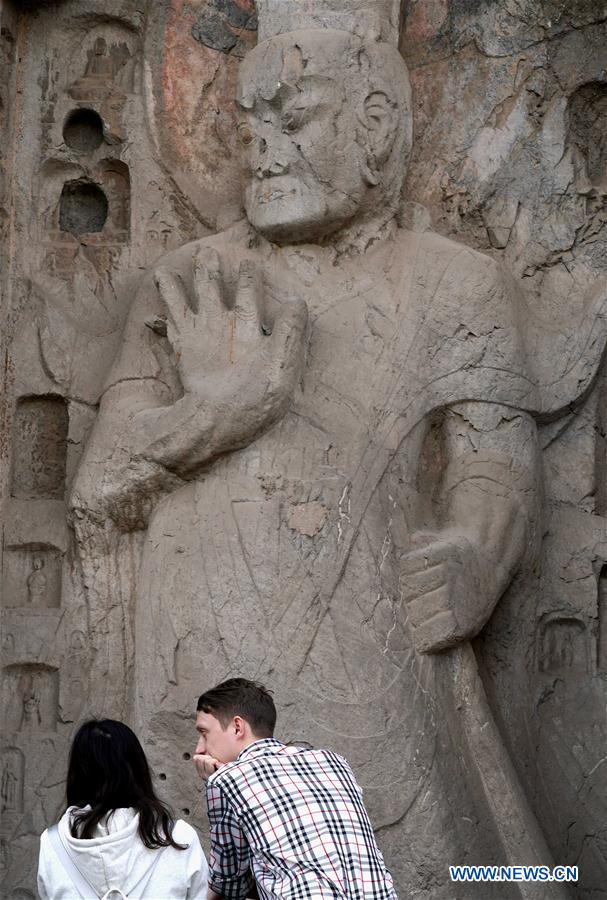
Understanding the Purpose Behind Votive Inscriptions
Before attempting to read the inscriptions, it’s essential to understand why they were created. These were not mere labels. In Buddhist tradition, commissioning an image was an act of generating merit, which could lead to a better rebirth, bless one’s ancestors, or bring peace and stability to the state. The inscription served as a permanent record of this meritorious deed, dedicating its spiritual benefits to specific individuals or causes. The text is the “receipt” for the spiritual transaction.
The content and style of these inscriptions evolved significantly between the two primary periods of carving at the Longmen Caves, China:
- Northern Wei Dynasty (late 5th to early 6th century): Inscriptions from this era are known for their elegant, angular calligraphy, often cited as a prime example of the Northern Wei script. The prayers are typically formal and formulaic. They often express wishes for the health and longevity of the emperor and empress, the stability of the state, and the salvation of the donor’s ancestors, reflecting a society where individual faith was deeply intertwined with imperial and familial piety.
- Tang Dynasty (7th to early 10th century): Tang inscriptions feature a more rounded and fluid calligraphic style. While imperial patronage continued, a wider cross-section of society began commissioning carvings. Inscriptions from this period show a greater diversity of personal prayers, including wishes for personal health, success in examinations, or the well-being of living family members. The language becomes more personal and varied.
Recognizing the historical period of an inscription provides immediate context about the carver’s world, their motivations, and the societal norms that shaped their act of devotion. This context is the foundation for any deeper analysis.
Decoding the Donors: Who Funded the Carvings?
The inscriptions at the Longmen Caves are a detailed ledger of its patrons, revealing a complex social hierarchy of devotion. By learning to identify the key markers associated with different donor groups, you can quickly ascertain the social standing and motivation behind a specific carving. This information provides a powerful lens for understanding the site’s development and its importance to different segments of ancient Chinese society.
Here is a breakdown of the primary donor types and how to identify them through their inscriptions:
| Donor Group | How to Identify in an Inscription | Typical Motivation & Scale |
|---|---|---|
| Imperial Family & Royalty | Look for specific imperial titles like Huangdi (Emperor), Huanghou (Empress), or names of princes and princesses. Inscriptions are often located in the largest, most centrally located, and artistically sophisticated caves (e.g., Binyang Caves, Fengxian Temple). | To secure the stability of the empire, project imperial power, and generate merit for the ruling family and the nation. These are the largest-scale projects. |
| High-Ranking Officials & Aristocrats | Inscriptions will list specific government titles (e.g., minister, general, regional inspector). The donor’s full name and official rank are almost always included. Their commissioned caves are often medium-sized and well-executed. | A mix of genuine piety, demonstrating loyalty to the Buddhist-supporting state, and showcasing personal wealth and status. Prayers often link personal fortune with the state’s well-being. |
| Monks, Nuns & Clergy | Donors are identified by their religious titles. The inscription may mention their home monastery. They often commissioned niches within larger caves or smaller grottoes dedicated to specific sutras or Buddhist figures. | To further their own spiritual progress, honor their teachers, or pray for the flourishing of the Dharma (Buddhist teachings). The focus is explicitly religious and doctrinal. |
| Commoner Associations (Yi She) | These inscriptions list multiple names, often without official titles, and identify the group as a Yi She (righteous/merit society). These were local groups of lay believers who pooled their resources. | Collective merit-making for the salvation and well-being of all members and their families. These carvings are typically smaller niches and reflect grassroots devotion. |
This comparative framework shows that patronage at the Longmen Caves was not monolithic. It was a layered system where everyone from the empress to a small group of villagers participated, each leaving a record that reflected their place in the world.
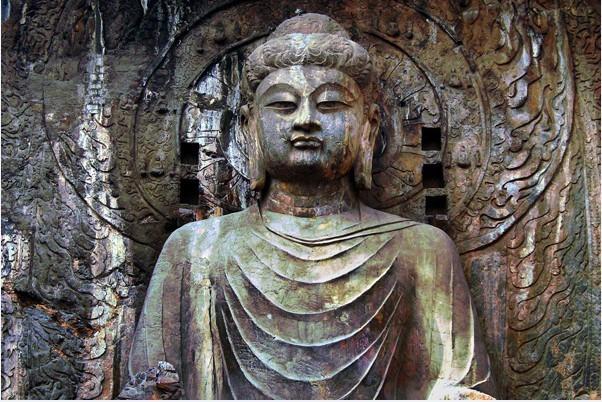
A Practical Guide to Reading Votive Inscriptions on Site
With an understanding of the context and donor types, you can begin to analyze inscriptions firsthand. While a full translation requires expertise in classical Chinese and epigraphy, any visitor can extract the core information by following a systematic process. This turns a passive viewing experience into an active investigation.
Here is a step-by-step procedure for analyzing a typical inscription at the Longmen Caves, China:
- Locate the Inscription: Votive texts are usually carved on a stele next to the main niche or on the walls surrounding the Buddhist figures. They can be vertical or horizontal. Take a moment to find the text associated with the art you are examining.
- Identify the Date: Look for characters indicating a reign era (e.g., Northern Wei, Tang), an emperor’s reign name, and a specific year, month, and day. The date is often one of the first pieces of information given and is crucial for placing the work in its proper historical context.
- Find the Donor’s Name and Title: Scan the text for names, which are often preceded by titles or affiliations. As detailed in the table above, identifying a title (imperial, official, monastic) is the quickest way to understand the patron’s social standing. If many names are listed together without titles, you are likely looking at a commoner association.
- Determine the Votive Purpose: The core of the inscription is the prayer itself. Look for recurring phrases related to dedicating merit. Common prayers are for the health of the emperor, peace in the realm, salvation for “seven generations of ancestors,” or blessings upon living parents. The object of the prayer reveals the donor’s primary motivation.
- Note the Beneficiaries: Who was the merit for? The inscription will state this explicitly. It could be a single person (the emperor), a group (parents and ancestors), or even “all sentient beings.” This detail adds a personal dimension to the act of devotion.
By following these steps, you can piece together a remarkable amount of information: who commissioned the work, when they did it, their social status, and what they hoped to achieve. This process transforms a stone carving from a static object into a personal testament of faith.
Common Mistakes to Avoid When Interpreting Inscriptions
When analyzing these texts, especially without formal training, it is easy to make simple errors. Keeping these common pitfalls in mind can help ensure a more accurate interpretation.
- Ignoring Physical Context: Do not analyze the text in isolation. The size of the niche, the quality of the carving, and its location within the UNESCO World Heritage Site all provide clues about the donor’s resources and importance. A grand inscription next to a tiny, crude niche tells a different story than one accompanying a masterfully carved statue.
- Misinterpreting Titles: Ancient Chinese bureaucratic and aristocratic titles are complex and changed over time. While you can identify a donor as an “official,” be cautious about assigning a precise modern equivalent to their role without further research.
– Taking Prayers at Face Value: While many prayers were genuinely pious, they were also public statements. An official commissioning a statue and praying for the emperor was also performing an act of political loyalty. Always consider the potential social and political function of the inscription, not just its religious one.
The intricate history of the longmen caves china is written not only in its magnificent sculptures but also in the dense columns of text that accompany them. By learning to see and interpret these donor inscriptions, you gain a far richer and more nuanced understanding of this monumental expression of art, faith, and culture.
For specialized research or detailed historical consultations regarding cultural heritage sites, contact our technical team to discuss your project.