Is Louyang a Misspelling of Luoyang or a Fictional Game City?
When you enter the term “louyang” into a search engine, the results can be perplexing. You might see images of ancient temples and sprawling modern cities alongside screenshots of pixelated characters and fantasy monsters. This ambiguity arises because the term straddles two distinct worlds: one a place of immense historical importance and the other a popular destination in a digital universe. Understanding the difference is the first step to finding the information you actually need.
This guide serves as a clear point of reference, disambiguating the common search query. We will explore the real-world city of Luoyang, a cradle of Chinese civilization, and then delve into the fictional city of Louyang from the world of online gaming. By examining the context, history, and significance of each, you can confidently determine which “Louyang” is relevant to your interests, whether for historical research, travel planning, or a gaming quest.
The Real-World Metropolis: Luoyang, a Pillar of Chinese History
More often than not, a search for this term is a simple misspelling of Luoyang, a major city in the Henan province of China. Far from being a minor typo, this points to one of the most significant locations in the entirety of Chinese history. Luoyang is recognized as one of the Four Great Ancient Capitals of China, having served as the seat of power for numerous dynasties over several millennia. Its historical and cultural wealth is nearly unparalleled, making it a crucial subject for anyone interested in history, archaeology, or East Asian culture.
A Cradle of Civilization and Dynastic Power
The history of Luoyang stretches back to the Neolithic period, but it rose to prominence during the Bronze Age. It was the capital city for the Eastern Zhou dynasty, a pivotal era that saw the flourishing of foundational Chinese philosophies. Thinkers like Confucius and Laozi are associated with this period, and the political and intellectual climate of the time was centered around the region of Luoyang. Its strategic location on the central plain of China made it a desirable capital for subsequent rulers.
Throughout its history, Luoyang was the capital for dynasties including the Eastern Han, Cao Wei, Western Jin, and Northern Wei. During the Eastern Han dynasty, it was one of the largest and most prosperous cities in the world. It was also a vital hub on the Silk Road, the ancient network of trade routes that connected the East and West. This position facilitated not only the exchange of goods like silk and spices but also the transmission of ideas, technologies, and beliefs. It was in Luoyang that Buddhism was formally introduced to China with the establishment of the White Horse Temple, considered the first Buddhist temple in the country.
Cultural and Archaeological Treasures
Modern Luoyang is a bustling industrial and cultural center, but its past remains its most powerful draw. The city and its surrounding areas are home to several UNESCO World Heritage Sites that attract scholars, historians, and tourists from around the globe.
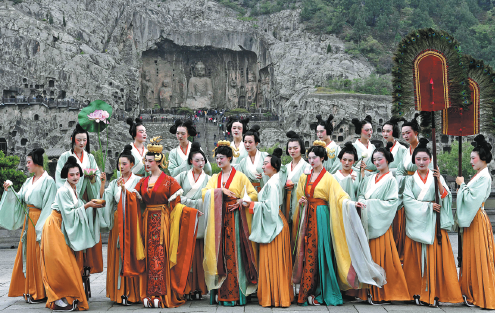
- The Longmen Grottoes: This is arguably Luoyang’s most famous site. The grottoes contain tens of thousands of statues of Buddha and his disciples, carved into the limestone cliffs along the Yi River. These carvings, created over several centuries starting from the Northern Wei dynasty, represent some of the finest examples of Chinese Buddhist art.
- The White Horse Temple: As mentioned, this temple marks the genesis of Buddhism in China. While the current buildings are mostly from the Ming and Qing dynasties, the site itself holds immense historical and religious significance.
- Ancient Tombs Museum: Often called the Luoyang Museum of Ancient Art, this is a unique underground museum featuring dozens of restored tombs from various dynasties, offering a direct look into the burial practices and artistic traditions of ancient China.
Understanding Luoyang’s context is vital. It is a real, tangible place with deep roots in global history. For researchers, travelers, and business professionals engaging with the region, recognizing its proper name and significance is the first step toward meaningful interaction.
The Fictional Realm: Louyang in Ragnarok Online
On the other side of the search results page lies a completely different world. The term louyang also refers to a famous city within the universe of Ragnarok Online, a massively multiplayer online role-playing game (MMORPG) that has maintained a dedicated player base for decades. This fictional city is part of the game’s “Global Project,” which introduced locations inspired by various real-world cultures.
An In-Game City Inspired by Ancient China
The game’s version of Louyang is a digital port town, designed with aesthetics heavily borrowed from ancient Chinese architecture and mythology. Players entering the city will find buildings with curved tile roofs, ornate gateways, and streets filled with non-player characters (NPCs) dressed in traditional-style clothing. The city is presented as a center of trade and martial arts, complete with a grand palace, a bustling field, and a mysterious dungeon.
The lore within the game positions Louyang as a distant land with a unique culture compared to the game’s primary European-fantasy-inspired settings. It serves as a hub for players to undertake specific quests, battle unique monsters, and acquire special items that are not available elsewhere. This makes it a key destination for players looking to advance their characters or explore the full breadth of the game world. The in-game music, monster design (including representations of figures from Chinese folklore), and quest narratives all work together to create an immersive, albeit fictional, cultural experience.
Quests, Dungeons, and Player Progression
For gamers, searching for “louyang” is directly related to achieving in-game objectives. The city is home to several important questlines that players must complete to unlock skills, gain experience, or earn valuable rewards. These quests often involve interacting with the city’s NPCs, gathering materials, or defeating powerful “boss” monsters located in the nearby dungeon, the Royal Tomb.
The surrounding areas, Louyang Field and the Royal Tomb, are populated with monsters unique to this region. Players visit these zones to battle creatures like the “Wooper” and “Mao Guai” for experience points and rare item drops. The city itself acts as a safe zone where players can rest, resupply, and interact with each other. Therefore, for a significant online community, Louyang is not a historical site but a strategic location within a complex digital economy and social space.
Context is Everything: How to Know Which Term to Use
Differentiating between the historical city and the game location is a matter of context. If your research involves history, geography, international business, or travel, your focus is undoubtedly the real city of Luoyang. If your interest is in online gaming, quest guides, or virtual communities, you are likely looking for information on the game location, Louyang.
Here are a few tips to refine your search and ensure you find the correct information:
- Check Your Spelling: The most common issue is the misspelling. The correct spelling for the Chinese city is L-U-O-Y-A-N-G. Correcting this in your search will almost always filter out the gaming-related content.
- Use Search Modifiers: Add clarifying terms to your search. For example, “Luoyang China history” or “Luoyang travel” will direct you to the historical site. Conversely, “louyang Ragnarok Online” or “louyang quest guide” will provide results specific to the game.
- Analyze the Source: Look at the websites that appear in your search results. Reputable sources like encyclopedias, official tourism boards, academic journals, and major news outlets will be discussing the real city. Gaming wikis, fan forums, and strategy guide websites will be focused on the fictional one.
While one is a cornerstone of human civilization and the other is a collection of pixels and code, both hold significance for their respective communities. Whether you are planning a trip to see the Longmen Grottoes or preparing to battle a digital dragon, knowing the difference between Luoyang and louyang is the crucial first step on your journey.