Compare Luoyang’s Buddhist and Imperial Heritage
Few places in the world force a traveler to make such a stark cultural decision as luoyang china. On one side of the city sits a thousand years of dynastic power, expressed through ruined palaces, tomb complexes, and city walls. On the other side sits one of the most important Buddhist landscapes in East Asia, carved into limestone cliffs and anchored by the first officially recognized Buddhist temple in the country. For a first-time researcher, the challenge is not finding information. It is deciding which historical thread deserves priority and what each landmark actually explains about the city’s past.
This guide compares the Buddhist and imperial dimensions of Luoyang’s heritage side by side. It does not tell you which one is better. It tells you what questions each site answers, how much time each theme demands, and how to sequence them so that the city’s history makes sense rather than blurring into a list of famous names.
Understanding the Two Historical Layers of Luoyang China
Luoyang’s historical identity is built on two distinct layers that developed in parallel but answered different needs. The imperial layer reflects political power. For centuries, the city served as a capital for multiple dynasties, which meant palaces, administrative centers, defensive walls, and elaborate royal tombs. These sites tell the story of governance, succession, military strategy, and the symbolic language of Chinese emperorship.
The Buddhist layer reflects spiritual and cultural transmission. Buddhism entered China along the Silk Road and found an early institutional home in Luoyang. Temples, pagodas, and cave shrines were funded by rulers but served a different purpose. They were places of worship, translation, pilgrimage, and artistic production. Understanding this distinction helps a researcher move beyond generic sightseeing and toward a clearer reading of the city.
Buddhist Heritage Sites and the Questions They Answer
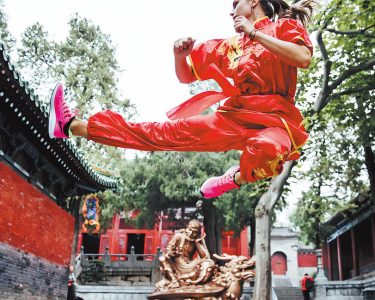
Buddhist landmarks in luoyang china are not just visually impressive. They document the arrival, adaptation, and institutionalization of a foreign religion in a new cultural context. Researchers should approach these sites with specific historical questions in mind.
Longmen Grottoes
The Longmen Grottoes are the most famous Buddhist site in Luoyang and among the most significant in China. Thousands of caves and niches line the Yi River cliffs, containing statues that range from tiny figures to monumental Buddhas. The site answers questions about patronage, artistic style, and the relationship between religious devotion and political display. Many of the carvings were funded by emperors, empresses, and aristocratic families, which means the site also functions as an imperial record in stone.
For a first-time researcher, Longmen is best understood as a fusion site. It is Buddhist in subject matter but deeply imperial in its funding and symbolism. A visit here does not separate the two heritage layers. It shows how they intertwined.
White Horse Temple
White Horse Temple is traditionally recognized as the first Buddhist temple in China. Its founding narrative involves Emperor Ming of the Eastern Han dynasty, who reportedly sent envoys westward and welcomed Buddhist monks and scriptures back to Luoyang. The temple answers questions about early transmission, translation, and the institutional beginnings of Chinese Buddhism.
Unlike Longmen, White Horse Temple is less about monumental scale and more about historical continuity. It has been rebuilt and expanded over centuries, and today it functions as an active religious site as well as a historical one. Researchers interested in the mechanics of early Buddhist community life and scriptural translation will find this site more relevant than the cliff carvings.
Other Buddhist Landmarks
Beyond the two headline sites, Luoyang contains smaller temples, pagodas, and museum collections that deepen the Buddhist picture. These sites often receive fewer visitors but can be valuable for researchers who want to trace regional variations in Buddhist practice or examine specific historical periods. When planning, it is worth checking which smaller temples are open and what their current interpretive materials cover.
Imperial Heritage Sites and the Questions They Answer
The imperial heritage of luoyang china is spread across a wider geographic area and is often less visually intact than the Buddhist sites. This can make it harder to interpret, but it is equally important for understanding the city’s role in Chinese history.
Museum Collections and Archaeological Remains
Luoyang’s museums hold some of the most important archaeological finds from the city’s dynastic periods. Bronzes, ceramics, tomb murals, and inscribed stones document court life, ritual practice, and administrative systems. For researchers focused on political history, these collections often provide more precise evidence than standing buildings, many of which were destroyed or rebuilt over time.
The key question imperial sites answer is how power was organized and displayed. Palace foundations, city wall remnants, and tomb layouts reveal spatial hierarchies, defensive priorities, and beliefs about the afterlife. These are not always photogenic, but they carry substantial interpretive weight.
Royal Tombs and Burial Complexes
Tombs are among the most revealing imperial sites in the Luoyang area. Their structure, orientation, and grave goods tell researchers how rulers and elites understood death, status, and continuity. Some tomb sites include accessible chambers or museum displays of excavated materials. Others are marked only by mounds or steles.
For a first-time researcher, tomb sites work best as a complement to museum collections. The objects explain what was buried. The tomb architecture explains why it was arranged that way. Together they form a coherent picture of imperial ritual culture.
City Walls and Palace Foundations
The physical footprint of ancient Luoyang’s imperial city is partially visible through archaeological parks and preserved foundation lines. These sites answer questions about urban planning, defense, and the scale of dynastic ambition. They are less immediately dramatic than a cave full of carved Buddhas, but they ground the imperial narrative in actual geography.
Side-by-Side Comparison for First-Time Researchers
The table below summarizes the key differences between Luoyang’s Buddhist and imperial heritage themes. Use it as a planning aid rather than a strict ranking.
| Comparison Factor | Buddhist Heritage | Imperial Heritage |
|---|---|---|
| Primary sites | Longmen Grottoes, White Horse Temple | Museums, tomb complexes, city wall remains |
| Visual impact | High, with monumental carvings and active temples | Variable, often reliant on museum displays and ruins |
| Historical questions answered | Religious transmission, patronage, artistic style | Political organization, ritual, urban planning |
| Time required | Half to full day for major sites | Flexible, often shorter per site but spread across the city |
| Ease of interpretation | Generally accessible with clear visual cues | Requires more reading and guidance |
| Best for | Art history, religious studies, Silk Road research | Political history, archaeology, urban studies |
This comparison matters because many visitors arrive with a vague interest in “history” and leave without a clear sense of what they saw. By identifying which questions each heritage theme answers, a researcher can allocate time and attention more effectively.
How to Sequence a Balanced Heritage Itinerary
A balanced approach to luoyang china heritage does not mean splitting time evenly between Buddhist and imperial sites. It means sequencing them so that each theme builds on the other. The most effective early itineraries follow a simple logic: start with the most visually legible site, then move to the more interpretive material.
For many researchers, that means beginning with Longmen Grottoes. The scale and detail of the carvings provide an immediate sensory anchor. From there, White Horse Temple adds the institutional and narrative layer, explaining how Buddhism became established in the first place. Only after these two sites does the imperial material begin to make sense, because the same rulers who built palaces also funded temples and cave shrines.
An alternative sequence starts with a museum. This works well for researchers who prefer to establish chronological context before visiting outdoor sites. A strong museum collection can frame the dynastic timeline and introduce key rulers, after which the Buddhist sites read as expressions of that same political world rather than as a separate category.
Common Misunderstandings About Luoyang’s Heritage
One common misunderstanding is that Buddhist heritage and imperial heritage are opposing categories. They are not. In luoyang china, the two are deeply entangled. Emperors funded temples. Buddhist iconography appeared in imperial spaces. Court artists worked on religious projects. Treating them as separate is useful for planning, but it should not harden into a fixed mental model.
Another misunderstanding is that the most famous site is automatically the most important for every researcher. Longmen is extraordinary, but a political historian may learn more from a well-curated museum exhibit than from a half-day at the grottoes. The right priority depends on the research question, not on the tourist ranking.
A third misunderstanding involves scale. Luoyang’s imperial heritage is often less visually spectacular than its Buddhist heritage, which can lead visitors to undervalue it. But the city’s historical significance rests substantially on its role as a dynastic capital. Skipping the imperial layer altogether means missing the reason Luoyang became a center of Buddhist activity in the first place.
Practical Research and Planning Notes
Before committing to a specific itinerary, check current opening conditions for each site. Some archaeological areas close seasonally or require advance booking. Museum collections may rotate, and smaller temples may have limited interpretive materials in English. For first-time researchers, this practical layer matters as much as the historical content.
Transport between sites also shapes the experience. Luoyang’s major Buddhist landmarks sit in different parts of the city and its outskirts, while imperial sites are often scattered across a wider area. Grouping sites by geography can save time, but grouping by theme often produces better comprehension. Decide which trade-off matters more for your specific trip.
Finally, build in time for note-taking and reflection. Luoyang’s heritage is dense. A rushed visit to multiple sites in a single day will produce impressions but not understanding. The city rewards researchers who treat it as a layered text rather than a checklist of monuments.
For those planning a broader research trip, it helps to review how Luoyang’s heritage connects with other ancient capitals in the region. The patterns of Buddhist patronage and imperial city planning visible here reappear in different forms elsewhere. Understanding luoyang china in this comparative frame turns a single-city visit into a foundation for wider study.