By
By How the Sui-Tang Canal Supplied Luoyang China
How could an inland capital sustain court officials, soldiers, craftsmen, merchants, and residents when local harvests alone were not enough? The answer lies in the canal network that connected luoyang china to grain-producing regions, transport corridors, and commercial markets across imperial China.
For visitors and researchers, the Sui-Tang Canal is more than an ancient waterway beside a famous capital. It explains why Luoyang could function as an eastern political center. The canal reduced the difficulty of moving staple food, tax grain, textiles, timber, and other necessities into the city. It also made the city a point of exchange between the northern plain, the Huai River region, the Yangtze basin, and routes leading west.
Understand the canal as a supply system rather than a single waterway
The Grand Canal should not be understood as one uninterrupted channel carrying identical cargo under identical conditions. It was a connected water-transport system shaped by rivers, excavated sections, storage points, ports, administrative controls, and changing political priorities. For luoyang china, its value came from connection: goods could move through linked waterways and then enter the capital’s distribution network.
The Sui dynasty developed major canal routes partly to support its political geography. Luoyang stood in a strategically useful position between northern and southern regions. An eastern capital required reliable access to food and supplies from beyond its immediate hinterland. The canal network helped answer that requirement by making long-distance water transport more practical than relying entirely on overland carts and pack animals.
The Tang period inherited and used this transport geography, although political conditions, route security, maintenance, taxation, and regional control could all affect how well the system operated. A canal did not automatically guarantee supply. It needed water, labor, administrative coordination, safe passage, functioning ports, and cargo producers willing or compelled to send goods.
| Supply-system element | What it affected in practice | What a researcher may misunderstand if it is ignored |
|---|---|---|
| Canal links | They connected Luoyang with river basins and regional production zones. | The city may appear dependent only on nearby agriculture, despite its wider supply reach. |
| Grain collection | It helped concentrate staple food for official consumption, storage, and redistribution. | Grain may be treated as ordinary trade alone, overlooking the fiscal role of transported grain. |
| Ports and warehouses | They enabled unloading, temporary storage, inspection, and transfer into urban channels. | Water transport may be assumed to end at the city wall, without considering local handling. |
| Market access | It brought merchants, goods, information, and regional demand into the capital. | Luoyang’s markets may be viewed only as local retail spaces rather than regional exchange points. |
| Political control | It determined who could maintain routes, organize labor, and protect cargo movement. | The canal can be mistakenly described as equally effective during all periods. |
The practical conclusion is straightforward: study the canal as infrastructure tied to institutions. This approach fits visitors examining how luoyang china became an eastern capital and researchers comparing political centers. It does not apply if the question is limited to the engineering details of one excavated canal segment, which requires site-specific archaeological evidence.
How canal links, grain transport, and market access supported the eastern capital
Canal links, grain transport, and market access worked together. None of these elements fully explains the role of the Sui-Tang Canal on its own. A route without cargo had little fiscal value. Grain without storage and local distribution could not feed an urban population efficiently. Markets without transport connections would have had a narrower commercial base.
For luoyang china, the system supported the eastern capital in three connected ways.
| Key factor | How it supported the eastern capital | What happened when the factor was weak or disrupted |
|---|---|---|
| Canal links | Linked Luoyang to broader river systems and agricultural regions, allowing supplies to approach from multiple directions. | Transport became slower, more expensive, or dependent on difficult land routes and uncertain local supply. |
| Grain transport | Moved staple grain toward the capital for official needs and urban consumption, supporting the concentration of people and institutions. | Food pressure could intensify, while the state had less ability to sustain large resident populations and administrative activity. |
| Market access | Allowed merchants and goods to reach urban consumers, creating exchange between regional producers and capital demand. | Markets became less connected to distant production areas, reducing variety and commercial circulation. |
| Transfer points | Enabled cargo to move from boats to storage areas, carts, streets, and market channels within the urban zone. | Even successfully transported goods could bottleneck before reaching users, officials, or traders. |
Canal links mattered because they extended the city’s usable hinterland. A capital’s immediate surroundings could provide some food and raw materials, but a major political center needed more dependable access than nearby fields could always offer. The waterway network made it possible to draw on distant regions. This was especially relevant when the city’s resident population included people supported by the state, such as court personnel and military forces.
Grain transport mattered because grain was a political resource. It was food, but it was also a form of taxation, storage, provisioning, and administrative control. When grain could reach Luoyang through organized routes, authorities had a stronger basis for supporting the institutions of an eastern capital. The limit is essential: transported grain did not eliminate shortages. Weather, warfare, route damage, corruption, labor demands, and regional instability could still interrupt supply.
Market access mattered because capitals consumed more than grain. Textile goods, crafted items, metals, timber, paper, medicines, luxury products, and everyday tools all depended on connections between producers and buyers. The canal helped bring commercial traffic toward luoyang china, while the capital’s demand encouraged merchants to participate in wider networks. This does not mean every product moved by canal or that every merchant benefited equally. Some goods traveled overland, and commercial activity depended on regulations as well as transport.
Trace the journey of grain from producing regions to urban consumption
A useful way to understand supply is to follow grain as a sequence of operations rather than imagining a boat arriving directly at a palace storehouse. The exact route and administrative arrangements could vary, but the broader process shows why the canal system mattered.
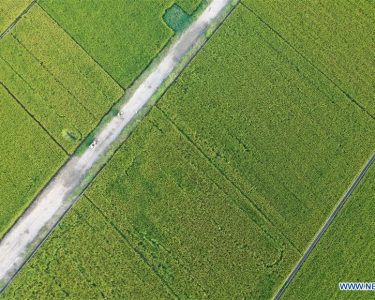
- Grain was produced and collected. Agricultural regions generated grain, some of which could be collected through fiscal obligations or acquired through exchange. The key point is that grain first had to be concentrated before it could become a transport resource.
- Grain was moved to a navigable loading point. Producers and officials needed access to local rivers, canal sections, or transfer centers. If this first connection failed, the larger canal network offered little practical help.
- Cargo traveled through linked waterways. Boats could carry bulky goods more effectively than many forms of land transport, especially where navigable water provided continuity between regions.
- Grain was unloaded and stored near the capital. Storage reduced the need for immediate consumption and allowed authorities or merchants to manage distribution over time.
- Urban distribution completed the supply chain. Grain still had to reach government granaries, markets, households, military units, and food producers. A water route alone did not feed a city.
This sequence offers a practical research method for interpreting luoyang china. When examining a canal site, ask where cargo entered the water, where it could be transferred, who controlled storage, and how it reached consumers. The conclusion is that transport capacity must be considered alongside handling capacity. This method is useful for historical landscape interpretation. It is less useful for assigning a precise volume of grain to a specific period unless reliable documentary or archaeological evidence is available.
Read Luoyang’s markets as evidence of connected demand
The canal’s importance was not limited to state provisioning. It also reinforced the commercial position of luoyang china. A capital gathered people with different needs: officials required supplies, households needed food and fuel, religious institutions required material support, and craftsmen depended on raw materials and customers. Such concentrated demand could attract merchants from connected regions.
Market access changed the practical meaning of location. Luoyang was not simply a city placed near transport routes. It became a place where waterborne movement could meet administrative demand, urban consumption, and interregional exchange. Goods arriving near the city could be redistributed locally, sold in markets, used in workshops, or directed toward institutions.
Researchers should avoid one common mistake: treating market activity as proof that all commerce was free and uncontrolled. Capital markets were shaped by official rules, taxation, access restrictions, and political conditions. Another mistake is to assume that a busy market always indicates prosperity across every social group. Commercial circulation could coexist with unequal access to food and goods.
- Do not separate grain from commerce. Staple food supply affected market stability and household purchasing conditions.
- Do not treat the canal as a passive backdrop. Its maintenance, security, and administration influenced whether trade could function.
- Do not assume a single route supplied everything. Waterways, roads, local production, and storage systems worked together.
- Do not generalize one dynasty’s conditions across all periods. The role of the canal changed with political control and regional circumstances.
- Do not confuse monument history with urban systems. Major sites reveal only part of how the capital was provisioned and connected.
For a history-minded visitor, this means that the canal should be read alongside city layout, nearby settlements, storage areas, roads, and market spaces. For a researcher, it means linking textual records about taxation and transport with the physical geography around luoyang china. Neither perspective should assume that surviving remains reveal the full scale of ancient movement.
Use a focused research checklist when studying the canal’s role
Questions about the Sui-Tang Canal often become too broad: “Did it help Luoyang?” A better question asks how, for whom, through which routes, and under what constraints. The checklist below turns that broad topic into manageable research tasks.
- Identify the political role of the city. Was Luoyang functioning as an eastern capital, a major regional center, or both in the period being studied?
- Map connections rather than one canal line. Note rivers, canal branches, roads, ports, and likely transfer areas around luoyang china.
- Separate state grain from commercial cargo. Both used transport networks, but their collection, destination, and control could differ.
- Look for storage and distribution evidence. Ask where bulk goods could wait before being consumed or sold.
- Check the condition of political control. Route security and maintenance depended on institutions, not water alone.
- Compare urban demand with regional supply. A capital’s needs often exceeded what its immediate surroundings could provide.
- State the limits of the evidence. Avoid turning a known route into an unsupported claim about constant traffic or guaranteed abundance.
The strongest interpretation is therefore not that the canal “made” luoyang china important by itself. Rather, the canal helped make the city governable, provisionable, and commercially connected when political institutions could organize and protect the network. That distinction matters. Infrastructure creates possibilities; administration, labor, production, and demand determine whether those possibilities become durable support for an eastern capital.
For a deeper visit or research plan focused on luoyang china, seek local historical guidance that connects canal landscapes with the city’s wider urban and economic history.