 By
By Understanding Northern Wei and Tang Sculpture at Longmen Caves for AP Art History
For students delving into the complexities of East Asian art history, distinguishing between the profound stylistic shifts evident at the Longmen Caves is crucial, especially for AP Art History examinations. This site, a UNESCO World Heritage treasure near Luoyang, China, offers a unique chronicle of Buddhist art spanning several centuries. Pinpointing the characteristics that separate Northern Wei dynasty creations from those of the Tang dynasty is not merely an academic exercise; it provides essential insights into the evolving spiritual, political, and cultural landscape of ancient China. Understanding these distinctions allows for a deeper appreciation of how imperial sponsorship, changing philosophies, and global connections shaped artistic expression.
The Historical Tapestry of the Longmen Caves
The Longmen Caves, carved into the limestone cliffs along the Yi River, represent one of the most significant collections of Chinese Buddhist art. Construction began in the late 5th century during the Northern Wei dynasty and continued through the Tang dynasty, with intermittent work even into later periods. This long span of creative activity means the caves serve as a living museum, showcasing a dramatic evolution in sculptural style, iconography, and artistic intent.
The Northern Wei period (386–534 CE) saw the caves’ initial development, primarily under Emperor Xiaowen, who moved his capital to Luoyang. This era was characterized by the sinicization policy, where the non-Han Tuoba Wei rulers adopted Chinese customs, language, and administration. Their Buddhist art reflects a blend of foreign influences, primarily from Gandharan and Gupta India, filtered through a distinctively Chinese spiritual aesthetic that often prioritized a sense of ethereal grace and inner contemplation.
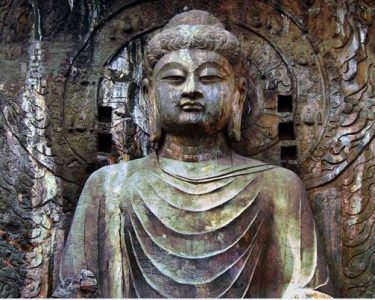
The subsequent Tang dynasty (618–907 CE) marked a golden age of Chinese culture, characterized by immense imperial power, cosmopolitanism, and economic prosperity. The Tang court, notably under Empress Wu Zetian, invested heavily in Buddhist art and architecture, leading to some of the most monumental and grand sculptures at Longmen. Tang art at the caves reflects a more naturalistic, robust, and worldly style, emphasizing human form and imperial authority, often with a visible connection to the vibrant international exchanges along the Silk Road.
Comparison: Northern Wei vs. Tang Sculpture at Longmen Caves
Understanding the nuanced differences between Northern Wei and Tang dynasty sculpture at the Longmen Caves is fundamental for anyone studying this period in AP Art History. These distinctions are not arbitrary; they reflect different cultural values, spiritual interpretations, and political agendas. Misinterpreting these stylistic cues can lead to a fundamental misunderstanding of the artwork’s original context and meaning.
Here is a detailed comparison of key parameters, explaining what each characteristic *actually affects* in practice for the viewer and analyst:
| Characteristic | Northern Wei Style (c. 490-534 CE) | Tang Dynasty Style (c. 618-907 CE) | Practical Impact & Why It Matters |
|---|---|---|---|
| Body Proportions | Elongated, slender, less naturalistic, often with a rigid frontal posture. Figures appear tall and attenuated. | Voluptuous, fleshy, naturalistic, and sensuous. Figures are full-figured, rounder, and often have a more relaxed stance. | Wei: Conveys transcendence and detachment from earthly concerns, emphasizing spiritual purity. A buyer or student mistaking this for poor anatomical skill misses the deliberate spiritual intent and symbolic representation over realism. Tang: Conveys earthly prosperity, divine power in a more relatable, humanized form, reflecting a confident, worldly empire. Misinterpreting this as mere sensuousness overlooks its connection to imperial grandeur and cosmopolitan ideals, which sought to embody the divine in a tangible, powerful form. |
| Drapery Style | Stylized, angular, linear, often described as “waterfall” or “fish-tail” folds that flare out. Creates a sense of movement and ethereal lightness. | Flowing, realistic, clinging to the body, emphasizing the underlying form. Drapes naturally, showing the contours of the body. | Wei: Creates a dynamic sense of movement and ethereal lightness, emphasizing the flowing robes of enlightened beings. Getting this wrong might lead to misinterpreting the dynamic, sharply defined lines as stiffness rather than stylized grace and spiritual dynamism. Tang: Highlights the body beneath, conveying naturalism and the substantiality of the divine presence. Incorrectly seeing this as simple fabric realism ignores its role in emphasizing the figure’s power, volume, and connection to the material world. |
| Facial Style | Elongated faces, almond-shaped eyes, thin lips, and a characteristic “archaic smile” that is serene and introverted. | Full, rounded faces, often with plump cheeks, realistic expressions, and a more outward-looking, confident, and sometimes benevolent gaze. | Wei: Projects inner serenity, a meditative state, and a slightly mysterious, otherworldly wisdom. A misinterpretation might brand it as primitive or less expressive rather than purposefully stylized for spiritual introspection. Tang: Expresses approachable divinity, imperial authority, and the vibrant, worldly confidence of the Tang empire. Mistaking this for simple realism ignores its role in conveying power, accessibility, and a cosmopolitan outlook that embraced a more humanistic ideal of divinity. |
| Scale and Monumentality | Often smaller, more intimate votive steles and niches, though monumental cave temples like the Binyang Caves exist, still retaining a refined spiritual quality. | Predominantly monumental, grand, and often colossal figures, such as the Vairocana Buddha at Fengxian Temple, reflecting immense imperial power. | Wei: Smaller pieces encourage personal devotion; larger ones still convey spiritual refinement. Not understanding the varied scale might lead to underestimating the dynastic ambition behind even the more delicate works, or missing the emphasis on individual piety. Tang: Overwhelms the viewer, asserting imperial might and the universal reach of Buddhism under Tang rule. Failing to grasp the scale’s message means missing the political statement inherent in the art, where grand scale equals grand power and influence. |
| Imperial Sponsorship | Early imperial patronage (Emperor Xiaowen) aimed at legitimizing non-Han rulers and reinforcing sinicization policies through Buddhist piety. | High Tang patronage (Empress Wu Zetian) reflecting a powerful, unified, and cosmopolitan empire. Art served to project imperial authority and universal Buddhist power. | Wei: Influences stylistic choices to align with Chinese aesthetic traditions while promoting Buddhism as a state religion to unify disparate peoples. Overlooking this connection means missing the political drivers behind artistic innovation and the strategic use of religion. Tang: Leads to eclectic styles, drawing from diverse international sources, and grand projects like Fengxian Temple, reflecting a diverse and powerful empire. Not connecting sponsorship to style overlooks how political and economic strength shaped artistic expression and the confidence to integrate varied artistic traditions. |
Identifying Key Features: Common Mistakes and Best Practices
For effective analysis, especially in a timed AP Art History setting, avoiding common pitfalls and adopting best practices for identification is essential when examining the Longmen Caves ap art history examples. The visual evidence is rich, but can be misleading without a structured approach.
Common Mistakes in Identifying Longmen Sculpture Periods:
- Confusing Archaic Smile with Lack of Skill: The Northern Wei “archaic smile” is a deliberate stylistic choice conveying inner peace, not an inability to render realistic expressions. Mistaking it for primitive artistry misses the profound spiritual intent.
- Overlooking Drapery Nuances: Assuming all flowing robes are Tang. Northern Wei “waterfall” drapery is also dynamic, but distinctively linear and angular, often flaring out. Tang drapery is more voluminous and realistic, clinging to the body.
- Ignoring Context of Scale: While Tang is known for monumental works, Northern Wei also produced large-scale cave complexes like the Binyang Caves. The key is the *style* within that scale—Northern Wei large figures still have an elongated, ethereal quality, whereas Tang monumental figures are robust and earthly.
- Fixating on a Single Feature: Relying on just one characteristic (e.g., “full face = Tang”) can lead to errors. A holistic assessment of body, drapery, and facial features together provides a more accurate identification.
- Neglecting Imperial Sponsorship: Disconnecting the art from its patrons. The motivations of Emperor Xiaowen (sinicization, piety) versus Empress Wu Zetian (power, cosmopolitanism) directly influenced the artistic output. Failing to consider this context obscures the “why” behind the stylistic shifts.
Best Practices for Analysis:
- Start with the Overall Impression: Does the figure feel ethereal, elongated, and spiritual (likely Northern Wei), or robust, humanistic, and powerful (likely Tang)?
- Examine Body Proportions: Look for slenderness and elongation (Northern Wei) versus fullness and naturalism (Tang).
- Analyze Drapery Carefully: Observe the folds. Are they sharp, linear, and flaring (Northern Wei), or soft, flowing, and body-revealing (Tang)?
- Focus on Facial Features: Note the shape of the face, eyes, and mouth. Is there an introverted archaic smile on an elongated face (Northern Wei), or a confident, outward gaze on a full, rounded face (Tang)?
- Consider the Scale and Setting: While less definitive on its own, the sheer monumental grandeur of something like the Fengxian Temple Vairocana Buddha often points to Tang imperial ambition.
- Integrate Historical Context: Remember the dynastic shifts and their associated ideologies. Northern Wei sought legitimacy and sinicization; Tang embraced cosmopolitanism and projected immense imperial power.
The Enduring Legacy for AP Art History
The Longmen Caves are an unparalleled resource for understanding the evolution of Buddhist art and imperial patronage in China. For students tackling longmen caves ap art history questions, mastering the distinction between Northern Wei and Tang dynasty styles is more than just memorization. It involves a critical analysis of how art reflects political power, religious devotion, and cultural exchange across centuries. The stylistic journey from the ethereal grace of the Northern Wei to the robust grandeur of the Tang provides a compelling narrative of China’s artistic development, showcasing the dynamism and adaptability of its visual traditions. This site offers concrete evidence of how different imperial priorities and prevailing esthetics translated into stone, leaving an invaluable record for future generations to study and appreciate.
To ensure your understanding of these critical periods, further exploration and detailed analysis of specific cave complexes within Longmen can provide even deeper insights.