
Blog
Optimize Your Visit to Luoyang White Horse Temple’s Halls

Planning Your Visit: A Logical Walking Sequence Through Luoyang White Horse Temple
Navigating a complex spiritual site like **Luoyang White Horse Temple** can feel overwhelming without a clear plan. As the first Buddhist temple in China, its sprawling grounds not only house centuries of Chinese religious heritage but also feature distinct architectural contributions from India, Thailand, and Myanmar. Understanding the layout and the logical progression through these diverse sections is key to an enriching and efficient visit. This guide provides a structured approach, ensuring you appreciate each unique facet of this historically significant destination.
Understanding the Core Layout of Luoyang White Horse Temple
The **Luoyang White Horse Temple**, known locally as Baimasi Temple, holds a pivotal place in the history of Buddhism. Established in 68 AD during the Eastern Han Dynasty, it marks the official introduction of Buddhism to China. Over nearly two millennia, the temple has expanded and evolved, incorporating various architectural styles while maintaining its fundamental role as a center for Buddhist study and practice.
The temple complex is broadly divided into two main areas:
- The Original Chinese Temple Complex: This is the historical core, featuring traditional Han Dynasty and later imperial Chinese architecture. It follows a classic temple axis, moving from gatehouses through various halls dedicated to different Buddhas and Bodhisattvas.
- The International Halls Area: A more recent addition, this section hosts temple structures built in the styles of India, Thailand, and Myanmar. These halls were constructed with support from their respective governments, symbolizing their shared Buddhist heritage and cultural exchange with China.
A planned **Baimasi Temple route** is essential not just for time management, but also for appreciating the cultural narratives embedded within the architecture. Without a clear sequence, visitors might miss critical historical context or overlook the subtle transitions between different spiritual traditions. Knowing how to visit White Horse Temple in Luoyang effectively means understanding this dual nature.
Navigating the Diverse Architecture: A Step-by-Step Guide to the White Horse Temple Halls
To truly experience the depth and breadth of **Luoyang White Horse Temple** and its unique international additions, follow this logical walking sequence. This approach ensures a coherent journey through the spiritual and architectural evolution of the site.
-
Step 1: The Traditional Chinese Halls (The Original Luoyang White Horse Temple)
Begin your journey at the historical heart. This section represents the original temple grounds and is crucial for understanding the foundation of Buddhism in China.
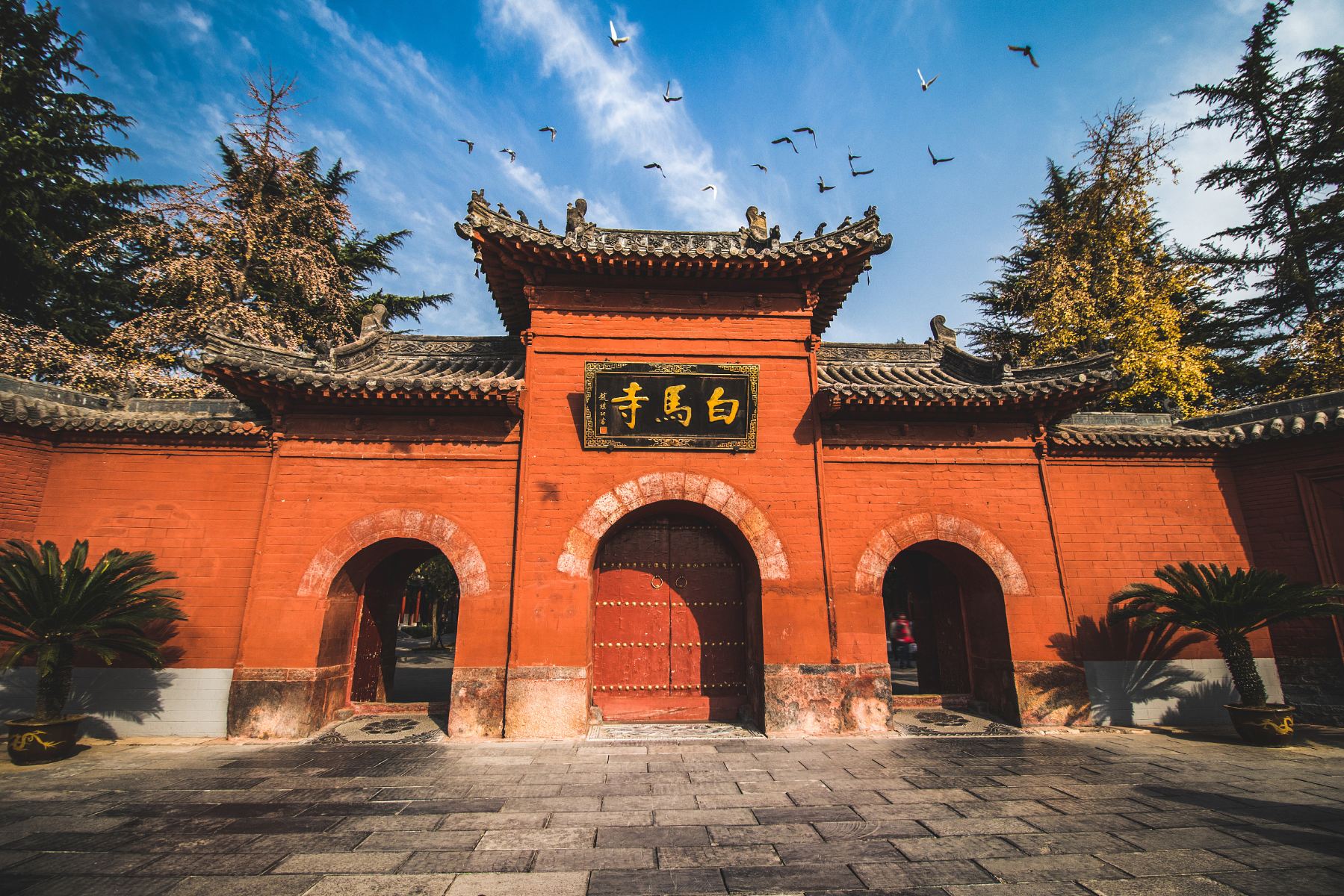
- Walking Sequence: Enter through the Main Gate (Mountain Gate), proceed to the Hall of Heavenly Kings, then the Hall of Great Buddha, followed by the Hall of Mahavira, the Hall of Preaching, and finally, the serene Qingliang Terrace. Conclude this segment with a visit to the Qiyun Pagoda, located slightly outside the main axis.
- Key Checkpoints:
- The iconic White Horse statues near the entrance, commemorating the horses that carried the first Buddhist scriptures to China.
- The four Heavenly Kings in their eponymous hall, guarding the temple.
- The impressive statues of Sakyamuni Buddha, Amitabha Buddha, and the Medicine Buddha in the Hall of Great Buddha.
- The ancient cypress trees and historical steles scattered throughout the courtyards.
- The Qiyun Pagoda, the oldest brick pagoda in China, offering a glimpse into early Buddhist architecture.
- Common Failure Reasons: Rushing through these foundational halls to reach the international sections, missing the profound historical and cultural context that underpins the entire site. Not taking time to read the explanatory plaques.
-
Step 2: The Indian-Style Temple
After immersing yourself in the Chinese traditions, transition to the first of the international **White Horse Temple halls**. This temple offers a stark architectural contrast and highlights the origins of Buddhism.
- Walking Sequence: Exit the main Chinese complex towards the west or northwest, following signs for the Indian Temple. It’s typically the first international hall encountered.
- Key Checkpoints:
- The distinct South Asian architectural style, including domes, intricate carvings, and specific deity representations not commonly found in Chinese temples.
- Statues of prominent Indian deities and Buddhist figures, reflecting the diverse pantheon from Buddhism’s birthplace.
- The serene atmosphere, often less crowded than the main Chinese halls.
- Common Failure Reasons: Viewing it merely as another building without appreciating the architectural and religious differences from the Chinese style. Not allowing time to observe the unique design elements.
-
Step 3: The Thai-Style Temple
Continue your global pilgrimage by moving from India to Thailand, experiencing another vibrant expression of Buddhist faith.
- Walking Sequence: From the Indian Temple, follow the signs leading to the Thai Temple, which is usually located adjacent or nearby within the international complex.
- Key Checkpoints:
- The iconic golden spire and multi-tiered roofs characteristic of traditional Thai temple architecture.
- The large, often gilded, Buddha statue within, reflecting Thai artistic traditions.
- Intricate wall murals and decorative elements unique to Thai craftsmanship.
- Common Failure Reasons: Skipping details due to perceived similarities with other Buddhist temples, or not recognizing the specific iconography and artistic techniques that define Thai Buddhist art.
-
Step 4: The Myanmar-Style Temple
Conclude your international tour with the Myanmar Temple, which offers yet another distinct architectural and spiritual experience within **Luoyang White Horse Temple**.
- Walking Sequence: Proceed from the Thai Temple to the Myanmar Temple, often the last of the international halls in a typical circuit.
- Key Checkpoints:
- The impressive golden stupa (pagoda) structure, a hallmark of Burmese temple design.
- The large jade Buddha statue, a common and revered element in Myanmar Buddhist worship.
- The unique carvings and details that differentiate Burmese artistry from Indian or Thai styles.
- Common Failure Reasons: Underestimating the time needed to fully absorb the details of each international hall, leading to a superficial understanding of their individual significance and contributions to the temple’s global identity.
Maximizing Your Experience: What to See and How Long It Takes
To make the most of your visit to **Luoyang White Horse Temple**, understanding the key highlights and allocating sufficient time is crucial. Many visitors wonder what to see at White Horse Temple and how long does White Horse Temple take. A thoughtful approach ensures you don’t miss out on its most significant features.
White Horse Temple Visitor Checklist: Essential Highlights
Ensure these elements are on your itinerary for a comprehensive experience:
- The Qiyun Pagoda: Stand before China’s oldest brick pagoda, a testament to early Buddhist influence. Its simple, elegant form dates back to the Tang Dynasty.
- The Bell Tower and Drum Tower: Located opposite each other, these structures traditionally mark the beginning and end of the monastic day. Their historical significance and architectural symmetry are noteworthy.
- The Sutra Depository: Housing ancient Buddhist scriptures and relics, this area offers a quiet space for contemplation and a glimpse into scholarly Buddhist traditions.
- Each of the Four Distinct White Horse Temple Halls: Dedicate time to truly experience the Chinese, Indian, Thai, and Myanmar temples, noting their unique architectural features, religious iconography, and cultural nuances.
- The Historical Steles and Inscriptions: Many courtyards feature ancient stone tablets with inscriptions detailing the temple’s history, imperial decrees, and significant events. These offer invaluable historical insights.
- Gardens and Courtyards: The tranquil gardens and well-maintained courtyards provide peaceful retreats and photo opportunities. Observe the traditional landscaping and flora.
Time Allocation Guide: How Long Does White Horse Temple Take?
The duration of your visit depends on your level of interest and desired pace:
- Minimum (Rushed): 2-3 hours. This allows for a quick walk through the main Chinese halls and a brief look at the exteriors of the international temples. You will cover the main path but likely miss many details.
- Recommended (Thorough): 4-5 hours. This duration permits a comfortable exploration of all major halls, including the interiors of the international temples, time for appreciating the **White Horse Temple architecture**, and reading some historical plaques. This is ideal for most visitors seeking a balanced experience.
- Leisurely (With Contemplation): Full day (6+ hours). For those deeply interested in Buddhist history, architecture, or photography, a full day allows for unhurried exploration, meditation, extended study of specific features, and enjoying the peaceful atmosphere.
Practical Tips: Visit during the early morning to avoid crowds, especially on weekends. Wear comfortable shoes as there is a significant amount of walking. Be mindful of photography rules, particularly inside active worship halls.
Beyond the Main Route: Deeper Insights into Baimasi Temple Architecture and Significance
The architectural diversity of **Luoyang White Horse Temple** is not merely a collection of buildings; it is a living testament to the global spread and adaptation of Buddhism. The **Baimasi Temple route** described earlier allows you to physically traverse this narrative, moving from the cradle of Chinese Buddhism to its international expressions.
The blend of styles within the temple grounds—from the stately, symmetrical grandeur of traditional Chinese temple design to the ornate domes of India, the golden spires of Thailand, and the multi-tiered stupas of Myanmar—represents a unique cultural dialogue. Each international hall, while distinct, harmoniously coexists, symbolizing the shared spiritual roots and the enduring power of cultural exchange that has shaped **Luoyang Buddhist sites** for centuries. The original Chinese architecture, with its reliance on wood, intricate carvings, and vibrant colors, contrasts sharply with the stone and stucco traditions seen in the Indian hall, or the gilded wooden elements of the Thai temple. This juxtaposition offers a rich educational experience, showcasing how a single faith can inspire such varied artistic interpretation across different civilizations.
For those interested in the broader context of **Luoyang Buddhist sites**, the White Horse Temple serves as the historical anchor. Its establishment paved the way for countless other temples and monasteries throughout China. Understanding its foundational role enriches the appreciation of other Buddhist landmarks you might encounter in the region. The careful preservation and expansion of the **White Horse Temple architecture** over time also provide valuable insights into historical construction techniques and artistic evolution in religious structures. The international halls, in particular, demonstrate contemporary efforts to foster interfaith understanding and celebrate the global heritage of Buddhism.
For comprehensive insights into optimizing your travel plans or understanding cultural sites, consider consulting specialized resources.
About LyWOW Tours
LyWOW is a locally based travel agency in Luoyang, specializing in private tours for international travelers across Luoyang, Shaolin, Xi’an and Central China. English-speaking guides, flexible itineraries and door-to-door service.
Learn more about us or browse all our tours.
