
Blog
Plan Your White Horse Temple Route by Architectural Style

Navigating the Architectural Styles of White Horse Temple in Luoyang
For first-time visitors to Luoyang, the prospect of exploring the historic White Horse Temple (Baimasi) can be both exciting and slightly overwhelming. As China’s very first Buddhist temple, its sprawling grounds are home not only to ancient Chinese structures but also to fascinating international halls reflecting Indian, Myanmar, and Thai Buddhist architectural traditions. Understanding how to approach this rich tapestry of styles is key to a meaningful visit. This guide provides an actionable route, ensuring you appreciate the unique architectural significance of each section, making your exploration of this pivotal Luoyang Buddhist site both efficient and enriching.
Understanding the Historical Layers of White Horse Temple Architecture
The White Horse Temple, often considered the “Cradle of Buddhism in China,” holds immense historical and cultural weight. Established in 68 AD during the Eastern Han Dynasty, its original structures have undergone numerous renovations and expansions over nearly two millennia. The temple’s architecture tells a story of Buddhism’s journey from India to China and its subsequent spread across Asia.
The core of the temple complex adheres to classical Chinese Han Dynasty architectural principles, characterized by symmetrical layouts, grand halls, intricate roof decorations, and serene courtyards. However, in recent decades, the temple has expanded to include international halls, each gifted by their respective nations, showcasing their unique interpretations of Buddhist temple design. These additions transform the White Horse Temple into a microcosm of global Buddhist art and architecture, offering a unparalleled opportunity to compare distinct styles side-by-side.
When planning your Baimasi Temple route, recognize that the overall experience is not just about appreciating individual buildings, but understanding the dialogue between these diverse architectural forms. Each hall, whether Chinese, Indian, Myanmar, or Thai, represents a chapter in Buddhism’s global narrative.
An Action-Based Walking Sequence for White Horse Temple Attractions
To truly appreciate the diverse architectural heritage of the White Horse Temple, a structured walking sequence is invaluable. This approach groups the various temple complexes by their distinct architectural styles and guides you through their unique visit flows, highlighting what to see at White Horse Temple beyond a superficial glance.
Here is a recommended action-based route for exploring the main White Horse Temple attractions:
| Phase & Architectural Style | Key Architectural Elements & Focus | Recommended Visit Flow & Actions | Checkpoints & What to Observe | Common Pitfalls & How to Avoid Them |
|---|---|---|---|---|
| Phase 1: Chinese Buddhist Temple Complex | Traditional Han Dynasty and Ming/Qing Dynasty styles. Symmetrical layout, grand halls (Heavenly Kings, Great Buddha), bell and drum towers, Qingliang Terrace, Qiyun Pagoda. | Begin at the main entrance. Proceed through the Heavenly Kings Hall, Great Buddha Hall, Mahavira Hall, and the Hall of Preaching. Explore the Qingliang Terrace and walk towards Qiyun Pagoda. | Note the intricate dougong (bracket sets), glazed tile roofs with mythical beasts (chishou, suanni), detailed statues of Buddhas and bodhisattvas, and historical steles. Observe the distinct arrangement of altars. | Rushing through the main halls without understanding their function. Missing the historical significance of the Qingliang Terrace (where the first two Indian monks resided). Not appreciating the age of Qiyun Pagoda (from the Jin Dynasty). |
| Phase 2: Indian Style Temple Complex | Modeled after the Great Sanchi Stupa. Large hemispherical dome, four ornate gateways (toranas) depicting Jataka tales, circumambulatory path (pradakshina-patha). | After the Chinese complex, move to the Indian-style temple. Approach the stupa, then walk clockwise around its base. Examine the intricate carvings on each of the four toranas. | Identify the narrative scenes on the gateways (stories of Buddha’s previous lives), the specific iconography of various deities, and the structural details of the stupa itself. Look for the distinct lack of interior space for worship. | Treating it as just a “dome” without understanding the symbolic significance of the stupa (representing the Buddha’s mind) and the narrative power of the torana carvings. Not taking time to decode the stories. |
| Phase 3: Myanmar Style Temple Complex | Characterized by a golden central stupa, often with multiple tiers and umbrella-like finials (hti). Ornate exterior decoration, often with embedded jewels or glass mosaics. Interior may house specific Buddha images. | Proceed to the Myanmar temple. Observe the gleaming golden exterior of the main stupa. Enter the hall if accessible, noting specific statuary and decorative patterns. | Focus on the intricate gold leaf work, the specific tiered structure of the stupa (often different from Thai styles), and the distinct facial features of the Buddha statues (often serene and rounded). Look for embedded stones or glass. | Confusing it with the Thai temple due to superficial similarities in golden decoration. Not observing the unique hti (umbrella) finial atop the stupa, which is characteristic of Myanmar design. |
| Phase 4: Thai Style Temple Complex | Features multi-tiered, steeply-sloped roofs (chofah) with distinctive finials, often gilded. Brightly colored murals and intricate wood carvings. Main hall typically houses a large, seated Buddha statue. | Visit the Thai temple. Take note of the roof structure and its specific finials. Enter the main hall to admire the central Buddha and any surrounding murals or decorative elements. | Identify the unique chofah (ornate finials resembling Garuda) on the roof gables. Observe the specific hand gestures (mudras) of the Buddha statue, the vibrant color palette, and the elaborate interior decoration. Look for Naga motifs. | Missing the subtle but significant differences in roof design and ornamentation that distinguish it from the Myanmar style. Overlooking the narrative beauty of any interior murals. |
This structured approach not only helps manage your time but also deepens your understanding of the distinct cultural and architectural expressions of Buddhism across Asia, making your visit to the White Horse Temple truly memorable.
Practical Planning for Your Luoyang Buddhist Sites Visit
Visiting a site as historically rich and architecturally diverse as the White Horse Temple requires some practical planning to maximize your experience. From transportation to timing, a few considerations can significantly enhance your exploration of these significant Luoyang Buddhist sites.
Buyer’s Decision Checklist for a Seamless White Horse Temple Visit:
- Optimal Timing: When to visit White Horse Temple in Luoyang? Aim for weekday mornings to avoid crowds, especially during peak tourist seasons (spring and autumn). The temple opens early, and arriving soon after opening allows for a more contemplative experience.
- Transportation: How to visit White Horse Temple in Luoyang? From Luoyang city center, public buses (e.g., Bus No. 56 or 58) offer an economical and direct route. Taxis or ride-sharing services provide more convenience for a slightly higher cost. Confirm the exact bus stop near the temple.
- Footwear: Wear comfortable walking shoes. The complex is extensive, requiring significant walking between halls and across courtyards.
- Hydration & Snacks: Carry water, especially on warm days. While there are vendors, having your own ensures you stay hydrated without interruptions. Modest snacks are acceptable, but avoid eating inside prayer halls.
- Photography Etiquette: Respect signs indicating “no photography” inside certain halls, particularly where ancient artifacts or active worship are present. Be mindful of worshippers.
- Guided Tours vs. Self-Exploration: Consider if a local guide would enhance your understanding of the history and intricate details of the White Horse Temple architecture. For self-exploration, consider downloading an audio guide or using a good guidebook.
- Time Allocation: Budget at least 3-4 hours to thoroughly explore all the major White Horse Temple attractions, including the international halls. Rushing through will diminish the experience.
Common Mistakes When Visiting Baimasi Temple:
- Underestimating the Scale: Many visitors assume it’s a small, single temple. The White Horse Temple is a large complex with multiple courtyards, halls, and international additions. Prepare for a substantial amount of walking.
- Ignoring the Historical Context: Without understanding its role as the birthplace of Buddhism in China, the profound significance of the site can be missed. Briefly research its history before your visit.
- Focusing Only on the Chinese Halls: While the traditional Chinese architecture is stunning, neglecting the Indian, Myanmar, and Thai temples means missing a unique comparative architectural experience that few other sites offer.
- Visiting During Peak Holidays: Chinese public holidays see massive crowds, making quiet contemplation or detailed examination of the architecture challenging. Check the national holiday calendar.
- Not Staying Hydrated: Especially in summer, the open courtyards can be hot. Dehydration is a common issue for visitors who don’t carry water.
By considering these practical aspects, you can ensure your visit to the White Horse Temple is not only culturally enriching but also comfortable and well-organized. The unique blend of architectural styles makes it one of the most compelling Luoyang Buddhist sites.
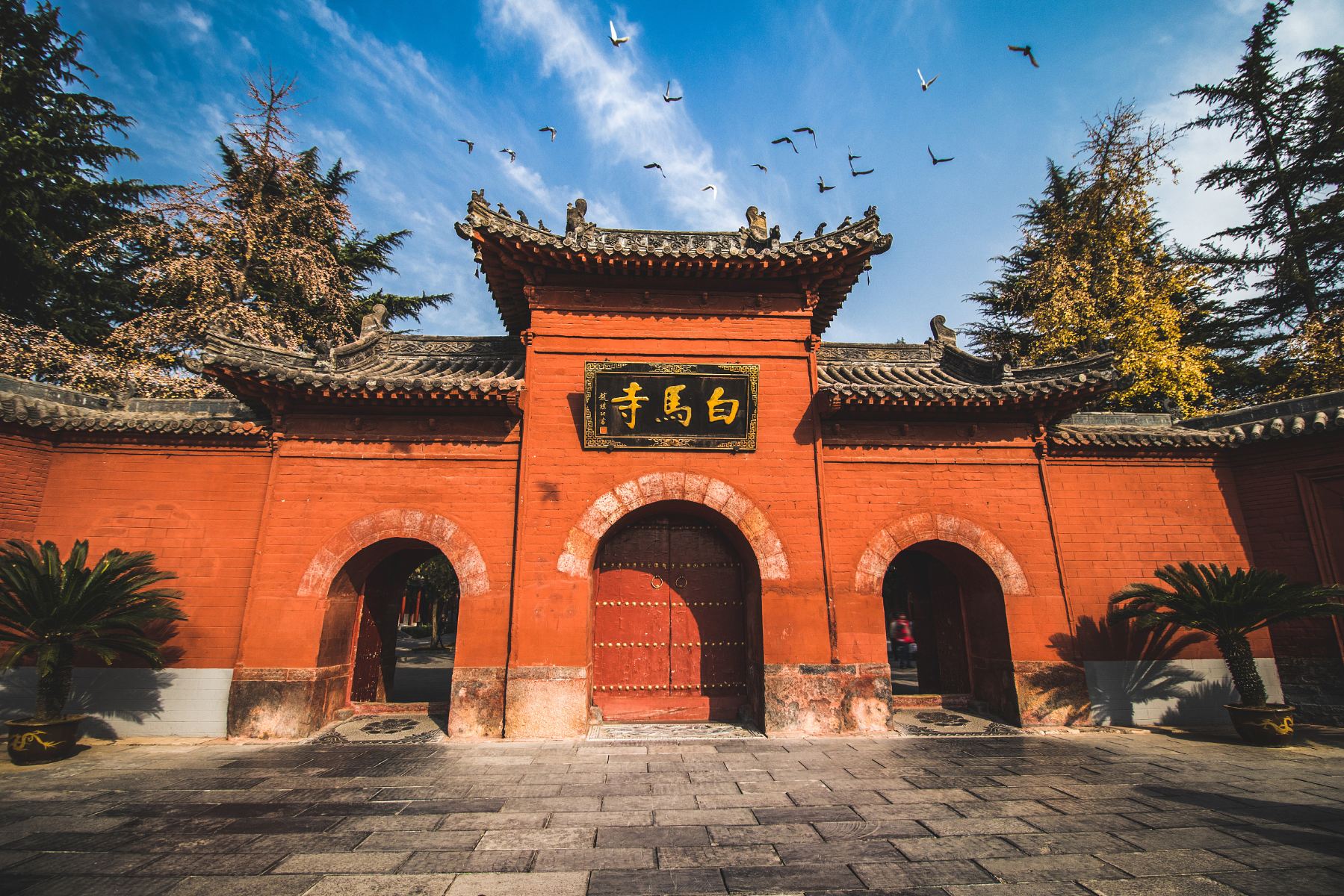
Which International Temple Halls Are at Baimasi?
The presence of international temple halls is a distinctive feature of the White Horse Temple, offering a global perspective on Buddhist art and devotion. These halls are not merely replicas but genuine expressions of faith and architectural tradition, gifted by their respective nations. Understanding which international temple halls are at Baimasi can help you appreciate this unique aspect.
* The Indian Buddhist Temple: This striking complex is a gift from the Indian government, designed to evoke the grandeur of India’s ancient Sanchi Stupa. It beautifully encapsulates classic Indian Buddhist architectural principles, particularly its focus on narrative reliefs and the symbolic form of the stupa itself, rather than an enclosed hall for congregational worship. It serves as a powerful reminder of Buddhism’s origins.
* The Myanmar Buddhist Temple: Donated by Myanmar, this temple complex features the distinctive golden stupas and ornate multi-tiered roofs characteristic of Burmese religious architecture. The use of gold leaf, intricate carvings, and specific Buddha iconography found here provides a clear contrast to both the Chinese and other international styles, highlighting the regional variations in Buddhist art.
* The Thai Buddhist Temple: Thailand’s contribution to the White Horse Temple complex showcases the elegant and vibrant aesthetics of Thai temple design. Visitors will notice the elaborate “chofah” roof finials, the golden and colorful decorative elements, and often a large, serene Buddha statue within the main prayer hall. It’s a vivid example of how Buddhist architecture evolved with local artistic traditions in Southeast Asia.
These international additions transform the White Horse Temple from a purely historical Chinese site into a living museum of pan-Asian Buddhist culture. They are a testament to the enduring connections and shared spiritual heritage among Buddhist nations. Exploring these sections allows for a direct comparison of diverse White Horse Temple architecture, offering insights into cultural exchange and artistic adaptation.
For tailored insights into cultural site planning or specific architectural considerations for your projects, consult our technical team.
About LyWOW Tours
LyWOW is a locally based travel agency in Luoyang, specializing in private tours for international travelers across Luoyang, Shaolin, Xi’an and Central China. English-speaking guides, flexible itineraries and door-to-door service.
Learn more about us or browse all our tours.
