By
By Understanding Distinct Types of Longmen Grotto Carvings
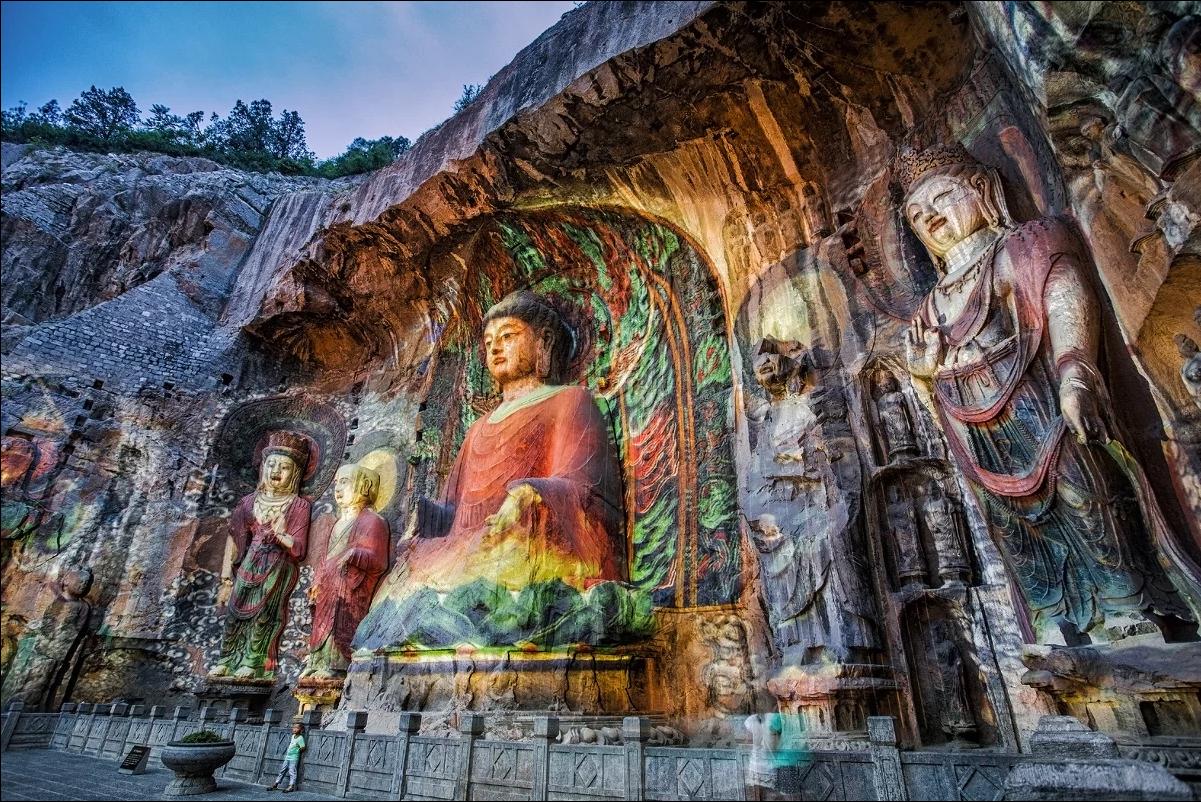
The Longmen Grottoes, a UNESCO World Heritage site near Luoyang, China, represent one of the finest examples of Chinese Buddhist art. Often viewed as a singular grand monument, the site in fact comprises tens of thousands of individual carvings and more than 2,300 caves and niches carved into the limestone cliffs. These varied creations are not monolithic; they distinctly differ in scale, patronage, and artistic intent. Discerning these distinctions is crucial for anyone seeking a deeper understanding of the Longmen Grottoes’ historical, religious, and artistic significance.
Understanding the typology of these carvings helps to unpack the complex social and religious landscape of ancient China. From imperial commissions reflecting dynastic power to personal expressions of piety, each type of carving within the Longmen Grottoes tells a unique story. This guide will clarify the key differentiators among the major categories, providing a framework for appreciating the intricate layers of this profound cultural heritage found at the Longmen Grottoes.
Comparison of Imperial Temple Caves, Donor-Funded Niches, and Small Votive Carvings
The vast collection of Buddhist sculptures at the Longmen Grottoes can be broadly categorized into three primary types, each representing distinct motivations, resources, and artistic expressions. Misinterpreting these categories can lead to a fundamental misunderstanding of the social hierarchy, economic forces, and religious practices that shaped the site over centuries. Here, we break down these differences:
| Characteristic | Imperial Temple Caves | Donor-Funded Niches | Small Votive Carvings |
|---|---|---|---|
| Scale and Size | Monumental, Grand: Often encompassing entire cave temples or massive cliff-face sculptures. Examples like Fengxian Temple feature colossal Buddha figures (e.g., Vairocana Buddha at 17.14 meters high). These require immense resources and coordinated effort, reflecting imperial power. | Medium to Small: Ranging from a few meters to less than a meter in height. These are typically individual niches, often recessed into cave walls or along cliff paths, accommodating one to several figures. Their size often corresponds to the donor’s means. | Tiny, Miniature: Often only a few centimeters to a few decimeters. These are carved on less prominent surfaces, sometimes in clusters, and may lack intricate detailing due to their size and the limited resources of their patrons. |
| Patronage and Funding | Imperial Court: Commissioned and funded directly by emperors, empresses, or high-ranking members of the imperial family. These projects served to legitimize dynastic rule, express imperial piety, and project national power. They are direct evidence of state-sponsored Buddhism. | Officials, Monastics, Wealthy Individuals: Funded by a broader range of patrons including civil and military officials, Buddhist monks and nuns, and prosperous commoners. These often reflect personal devotion, merit-making for family, or aspirations for rebirth, showing widespread religious engagement. | Common People, Travelers: Often anonymous or sponsored by ordinary individuals with limited resources. These were simple acts of devotion, seeking blessings, protection, or merit for personal well-being or deceased relatives, demonstrating popular piety. |
| Iconography and Style | Formal, Unified, Grand Narrative: Typically depict a central Buddha (often Vairocana or Amitabha) flanked by Bodhisattvas, disciples, and guardians, forming a complete Buddhist pantheon. Styles often reflect official court aesthetics of the time (e.g., Northern Wei slender grace, Tang dynasty robust realism). | Varied, Personalized, Specific Sutras: Iconography can be diverse, sometimes reflecting specific Buddhist sutras or personal devotional preferences. While often featuring Buddhas and Bodhisattvas, the arrangement and accompanying figures can vary widely based on the patron’s intent. | Simple, Repetitive, Essential Figures: Predominantly feature single Buddhas or Bodhisattvas, sometimes repetitive rows. The emphasis is on the sacred image itself rather than complex narrative or elaborate composition, reflecting direct, simple devotion. |
| Practical Implications of Misinterpretation | Misattributing an imperial cave to a private donor obscures the political motivations behind its creation and the immense state resources mobilized. It understates the power projection and legitimization functions of such grand projects within the Longmen Grottoes. | Confusing a donor-funded niche with an imperial commission overstates the private individual’s influence and wealth, or conversely, understates the widespread adoption of Buddhism across social strata. It misses the nuances of individual religious practice at the Longmen Grottoes. | Mistaking a small votive carving for a larger, planned project can lead to an incorrect assessment of the Longmen Grottoes’ overall artistic quality or historical significance. It obscures the pervasive popular piety that contributed to the grottoes’ growth beyond official patronage. |
Dynastic Shifts and Stylistic Evolution in Longmen Grotto Art
The artistic styles within the Longmen Grottoes are not static; they underwent significant transformations reflecting the dominant dynasties and their cultural preferences. The primary periods of carving span the Northern Wei dynasty (386–534 AD) and the Tang dynasty (618–907 AD), each leaving a distinct artistic signature. Recognizing these stylistic shifts is essential for accurately dating and interpreting the numerous sculptures at the Longmen Grottoes.
During the **Northern Wei dynasty**, the art at Longmen, particularly evident in caves like Guyang Cave and Binyang Middle Cave, is characterized by a distinctive style reflecting foreign influences adapted to Chinese aesthetics. Figures are often slender, elongated, with a sense of ethereal grace. Drapery is typically rendered in sharp, angular folds, creating a “waterfall” effect. Faces are often characterized by a gentle, enigmatic smile, and the overall impression is one of spiritual transcendence rather than worldly power, defining an early Longmen grotto aesthetic.
The **Tang dynasty** ushered in a period of unprecedented prosperity and cultural exchange, which is vividly reflected in the Longmen Grottoes. Tang sculptures, exemplified by the monumental figures of Fengxian Temple, are known for their robust, naturalistic, and often sensuous forms. Figures are typically fuller-bodied, with rounded contours and a strong sense of three-dimensionality. Drapery falls in soft, flowing lines, emphasizing the body underneath. Faces are more expressive, often conveying a sense of majesty and inner calm. This shift reflects a more confident, worldly empire that embraced diverse influences and emphasized humanistic ideals in a Longmen grotto.
Common Mistakes in Dating Longmen Grotto Sculptures:
- Focusing solely on size: Not all large carvings are Tang, and not all small ones are Wei. Scale often relates to patronage rather than strictly chronology for a Longmen grotto.
- Ignoring drapery style: The way robes fall is a key indicator. Angular, “wet drapery” often points to Northern Wei; soft, voluminous folds typically suggest Tang.
- Overlooking facial features: The elongated, almost aristocratic Northern Wei faces differ significantly from the fuller, more naturalistic Tang countenances found in a Longmen grotto.
- Assuming uniform style within a single cave: Many caves were carved over extended periods, sometimes spanning dynastic changes, leading to a mix of styles within the same grotto.
- Disregarding accompanying inscriptions: Inscriptions often provide precise dates and patronage details, which can override purely stylistic assumptions for a specific Longmen grotto carving.
Understanding these stylistic nuances allows for a more precise appreciation of the artistic evolution and the changing cultural values that shaped the Longmen Grottoes over roughly four centuries of active carving.
Inscriptions: Unlocking the Stories of the Longmen Grottoes
Beyond their visual grandeur, the Longmen Grottoes are invaluable for their thousands of inscriptions. These carved texts, often found accompanying sculptures or within niches, serve as primary historical documents. They provide critical insights into dating, patronage, religious beliefs, and even the daily lives of people during the Northern Wei and Tang dynasties. Without these inscriptions, much of the socio-cultural context of the Longmen Grottoes would remain speculative.
What Inscriptions Reveal:
- Dating: Many inscriptions include specific dates, often using traditional Chinese reign eras, allowing scholars to precisely date the creation of a particular sculpture or niche within a Longmen grotto. This is indispensable for charting artistic and religious trends.
- Patronage: They frequently name the donor(s), their official titles, family relations, and sometimes even their place of origin. This information illuminates the social strata involved in commissioning Buddhist art, from emperors to commoners.
- Votive Wishes: The purpose of the carving is often explicitly stated – for the merit of deceased relatives, for the health of parents, for the prosperity of the emperor, or for universal salvation. These wishes offer direct insight into personal and collective religious aspirations.
- Buddhist Doctrines: Some inscriptions quote sutras or refer to specific Buddhist teachings, indicating which doctrines were popular or emphasized at the time.
- Historical Events: Occasionally, inscriptions allude to contemporary events or social conditions, providing valuable primary source material for historians studying the Longmen Grottoes.
For visitors and researchers, approaching the inscriptions with a structured methodology can significantly enhance understanding. It is not merely about reading the text, but about contextualizing it within the broader historical and artistic framework of the Longmen Grottoes. The integration of epigraphic evidence with art historical analysis offers the most comprehensive interpretation for any Longmen grotto.
Strategic Considerations for Cultural Heritage Preservation at Longmen
The distinctions among imperial caves, donor niches, and votive carvings are not merely academic; they hold significant implications for the preservation and management of the Longmen Grottoes as a cultural heritage site. Understanding the scale of original patronage and the intent behind various carvings informs conservation strategies, visitor management, and ongoing research for each Longmen grotto.
For instance, the monumental imperial caves, due to their scale and imperial backing, often involved sophisticated engineering and artistic techniques. Their preservation requires large-scale structural analysis, environmental control, and specialized restoration efforts. Damage to such a site reflects not just artistic loss but also the erosion of a direct link to imperial power and state-sponsored religion.
Conversely, the vast number of smaller donor-funded niches and votive carvings presents a different set of challenges. While individually smaller, their sheer quantity makes comprehensive documentation and monitoring a Herculean task. These smaller works are often more susceptible to weathering, vandalism, and the impacts of mass tourism. Their value lies in their collective testimony to widespread popular piety and the democratization of Buddhist art, rather than singular grandeur. Preservation efforts here might focus on digital archiving, micro-environmental controls for specific vulnerable areas, and public education to prevent human interaction damage. Cultural heritage management requires tailoring strategies to the specific characteristics and significance of each category of carving within the Longmen Grottoes.
Decision Checklist for Interpreting Grotto Carvings:
- Assess Overall Scale: Is it a colossal, multi-figure complex, a recessed niche, or a tiny individual carving? (Indicates potential patronage and resources).
- Examine Figural Style: Are figures slender and ethereal (Northern Wei) or robust and naturalistic (Tang)? (Helps with dating and dynastic context).
- Look for Inscriptions: Are there any carved texts nearby? If so, prioritize their transcription and translation. (Provides direct evidence of date, patron, and intent).
- Identify Key Iconography: Which Buddha or Bodhisattva is central? Are there specific narrative scenes? (Points to specific Buddhist doctrines or devotional practices).
- Consider Location: Is the carving in a prominent, easily accessible area, or a more secluded spot? (Can indicate patron status or public versus private devotional space).
- Note Materials and Carving Quality: Is the limestone finely worked or more roughly hewn? (Suggests available skill and resources, though weathering can obscure this).
By systematically applying these criteria, researchers and enthusiasts can move beyond a superficial appreciation of the Longmen Grottoes to a deep understanding of their multifaceted history and enduring cultural value.
Understanding the varied expressions within the Longmen Grottoes enriches our appreciation of this extraordinary site. Each carving, whether imperial or personal, contributes to the grand narrative of Buddhist art in China, making the Longmen Grottoes a truly unique cultural treasure.
For deeper insights into historical site analysis and cultural preservation strategies, contact our technical team.