
Blog
Understanding the Real Hangu Pass Location Across Dynasties

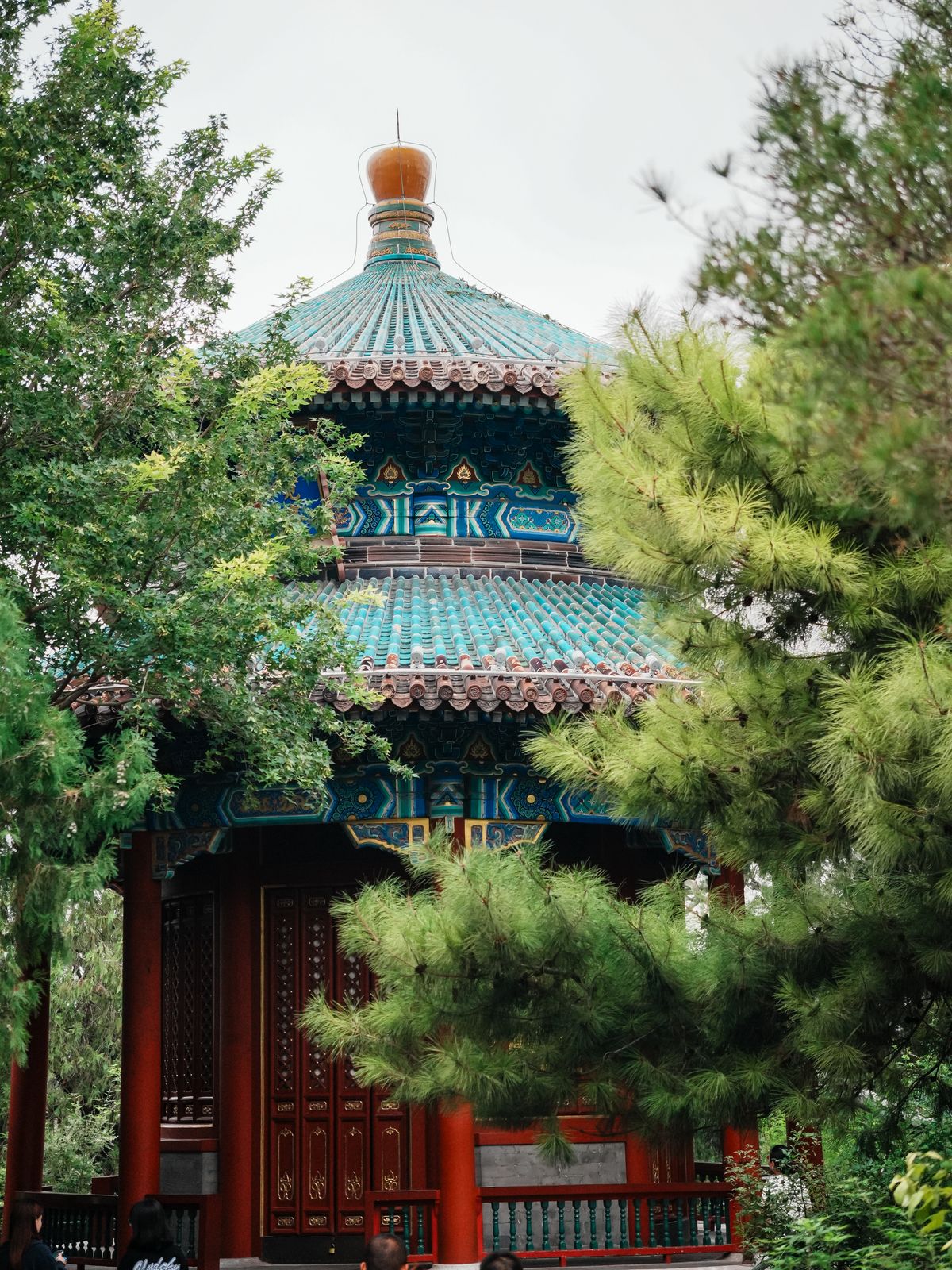
How to Correctly Identify the Hangu Pass Across Different Historical Sites
One of the most common points of confusion in ancient Chinese history is the precise location of the Hangu Pass. Historical texts, maps, and even modern media often refer to it as a single entity, yet depict it in different locations. This discrepancy arises because there wasn’t just one Hangu Pass; there were several strategic fortifications built under this name, most notably during the Qin and Han dynasties. Understanding which pass is relevant to a specific event is critical for accurate historical analysis, logistical planning, and cultural resource projects.
The name “Hangu” (函谷) itself means “Pass in a Box,” a vivid description of a chokepoint nestled within a deep, box-like valley. Its strategic value was immense. For centuries, it served as the primary eastern gateway to the Guanzhong Plain—the heartland of the powerful Qin state and later the Western Han dynasty. Differentiating between the key historical sites is not just an academic exercise; it’s essential for anyone whose work requires a precise understanding of ancient geography and military strategy. This guide provides a clear framework for distinguishing these critical locations.
Distinguishing the Three Major Hangu Passes: Qin, Wei, and Han
The primary source of confusion stems from the existence of at least two, and arguably three, major fortified passes that bore the name Hangu. The original was built by the state of Qin during the Warring States period. Later, after the capital shifted eastward, the Han Dynasty built a new pass, also named Hangu, in a different location better suited to the new geopolitical landscape. A fortification also existed nearby under the state of Wei, which adds another layer. Clarifying these is the first step toward accurate analysis.
Each pass served a distinct purpose dictated by the political and military needs of its time. The following table breaks down the key identifiers for each major iteration.
| Attribute | Qin Hangu Pass (The Original) | Wei-era Fortifications | Han Hangu Pass (The New Pass) |
|---|---|---|---|
| Dynasty / Period | Warring States Period (State of Qin), Qin Dynasty | Warring States Period (State of Wei) | Han Dynasty |
| General Location | Lingbao, Henan Province (in a narrow, defensible valley) | Near the confluence of the Wei and Yellow Rivers, often associated with Tongguan Pass area. | Xin’an, Luoyang, Henan Province (on a relatively flat plain) |
| Primary Function | To defend the Qin heartland (Guanzhong Plain) from eastern invaders. A military chokepoint. | To control river access and defend Wei territory from the advancing Qin. | To guard the new capital, Luoyang, and serve as a customs and administrative checkpoint for the Silk Road. |
| Historical Significance | Famous for holding off the combined armies of six states. Key to Qin’s unification of China. Mentioned in the proverb “One man at the pass can hold off ten thousand.” | Part of the complex border defenses between rival states; eventually fell to Qin’s expansion. Its history is often absorbed into the larger Qin-Wei conflicts. | Became the eastern terminus for many Silk Road caravans. It represents the shift from a purely military focus to an administrative and economic one under the unified Han empire. |

A Step-by-Step Method for Verifying Historical Pass Locations
When analyzing a historical event, text, or map referencing the Hangu Pass, a systematic approach is necessary to avoid misinterpretation. Following a clear verification process ensures you are associating the event with the correct geographical and strategic context.
- Start with the Dynasty and Date: This is the most crucial first step. If the event occurred during the Warring States Period or the Qin Dynasty (before 206 BCE), the reference is almost certainly to the original Qin Hangu Pass near Lingbao. If the event is from the Eastern Han Dynasty (after 25 CE), it overwhelmingly points to the new Han Pass near Luoyang. The transitional period of the Western Han can be ambiguous, but the strategic focus was still largely on the original pass.
- Cross-Reference with Geographical Descriptions: Ancient texts often contain topographical clues. Is the pass described as being in a deep, narrow gorge where chariots could barely pass? That strongly suggests the old Qin pass. Is it described as a major gate on a wide road near the capital of Luoyang? That is the Han pass. Understanding the distinct landscapes of these two sites is a powerful tool for differentiation. For more details on this, our guide to historical source analysis can provide further techniques.
- Analyze the Strategic Context: Ask what purpose the pass served in the narrative.
- Defensive Military Action: An account of an army from the eastern plains being stopped from entering the Guanzhong region points to the Qin pass.
- Administrative or Trade Control: A story about merchants, diplomats, or taxes related to the Silk Road is more likely associated with the Han pass.
- Imperial Processions: The Han emperors, based in Luoyang, would have used the new pass for travels, making it the relevant site for Eastern Han court events.
- Consult Modern Archeological and Scholarly Sources: While primary texts are vital, modern scholarship and archeological findings provide definitive locations. Research papers and university publications can confirm the excavated sites of both the Qin and Han passes, removing any doubt. This step helps ground historical narratives in physical evidence.
Common Mistakes in a Hangu Pass Site Analysis
Even with a clear method, several common pitfalls can lead to inaccurate conclusions. Being aware of these helps maintain precision in any analysis, from academic research to planning cultural tours or media productions.
- Mistake: Relying on a Single, Simplified Map. Many modern or general-purpose historical maps label only one “Hangu Pass” to avoid clutter. This simplification is a major source of error, as it often defaults to the more famous Qin location or arbitrarily places a single point between the two. Always seek out detailed, period-specific maps for serious projects.
- Mistake: Conflating Literary and Military Significance. The Qin pass, with its dramatic terrain and epic battles, captured the imagination of poets and strategists for centuries. Therefore, a later Han or Tang dynasty poem might romantically refer to the “impassable” Hangu Pass while referencing the original Qin site, even though the strategically important pass of their time was the newer Han gate. It is crucial to distinguish between a symbolic reference and a literal geographical one.
- Mistake: Ignoring the Shift of Capital Cities. The entire reason for the new Han pass was the relocation of the capital from Chang’an (near the old Qin heartland) to Luoyang. The defense and administrative priorities shifted eastward. Forgetting this political change makes the existence of the second pass seem illogical, leading researchers to force-fit all events to the original location. Accurate project research relies on understanding these political geography shifts.
- Mistake: Taking Popular Media as Fact. Films, television series, and video games often prioritize drama over historical accuracy. They may consolidate the passes into one location or use the more visually impressive Qin pass terrain for an event that actually occurred at the Han pass. For any professional application, these sources should be treated as inspiration, not as factual references.

The Strategic Impact of Each Pass on Chinese History
The evolution of the Hangu Pass mirrors the evolution of the Chinese empire itself. Each site played a pivotal role in the fortunes of the dynasties that built and controlled them, making them more than just gates—they were instruments of power.
The Qin Pass: The Crucible of an Empire
The original Hangu Pass was the ultimate defensive asset. Nestled in a valley, it formed a nearly impenetrable barrier that protected the fertile Guanzhong Plain. This security allowed the state of Qin to consolidate its power, develop its resources, and build a formidable army without fear of sudden invasion from the rival eastern states. When Qin was ready to expand, the pass became a chokepoint in reverse, allowing its armies to sally forth from a secure base. Its ability to hold off vastly superior allied forces is legendary and was a direct contributor to Qin Shi Huang’s eventual unification of China. This pass symbolizes the era of brutal, existential warfare between competing states.
The Han Pass: The Gate to a Globalized World
By the Eastern Han Dynasty, the empire’s challenges had changed. The primary threat was no longer a coalition of rival Chinese states to the east, but rather internal stability and managing the vast territory. The capital’s move to Luoyang required a new eastern gate. The Han Hangu Pass, built on a plain, was less of a military fortress and more of a grand imperial checkpoint. It controlled access to the political center and, most importantly, became a key junction on the nascent Silk Road. It taxed caravans, processed diplomats, and projected the administrative power of the Han empire. This pass represents the shift from unification by force to governance through administration and trade, highlighting the importance of understanding logistical chokepoints in history.
By carefully applying a systematic approach based on dynasty, geography, and strategic function, you can confidently distinguish between the different Hangu Pass locations. This clarity is essential for any project that depends on historical and geographical accuracy.
If your project requires precise historical and geographical analysis, contact our team for expert guidance.
About LyWOW Tours
LyWOW is a locally based travel agency in Luoyang, specializing in private tours for international travelers across Luoyang, Shaolin, Xi’an and Central China. English-speaking guides, flexible itineraries and door-to-door service.
Learn more about us or browse all our tours.
