 By
By What Makes Luoyang City China a Nine-Dynasty Capital?
Why do historians return to Luoyang city China when tracing the roots of Chinese civilization? The answer lies not in a single monument, but in a rare combination of geography, political continuity, and religious exchange. Luoyang served as a capital for multiple dynasties across more than a millennium. That longevity created a layered urban record that few other cities in the world can match.
This guide answers the early-stage questions travelers and researchers often ask. It separates documented history from common generalizations. You will find a clear explanation of which dynasties actually ruled from Luoyang, why the Luo River mattered, and how the Longmen Grottoes fit into the city’s identity.

Documented Dynastic Capitals: A Precise Count
Luoyang’s status as a “Nine-Dynasty Capital” is a historical shorthand, not a bureaucratic label. Different scholars count the dynasties differently. Some lists include short-lived regimes or overlapping periods. The most commonly cited nine dynasties that established their primary or secondary capital at Luoyang include the Eastern Zhou, Eastern Han, Cao Wei, Western Jin, Northern Wei, Sui, Tang (as an eastern capital), Later Liang, and Later Tang.
This list matters for a practical reason. When you read travel guides or academic papers, the phrase “nine dynasties” can obscure as much as it reveals. The Eastern Han and Northern Wei used Luoyang as their primary seat of power. The Tang dynasty, by contrast, treated Luoyang as a secondary eastern capital while Chang’an (modern Xi’an) remained the political center. Understanding this distinction prevents a common mistake: assuming every dynasty on the list gave Luoyang equal status.
For a visitor planning a historical itinerary, this nuance changes expectations. The Han-era remains are largely archaeological, visible in museum collections and excavated city-wall segments. The Northern Wei and Tang periods left more visible surface heritage, especially at Longmen. You cannot see a single “nine-dynasty palace.” You see fragments from different eras, each with its own architectural logic.
Why Luoyang, Not Somewhere Else?
Geography drove the choice. Luoyang sits in the western Henan basin, surrounded by mountains on three sides. The Luo River flows through the city before joining the Yellow River. This position offered natural defense, fertile agricultural land, and access to north-south and east-west transport routes. Ancient strategists described the region as “the center of the world under heaven.” That phrase was not poetic exaggeration. It reflected a practical assessment of logistics and defense.
The Yellow River system connected Luoyang to the North China Plain. The Luo River provided irrigation and a manageable waterway for smaller boats. These advantages made Luoyang a rational capital for dynasties that needed to control both the Central Plains and the routes to the northwest. When a dynasty’s power base shifted elsewhere, the capital often moved too. Luoyang’s repeated selection was not sentimentality. It was logistics.
Boundary-Focused FAQ: Separating Fact from Common Broad Claims
Many descriptions of Luoyang city China blur distinct historical facts. This section answers each question directly, including where the boundaries of the claim lie. It is designed for readers who need to know what Luoyang was, and what it was not.
| Question | Direct Answer | Boundary / Limitation |
|---|---|---|
| Was Luoyang the capital of all nine dynasties in the same sense? | No. The term “capital” covers different political roles. | Some dynasties used Luoyang as the sole primary capital (Eastern Han). Others used it as a secondary or seasonal capital (Tang). The “nine” count is a modern convention, not an ancient official list. |
| Does the Luo River define Luoyang’s identity today? | Yes, historically. The river gave the city its name and agricultural base. | The modern city has expanded far beyond the old river corridor. The Luo River is a scenic and historical feature, not the primary economic driver it once was. Do not expect a water-town atmosphere comparable to Suzhou or Venice. |
| Is Luoyang the “cradle of Chinese Buddhism”? | Partially. The White Horse Temple, founded in the Eastern Han, is traditionally recognized as the first Buddhist temple in China. | Buddhism did not “begin” in Luoyang. It arrived via the Silk Road. Luoyang was an early administrative and translation center, but later centers like Chang’an and the southern kingdoms also played major roles. The Longmen Grottoes are a high point of imperial patronage, not the origin of the religion. |
| Is Luoyang still a major political capital today? | No. Luoyang is a prefecture-level city in Henan Province. | Its modern identity is industrial and cultural, not political. It is a base for manufacturing and a destination for heritage tourism. It does not host national government functions. |
| Can you see all nine dynasties in one archaeological site? | No. The remains are scattered across a wide area. | The Han and Wei city sites are largely below ground or in museums. The Sui-Tang city layout is partially visible in street patterns and park areas. Longmen and the White Horse Temple represent specific periods. Plan for multiple sites, not one unified “old city.” |
What This FAQ Means for Your Research
If you are comparing Luoyang to other ancient capitals like Xi’an, Nanjing, or Beijing, the key distinction is the type of capital Luoyang was. Xi’an served as the primary capital for the unified Qin, Han, and Tang empires. Beijing has been the near-continuous primary capital since the Yuan dynasty. Luoyang’s role was more intermittent and often secondary. That does not diminish its importance. It clarifies it.
Luoyang is best understood as a recurring capital — a city that dynasties returned to when the political center of gravity shifted back to the Central Plains. This pattern gives Luoyang a unique historical texture: layers of construction, destruction, and reconstruction from different ruling houses.
Buddhist Heritage: The Longmen Grottoes in Context
The Longmen Grottoes are the most famous visual symbol of Luoyang’s Buddhist past. They contain thousands of Buddhist statues carved into limestone cliffs along the Yi River, a tributary of the Luo. The carvings began in the Northern Wei period and continued through the Tang. The scale and quality of the Tang-era carvings, especially the Vairocana Buddha, reflect imperial sponsorship at the highest level.
For a visitor, Longmen is not a single “temple.” It is a linear site stretching along the river. The western hill contains the most famous caves. The eastern hill has smaller, quieter caves and a temple complex. A common mistake is to allocate only an hour. A proper visit to both sides takes half a day. The site is also weather-dependent. In heavy rain, some paths become slippery and the river views lose clarity.
Longmen’s significance for Luoyang’s identity is specific. It shows that Luoyang was not only a political capital but also a center of imperial religious patronage. The grottoes are not a folk-art site. They are a top-down project, funded by emperors and empresses. This distinguishes Luoyang from other Buddhist cave sites in China, such as Dunhuang, which relied more on merchant and local patronage.
A Practical Comparison: Luoyang vs. Other Ancient Capitals
When planning a trip or a study project, a direct comparison helps. The table below summarizes the practical differences a visitor or researcher should expect.
| Feature | Luoyang | Xi’an | Nanjing |
|---|---|---|---|
| Primary role | Recurring capital, often secondary | Primary capital for major unified dynasties | Capital for southern dynasties and early Ming |
| Most visible heritage | Longmen Grottoes, White Horse Temple, museum collections | City wall, Terracotta Army, Tang palace sites | Ming city wall, Sun Yat-sen Mausoleum, Confucian temple |
| Urban layout | Scattered sites across a large basin | Compact walled core with clear grid | Linear along the Yangtze and hills |
| Time needed for a first visit | 2–3 days minimum | 3–4 days | 2–3 days |
| Best for | Buddhist art, early Chinese history, quieter sites | Imperial grandeur, archaeological spectacle | Late imperial and republican history |
This comparison is not about ranking. It is about matching expectations. If your interest is Buddhist cave art with imperial patronage, Luoyang is the strongest choice among these three. If your interest is the unified empire’s administrative core, Xi’an is clearer. If you want a mix of late imperial and modern political history, Nanjing fits better.

Common Mistakes When Researching Luoyang
Early-stage research on Luoyang city China often runs into the same problems. Avoiding these will save you time and prevent a distorted picture.
- Mistake 1: Treating “nine dynasties” as a single continuous era. The nine dynasties span over 1,000 years with long gaps. Luoyang was not continuously a capital. It was destroyed and rebuilt multiple times.
- Mistake 2: Assuming all ancient capital cities look alike. Luoyang does not have a massive intact city wall like Xi’an or Nanjing. Its ancient remains are more fragmented. Expect museums and archaeological parks, not a walled old town.
- Mistake 3: Overlooking the modern city. Luoyang is a large industrial city with a population in the millions. It is not a small museum town. The historical sites sit within or on the edges of a working city.
- Mistake 4: Confusing the Luo River with the Yellow River. The Luo is a tributary. The Yellow River is north of the city. Ancient texts sometimes refer to “the river” without specifying, which causes confusion.
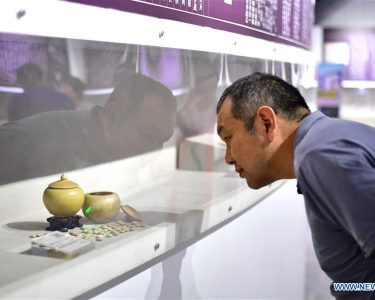
- Mistake 5: Skipping the Luoyang Museum. Many of the most important Han and Wei artifacts are indoors. The museum provides the chronological framework that the scattered outdoor sites cannot give on their own.
A Step-by-Step Approach for First-Time Research
If you are starting from zero, follow this sequence. It builds a factual base before you dive into individual landmarks.
- Clarify the time period. Which dynasty interests you? Eastern Han, Northern Wei, and Tang all left different traces. Choose one as your anchor.
- Map the geography. Locate the Luo River, the Yi River, and the surrounding mountains. Understand that the ancient capital area is not identical to the modern city center.
- Review the dynastic list. Write down the nine dynasties and note which ones used Luoyang as primary vs. secondary capital. This single step prevents most misunderstandings.
- Identify the key sites. Longmen Grottoes, White Horse Temple, Luoyang Museum, and the Han-Wei city site are the core. Add the Sui-Tang city site if your time allows.
- Check seasonal access. Luoyang is famous for peonies in April. That is also the busiest period. If you prefer quieter visits to the grottoes, choose autumn or early spring.
Why the “Center” Concept Still Matters
The ancient claim that Luoyang was the geographic center of China shaped its fate. Dynasties that wanted to project authority over the Central Plains chose Luoyang. Those that needed to defend against northern steppe powers or southern maritime trade chose other capitals. This logic explains the city’s recurring rise and fall.
Today, the “center” concept has shifted. China’s political center is Beijing. Its economic center is the Yangtze Delta and Pearl River Delta. Luoyang is no longer the pivot of national power. But for understanding how Chinese civilization organized itself before the modern era, Luoyang remains an essential case study. Its fragmented, layered heritage is not a flaw. It is the honest record of a city that served many masters over many centuries.
If you are planning a focused research itinerary or need help separating the Han, Wei, and Tang layers before you travel, send a note with your specific period of interest. A short list of sites matched to your timeline will save you from the most common planning error: trying to see “all of Luoyang” in one day.