 By
By Why China Luoyang Was the Center of the Ancient World
For over a millennium, emperors and dynasties repeatedly chose one city as their seat of power. It wasn’t always the largest or the most fortified, but its unique position at the confluence of geography, trade, and culture made it an unparalleled strategic prize. That city was China Luoyang. Understanding why this location became the nexus for so many powerful empires provides a crucial window into the logic of ancient Chinese statecraft and economic development.
The decision to establish a capital was never arbitrary. It was a calculated choice based on defensibility, access to food and water, and the ability to project power across the realm. Luoyang, situated on the central plains, offered a rare combination of these factors. It was a hub where north met south and east met west, making it the geographical and political heart of the ancient world. This article breaks down the precise factors that led to its prominence and what researchers and travelers should understand before exploring its legacy.
The Rise of a Capital: A Chronological Journey
Luoyang’s ascent was not a single event but a recurring choice made by successive rulers who recognized its inherent advantages. The city’s location in the fertile basin between the Luo and Yi rivers, south of the formidable Yellow River, provided the foundation for its long history as an imperial center. Here is a chronological breakdown of how geography and dynastic ambition shaped its destiny.
- Neolithic and Early Dynasties (Xia, Shang): The region around modern Luoyang, known as the Heluo area, was one of the cradles of Chinese civilization. The fertile loess soil and reliable water from the Luo River supported large agricultural populations. Archaeological evidence from the Erlitou culture, often associated with the semi-legendary Xia dynasty, shows a sophisticated bronze-age society already established here. For the Shang and Zhou dynasties that followed, controlling this breadbasket was essential for national stability.
- Eastern Zhou Dynasty (770–256 BCE): This marks Luoyang’s first major period as a capital. After nomadic invasions forced the Zhou court to flee their western capital near modern Xi’an, they established a new seat of power at Luoyang. Its central location was key. From here, the Zhou kings could theoretically command the allegiance of the various feudal states. Though their power was waning, their presence in Luoyang cemented the city’s status as the legitimate center of the “world under heaven” (Tianxia).
- Eastern Han Dynasty (25–220 CE): After a brief interruption, the Han dynasty re-established its capital at Luoyang. This period saw the city flourish into a metropolis of immense wealth and intellectual activity. Its position facilitated control over the vast empire and management of the burgeoning Silk Road trade. The city was a terminal for goods and ideas flowing from Central Asia, making it a cosmopolitan center. The White Horse Temple, China’s first Buddhist temple, was founded here during this era, highlighting its role as a cultural gateway.
- Cao Wei and Western Jin Dynasties (220–316 CE): Following the fragmentation of the Han empire, Luoyang remained the capital for successor states. Its existing imperial infrastructure and symbolic importance made it the logical choice for rulers seeking to claim the Mandate of Heaven. The city became a center for philosophical and artistic advancements, including the “Seven Sages of the Bamboo Grove.”
- Northern Wei Dynasty (493–534 CE): When the Tuoba Xianbei people conquered northern China, they deliberately moved their capital to Luoyang. This was a strategic political move to adopt Han Chinese administrative practices and legitimize their rule over their new subjects. They initiated massive construction projects, most notably the magnificent Longmen Grottoes, fusing their own cultural traditions with Chinese Buddhism on a monumental scale.
- Sui and Tang Dynasties (581–907 CE): While Chang’an (Xi’an) was the primary capital, Luoyang was designated the “Eastern Capital” and served as a vital secondary administrative and economic center. The Sui emperor constructed the Grand Canal, connecting the Yellow River and the Yangtze River. This engineering marvel made Luoyang an indispensable economic hub, allowing grain and resources from the fertile south to be transported efficiently to the political and military centers in the north.

Luoyang vs. Chang’an (Xi’an): A Strategic Comparison
Throughout much of ancient Chinese history, the choice of capital often came down to two primary contenders: Luoyang and Chang’an (modern Xi’an). While both served as imperial seats for glorious dynasties, they offered different strategic advantages. Understanding their differences highlights why emperors shifted their power base between the two.
Chang’an, located in the Wei River Valley, was a fortress. It was protected by mountains and offered a secure base from which to launch military campaigns. Luoyang, on the central plains, was more of a hub—less defensible but economically and administratively superior. Here is a direct comparison of their key attributes.
| Attribute | Luoyang (Eastern Capital) | Chang’an / Xi’an (Western Capital) |
|---|---|---|
| Geography & Defense | Located on an open plain, making it more vulnerable to attack. It was defended by surrounding mountain passes and the Yellow River to the north, but was not a natural fortress. | Situated in the Wei River Valley, surrounded by high mountains on all sides (“the land within the passes”). It was exceptionally easy to defend and difficult to attack. |
| Economic Access | Exceptional. Situated at the heart of the central plains with access to the Grand Canal, connecting it to the rich agricultural regions of the south. This made provisioning the city easier. | More limited. Relied heavily on the agricultural output of the Wei Valley. Transporting grain from eastern and southern China was difficult and expensive before the Grand Canal. |
| Political Control | Its central location made it ideal for administering the entire empire. It allowed for faster communication and deployment of officials to eastern and southern provinces. | Excellent for controlling the western frontiers and the Hexi Corridor, a vital part of the Silk Road. Its location was more peripheral for managing the populous eastern plains. |
| Symbolic Value | Considered the geographical center of China, a place where heaven and earth met. Associated with the Eastern Zhou, legitimizing subsequent dynasties. | The cradle of the powerful Qin and Western Han dynasties, symbolizing military strength and unification. Its legacy was one of conquest and imperial power. |
Planning Your Historical Research in Luoyang: A Site Checklist
For researchers, historians, and serious travelers, visiting China Luoyang offers a unique opportunity to witness millennia of history layered in one place. Unlike cities where history has been completely paved over, Luoyang’s key sites provide tangible connections to its past as an imperial capital. To maximize the value of a visit, focus on sites that directly reflect its dynastic importance.
Use this checklist to structure your exploration and ensure you connect each location to its historical context.

-
☐ Longmen Grottoes:
- What it is: A breathtaking series of Buddhist carvings in limestone cliffs, initiated by the Northern Wei dynasty.
- Research Focus: Observe the transition in artistic styles from the early, more angular Northern Wei figures to the fuller, more lifelike Tang dynasty sculptures. This reflects the sinicization of foreign rulers and the golden age of Chinese Buddhism. Look for inscriptions that name donors, which provide insights into the society of the time. This is a must see part of any guide to Luoyang sites.
-
☐ White Horse Temple (Baima Si):
- What it is: Traditionally regarded as the first Buddhist temple in China, established during the Eastern Han dynasty.
- Research Focus: While the current structures are from later dynasties (Ming and Qing), the site’s importance is historical. Analyze the temple’s layout and its function as a center for translating Buddhist scriptures. It represents Luoyang’s role as a gateway for foreign ideas arriving via ancient trade routes.
-
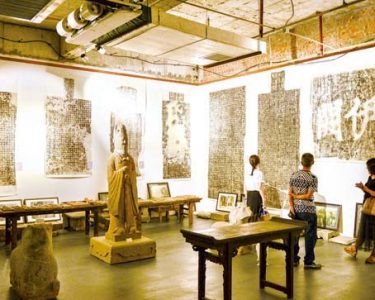
☐ Luoyang Museum:
- What it is: A modern museum housing artifacts unearthed from the region, covering every major period of the city’s history.
- Research Focus: Pay close attention to the ritual bronze vessels from the Zhou dynasty and the pottery figurines (mingqi) from the Han and Tang dynasties. These artifacts provide direct evidence of the burial customs, social hierarchy, and daily life during the periods when Luoyang was the capital.
-
☐ Ruins of Han and Wei Dynasty Luoyang City:
- What it is: An archaeological site of the former imperial city. Much of it is underground, but the scale is immense.
- Research Focus: This is for the dedicated researcher. Study the layout of the city walls, palace foundations, and road networks. This reveals the principles of ancient Chinese urban planning, cosmology, and the sheer administrative scale required to run an empire from this location. It highlights the work of many ancient Chinese dynasties.
By understanding the deep geographical and strategic reasons behind Luoyang’s historical prominence, one can appreciate its historical sites not just as tourist attractions, but as monuments to a city that was, for centuries, the true center of its world.
For in-depth research assistance or to arrange logistics for your historical exploration of Luoyang, contact our team.