
Blog
Why Nine Dynasties Chose Luoyang City China

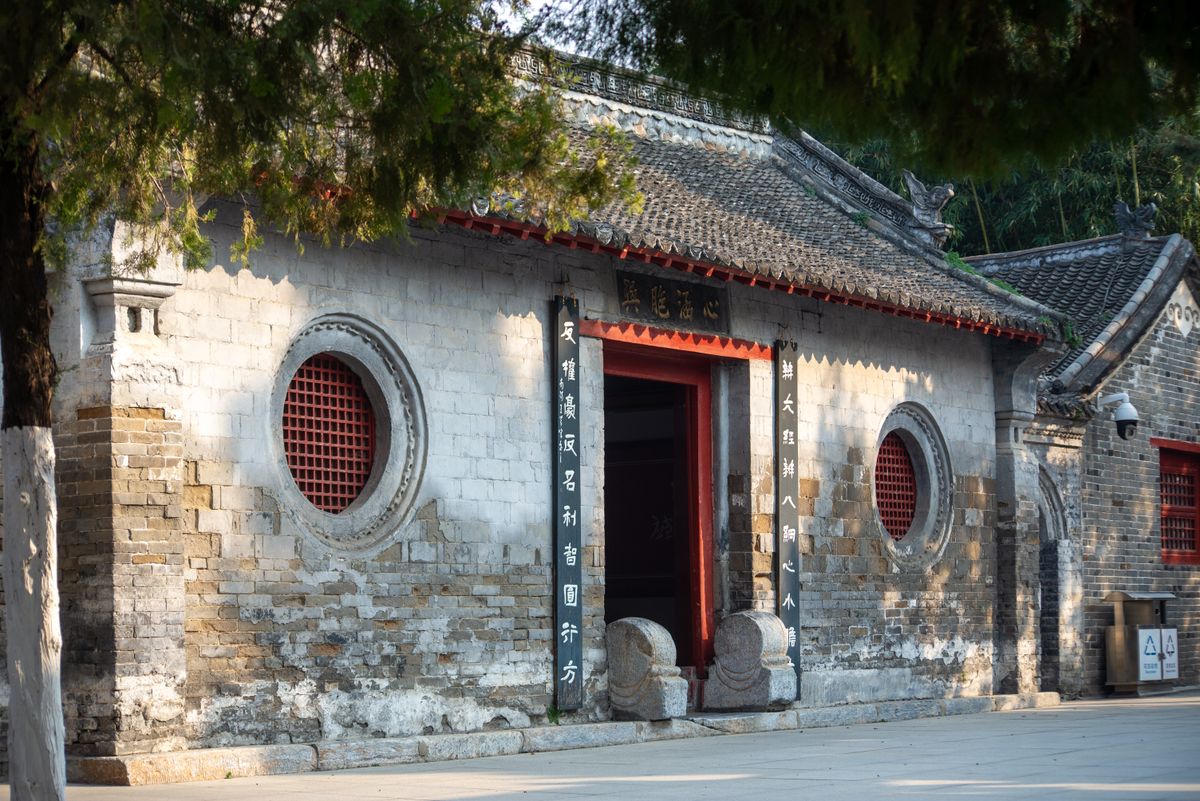
Why Nine Dynasties Chose Luoyang City China as an Imperial Center
Why did rulers repeatedly return to the same inland city when China had several powerful regional centers? The answer lies in geography, grain supply, transport routes, court politics, and defense. Luoyang was not chosen simply because one dynasty favored it. The importance of luoyang city china developed because successive governments could use the area to govern the Central Plain while staying connected to major political and economic corridors.
For visitors and students of Chinese imperial capitals, the key point is that a capital was more than a palace location. It needed access to food, officials, armies, communication routes, ceremonial sites, and defensible approaches. The Luoyang ancient capital tradition reflects how these requirements overlapped in one place, even though the city’s exact status changed from one regime to another.

Why Luoyang Recurred as a Capital Beyond a Dynasty Timeline
The most useful way to understand luoyang city china is not to memorize a list of rulers. Instead, compare the practical reasons that made the city attractive. A dynasty could choose Luoyang as its principal capital, an eastern capital, a western capital, or a major administrative base depending on its own circumstances. That distinction matters when evaluating claims about the nine dynasties.
| Factor | Why it favored Luoyang | Best-fit political scenario | Limit or trade-off |
|---|---|---|---|
| Political position | Its location in the Central Plain gave rulers proximity to established population centers and earlier state institutions. | A regime seeking legitimacy through association with earlier Chinese imperial capitals. | Centrality could also expose the city to competing armies and court factions. |
| Transport connections | River valleys and overland routes linked the area with northern, western, and eastern regions. | A government that needed officials, tribute, messages, and supplies to move between regions. | Transport access benefits invaders as well as the ruling court. |
| Agricultural base | The surrounding plain supported a large settled population and access to grain-producing districts. | A court requiring reliable provisioning for residents, officials, and military personnel. | Food supply still depended on weather, security, taxation, and route control. |
| Defensive setting | Mountains, rivers, and approaches around the basin could shape movement toward the city. | A regime seeking a protected inland seat rather than an exposed coastal capital. | Defensive terrain does not guarantee safety when rival forces control nearby routes. |
Political conclusion: luoyang city china was valuable because it stood close to places where imperial authority could be recognized and displayed. This suited rulers who wanted to connect their rule with established traditions of statecraft. It does not mean that every dynasty considered Luoyang the most prestigious option; Chang’an, Kaifeng, Nanjing, Beijing, and other capitals served different strategic needs.
Transport conclusion: the city worked best when a regime needed to coordinate the Central Plain with neighboring regions. The Luo River valley and connected land routes made movement possible across a broad inland network. This advantage was less decisive when a dynasty’s strongest political and economic base lay farther south, on the coast, or in the far north.
Agricultural conclusion: rulers could draw on a densely settled farming region rather than trying to sustain a court in a remote frontier zone. For luoyang city china, this was a durable attraction. Still, agricultural potential should not be confused with automatic abundance. War, disrupted taxation, flood damage, and blocked transport could weaken any capital’s food security.
Defensive conclusion: Luoyang had useful natural approaches, but it was not unreachable. Its position was strategically attractive precisely because it sat near contested routes. The same location that helped rulers project authority could make it a target during periods of fragmentation.

How the Nine Dynasties Label Should Be Read Carefully
The phrase nine dynasties is widely used in discussions of Luoyang history, but it should be treated as a historical shorthand rather than a single fixed scholarly list. Different sources count dynasties differently because they may include early states, principal capitals, secondary capitals, temporary court locations, and later regimes that used the city in a different administrative role.
This boundary is essential when researching luoyang city china. A visitor may see a claim that the city served many dynasties, while an academic source may use another total. Both statements can be reasonable if they use different definitions of “capital.” The question is not only whether a dynasty ruled from Luoyang, but also whether Luoyang was its main seat of government, one of several capitals, or a ceremonial and administrative center.
Dynasties most closely associated with ruling from Luoyang
- Eastern Zhou: Luoyang became the court center after the Zhou royal house shifted eastward, making it central to the political order of that era.
- Eastern Han: The city served as the principal imperial capital and a major center of court administration.
- Cao Wei: Luoyang was an important seat of government during the period of competing northern states.
- Western Jin: The city functioned as the Jin capital before political instability reshaped northern China.
- Northern Wei: The court moved to Luoyang during a major phase of political and cultural transformation.
- Sui and Tang: Luoyang held major capital status alongside other imperial centers, especially when rulers required an eastern base.
- Wu Zhou: The city played an especially prominent role under Empress Wu’s government.
- Later northern regimes: Some later dynasties used Luoyang as a capital or important administrative city, but classifications differ by source.
The practical takeaway is simple. When a guide, textbook, or travel program uses the phrase “nine dynasties,” ask what it counts. That is a stronger research habit than repeating the number without context.
What Luoyang Reveals About Chinese Imperial Capitals
Comparing luoyang city china with other Chinese imperial capitals helps explain why no single capital remained ideal forever. Capitals changed as political power, military pressure, transport systems, and economic centers shifted. Luoyang’s repeated importance shows the lasting strength of the Central Plain, but its changing status also shows the limits of geography.
| Capital-choice question | How Luoyang answered it | When another capital might be preferred |
|---|---|---|
| Where can the court govern the northern heartland? | Luoyang offered a central inland position close to important political regions. | A northern frontier regime might prioritize a location nearer its military base. |
| Where can supplies reach the court? | Regional rivers and roads supported connections with surrounding farming districts. | A state focused on maritime trade or southern grain routes might favor another city. |
| Where can a ruler claim historical legitimacy? | The city carried deep associations with earlier courts and dynastic institutions. | A new regime might deliberately establish a different capital to signal a new order. |
| Where can a court defend itself? | Its surrounding landscape offered strategic advantages for an inland capital. | A ruler facing threats from a different direction could select a more suitable defensive position. |
This comparison gives luoyang city china a distinct place in Luoyang history. It was not important because it was permanently secure or permanently dominant. It mattered because it repeatedly matched the needs of governments trying to control northern China from an established political center.
Cultural evidence reinforces this role. The nearby Longmen Grottoes preserve major Buddhist artistic work associated with periods when the city was politically and culturally influential. For travelers, this means that palace sites, museums, tombs, river landscapes, and religious monuments should be viewed as connected evidence of an imperial region rather than isolated attractions.
How to Evaluate Luoyang’s Historical Importance Before a Visit
If you are planning a visit or beginning research on luoyang city china, use a structured approach. This avoids a common mistake: treating every ancient site as evidence of the same dynasty or the same type of capital status.
- Define the period you want to study. Choose whether your focus is Eastern Zhou, Eastern Han, Northern Wei, Sui-Tang history, or a broader survey. A general itinerary is useful for first-time visitors, but it will not provide the depth needed for dynasty-specific research.
- Check the site’s historical function. Determine whether it was a palace area, burial site, religious monument, defensive structure, or later reconstruction. Do not assume that “ancient” means “imperial palace.”
- Separate capital status from cultural influence. A city may remain culturally significant after it stops being the principal political capital.
- Compare at least two sources. Use museum interpretation, academic references, or recognized heritage resources when a dynasty count differs between sources.
- Map geography against history. Notice rivers, plains, mountains, and approach routes. These features explain why luoyang city china remained strategically relevant across different periods.
Common mistakes to avoid
- Assuming nine is a universal count: the number depends on which dynasties and capital functions a source includes.
- Equating a secondary capital with a principal capital: both are important, but they are not the same political role.
- Ignoring logistics: palaces and monuments are visible, while grain supply and route access often explain the original capital choice.
- Viewing dynasties in isolation: the enduring value of luoyang city china came from recurring geographic and institutional advantages.
Frequently Asked Questions About Luoyang as a Capital
Why was Luoyang an ancient capital?
Luoyang was an ancient capital because its Central Plain location combined political legitimacy, access to productive agricultural districts, transport connections, and defensible terrain. These strengths suited several different governments over time. The limit is that these advantages did not make Luoyang permanently dominant; changes in warfare, regional economies, and ruling priorities could favor other cities.
Which dynasties ruled from Luoyang?
The most frequently cited dynasties include Eastern Zhou, Eastern Han, Cao Wei, Western Jin, Northern Wei, Sui, Tang, and Wu Zhou, with some accounts also including later regimes. The correct answer depends on whether the source counts only principal capitals or includes secondary and administrative capitals. For this reason, claims about luoyang city china should always identify the definition being used.
Why did Chinese dynasties choose Luoyang?
Chinese dynasties chose Luoyang when they needed an inland political center connected to the northern heartland. Its transport links, farming base, historical prestige, and strategic geography made it practical for governance. It was not the right choice for every regime, particularly when political power shifted toward other regions or when different supply and defense priorities became more important.
For a more focused historical itinerary or research plan, seek selection advice based on the dynasty and sites you want to study.
About LyWOW Tours
LyWOW is a locally based travel agency in Luoyang, specializing in private tours for international travelers across Luoyang, Shaolin, Xi’an and Central China. English-speaking guides, flexible itineraries and door-to-door service.
Learn more about us or browse all our tours.