
Blog
Why the Luoyang Grottoes Longmen Are a UNESCO World Heritage Site

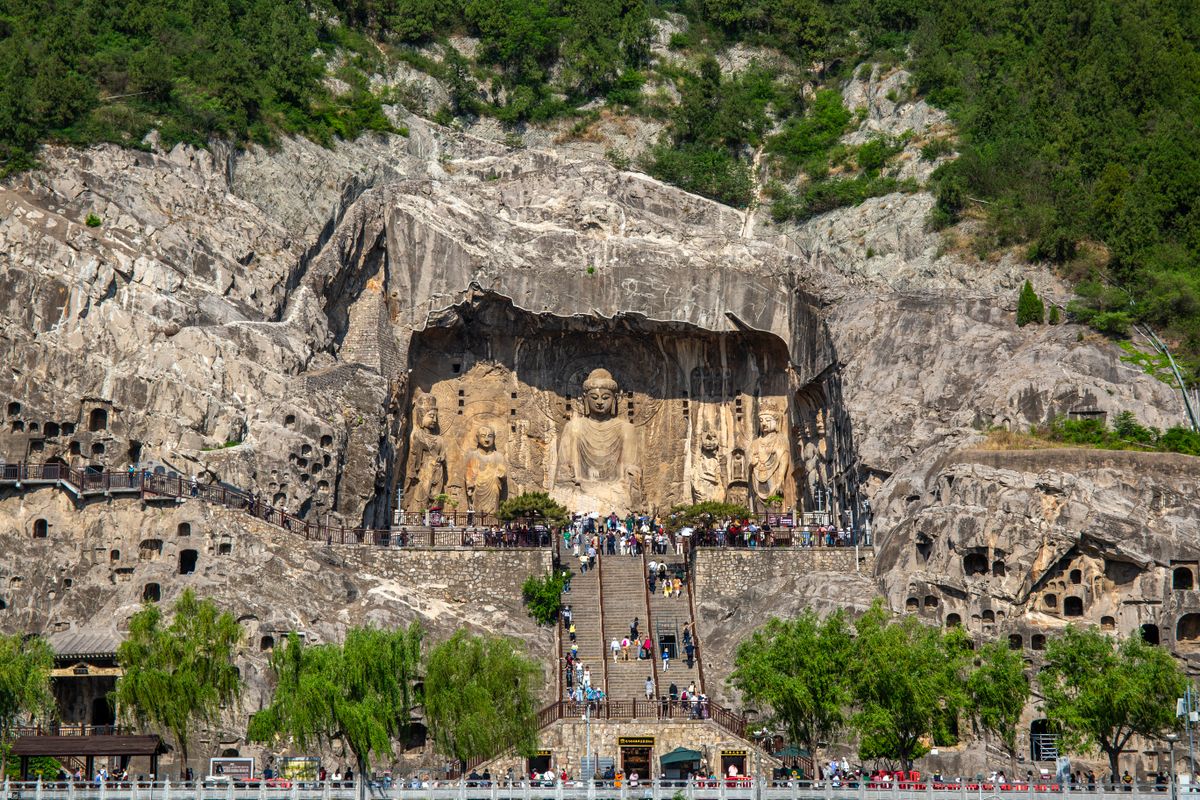
Why the Luoyang Grottoes Longmen Are a UNESCO World Heritage Site
Many recognize the name, but few understand the precise reasons why the luoyang grottoes longmen hold a coveted position on the UNESCO World Heritage List. The designation is not merely for their beauty or age, but is based on a rigorous evaluation of their outstanding universal value. This site represents one of the most significant and dense collections of Chinese art from the late Northern Wei and Tang Dynasties (316-907 AD), offering an irreplaceable record of cultural, religious, and political evolution carved directly into limestone cliffs.
For researchers, cultural historians, and strategic planners operating in the region, understanding the depth of this heritage is crucial. It speaks to the historical importance of Luoyang as a dynastic capital and a hub of international exchange. This article breaks down the specific UNESCO criteria that elevate the Longmen Grottoes from a historical monument to a treasure of global significance, providing a framework for appreciating its unparalleled artistic and historical contributions.
The UNESCO Verdict: A Criterion-Based Explanation for Longmen’s Status
UNESCO does not grant World Heritage status lightly. A site must meet at least one of ten specific selection criteria. The Luoyang Grottoes Longmen met three, a testament to its profound and multifaceted importance. The inscription in November 2000 was a formal international recognition of its role as a pinnacle of Buddhist rock-cut art.
Here is a breakdown of the specific criteria Longmen satisfied and what they mean in the context of the grottoes:
| UNESCO Criterion | How the Luoyang Grottoes Longmen Fulfill This Criterion |
|---|---|
| Criterion (i): to represent a masterpiece of human creative genius. | The grottoes are the epitome of large-scale, high-quality Buddhist sculpture. The central Vairocana Buddha in the Fengxian Temple cave, with its combination of monumental scale and serene, humanistic expression, is widely considered the zenith of Chinese Buddhist art. The craftsmanship demonstrated across thousands of statues showcases an exceptional level of artistic skill and aesthetic vision that has influenced art for centuries. |
| Criterion (ii): to exhibit an important interchange of human values, over a span of time or within a cultural area of the world, on developments in architecture or technology, monumental arts, town-planning or landscape design. | Longmen stands at a cultural crossroads. The art of the Northern Wei Dynasty caves shows a distinct style with elongated figures and formal expressions, influenced by earlier traditions. In contrast, the Tang Dynasty caves display a more naturalistic, dynamic, and corporeal style, reflecting a confident and cosmopolitan empire that integrated influences from across the Silk Road. This clear stylistic evolution, carved into the same cliffs, provides a tangible record of changing cultural values, religious interpretations, and aesthetic ideals over 400 years. |
| Criterion (iii): to bear a unique or at least exceptional testimony to a cultural tradition or to a civilization which is living or which has disappeared. | The site is an unparalleled archive of the Northern Wei and Tang civilizations. The thousands of inscriptions found alongside the sculptures provide invaluable data on imperial patronage, religious doctrine, calligraphic styles, medicinal practices, and the daily life of the period. The luoyang grottoes longmen are not just art; they are a primary source document carved in stone, offering a direct and exceptional testimony to the political and cultural life of a civilization at its peak. |
An Unmatched Fusion of Scale, Artistry, and Continuity
While other Buddhist grottoes exist in China, the Longmen complex is distinguished by its sheer density and the extended period of its creation. The carving began when Emperor Xiaowen of the Northern Wei Dynasty moved his capital to Luoyang in 493 AD and continued for over four centuries, spanning several dynasties. This long duration is critical, as it allows us to witness the complete evolution of a major art form in a single location.
The numbers alone are staggering:
- Over 2,300 caves and niches carved into the cliffsides.
- Nearly 110,000 Buddhist statues, ranging from a few centimeters to over 17 meters in height.
- More than 60 Buddhist pagodas or stupas.
- Approximately 2,800 inscriptions and steles, providing rich historical context.
This immense scale, concentrated along a 1-kilometer stretch of the Yi River, creates a powerful visual and historical impact. Unlike a museum where artifacts are collected and curated, the luoyang grottoes longmen present their art in its original, intended context. This in-situ preservation allows for a more authentic understanding of the relationship between the art, its landscape, and its patrons. The transition from the slender, ethereal figures of the Northern Wei to the full-bodied, confident sculptures of the Tang is not just an art history lesson; it’s a visible narrative of a nation’s changing self-image and spiritual beliefs.

A Practical Checklist for Analyzing the Grottoes
For those visiting for research, business, or in-depth cultural exploration, appreciating the site requires more than a casual walkthrough. Understanding what to look for can transform the experience from sightseeing into analysis. The sheer number of caves can be overwhelming, so a structured approach is essential for a productive visit.
Use this checklist to focus your observations and gain a deeper understanding of the site’s significance:
Pre-Visit Planning & On-Site Analysis Checklist
- ☐ Identify Key Dynastic Periods: Before you go, familiarize yourself with the distinct artistic styles of the Northern Wei and Tang Dynasties. Look for Northern Wei’s sharp, linear engravings and elongated figures (e.g., Guyang Cave) versus the Tang’s rounded, realistic, and powerful forms (e.g., Fengxian Temple).
- ☐ Prioritize Major Caves: You cannot see everything in one day. Focus on the most significant caves first. These typically include Guyang Cave (earliest), Binyang Caves (imperial patronage), and Fengxian Temple (the monumental Vairocana Buddha).
- ☐ Analyze the Patronage: Pay attention to the inscriptions. Were the patrons emperors, aristocrats, military officials, or commoners? This reveals how different levels of society participated in religious life and used art to express devotion or secure merit.
- ☐ Observe the Iconography: Look beyond the main Buddha figure. Identify the attendant bodhisattvas, disciples, and guardian kings. Their poses, expressions, and clothing provide clues about the specific Buddhist sutras and doctrines that were popular at the time.
- ☐ Document the Architecture: Note how the caves themselves are designed. Some imitate wooden temple structures, while others are simple niches. This reflects the evolution of rock-cut architecture and its relationship with traditional Chinese construction.
- ☐ Study Calligraphy: The inscriptions are not just text; they are masterpieces of Chinese calligraphy. The “Twenty Masterpieces of Longmen Calligraphy” are prime examples of the forceful and elegant Northern Wei script, a crucial stage in the development of Chinese writing.
This structured approach helps deconstruct the immense collection of art and history at the luoyang grottoes longmen into manageable, analyzable components. It allows for a more meaningful engagement with one of the world’s most important cultural sites.

Longmen’s Enduring Legacy in Art and History
The importance of the Longmen Grottoes extends far beyond their religious function. They are a primary source for understanding the history of one of China’s most powerful and influential periods. The detailed depictions of clothing, musical instruments, and architectural elements serve as a visual encyclopedia of Tang Dynasty life. The inscriptions offer direct evidence of economic transactions, political events, and social structures.
For centuries, the artistic style perfected at Longmen influenced sculpture and painting across East Asia, traveling along trade routes to Korea and Japan. The realism and compassionate grandeur of the Tang-era statues set a new standard, creating a stylistic legacy that can be traced in Buddhist art for generations. The site is not a relic of a forgotten past; it is an active and foundational chapter in the ongoing story of world art.
Our team is based in a region rich with this kind of profound history. This deep cultural context informs our understanding of the long-term perspectives necessary for successful enterprise.
To leverage our deep regional knowledge for your projects, please contact our team for a consultation.
About LyWOW Tours
LyWOW is a locally based travel agency in Luoyang, specializing in private tours for international travelers across Luoyang, Shaolin, Xi’an and Central China. English-speaking guides, flexible itineraries and door-to-door service.
Learn more about us or browse all our tours.
