
 By
By Understanding Donor Inscriptions at Longmen Caves China
For historians, art enthusiasts, and cultural researchers, deciphering the stone inscriptions found within the Longmen Grottoes in China presents a unique opportunity. These thousands of carved texts offer direct insights into the social, economic, and religious fabric of ancient Chinese society. They are not merely decorative elements; they function as primary documents revealing patronage motives, social hierarchies, and devotional practices spanning centuries. The challenge lies in accurately interpreting these rich, often terse, historical records.
Specifically, understanding how to distinguish between imperial commissions, family dedications, and individual religious patronage is crucial. This distinction illuminates the varying scales of influence, wealth, and spiritual intent behind the monumental Buddhist art of the Longmen Caves. By analyzing specific textual and contextual cues, one can unlock a deeper understanding of this UNESCO World Heritage site and the forces that shaped its creation.
The Historical Context of Longmen Caves China Inscriptions
The Longmen Caves, situated near Luoyang in Henan province, represent one of the finest examples of Chinese Buddhist art. Carving began in 493 AD during the Northern Wei dynasty and continued through the Tang dynasty, spanning over 400 years. During this period, Buddhist art flourished, driven by fervent religious belief and significant state support. The sheer volume of statues, reliefs, and stupas is staggering, but equally important are the accompanying inscriptions – over 3,600 of them. These texts provide an invaluable mirror to the periods of their creation.
These inscriptions are more than just labels. They record the names of donors, the dates of their contributions, the specific deities invoked, and the prayers or aspirations associated with the carvings. For example, some inscriptions detail wishes for the emperor’s longevity or the prosperity of the state, indicating imperial involvement. Others might list several family members, praying for the deceased or future generations. Smaller, more personal inscriptions often express individual piety or hopes for personal salvation. Analyzing these textual nuances helps us reconstruct the social networks and spiritual motivations that fueled the creation of the Longmen Caves China.
Interpreting Donor Inscriptions: Imperial, Family, and Individual Patronage
Distinguishing between different types of patronage at the Longmen Caves China requires careful observation and an understanding of historical conventions. Each category of donor—imperial, family, and individual—left distinctive marks in terms of inscription content, scale of the artwork, and even the physical location of their dedication.
Step-by-Step Guide to Identifying Patronage
- Examine the Donor’s Title and Name:
- Imperial: Look for official titles such as “Emperor (皇帝),” “Empress (皇后),” “Prince (王),” or “Princess (公主).” Specific reign eras (e.g., “景明 (Jingming)” or “永徽 (Yonghui)”) often indicate state-sponsored projects. The inscription might explicitly mention a dedication “for the Emperor” or “for the imperial family.”
- Family: Multiple names are a strong indicator. Look for familial relationships like “father (父),” “mother (母),” “son (子),” “daughter (女),” or “ancestor (祖).” Often, a leading family member is named, followed by “with all family members (闔家)” or similar phrasing.
- Individual: Typically, a single name or a singular “disciple (弟子)” followed by a personal title or designation. The wording often focuses on personal merit or salvation.
- Analyze the Scale and Location of the Artwork:
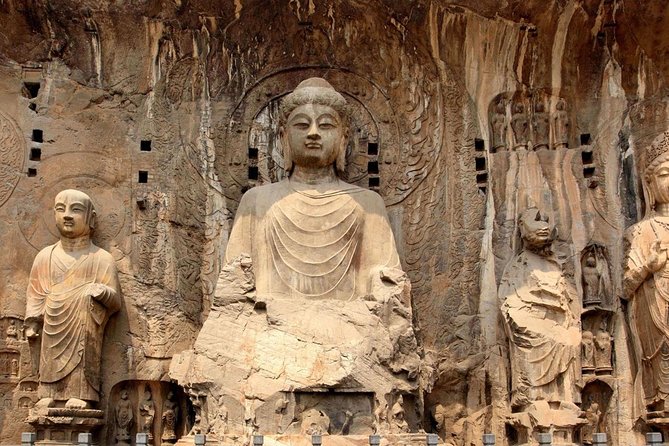
- Imperial: These commissions tend to be the largest and most prominent, often occupying central grottoes or entire cliff faces, such as the grand Fengxian Temple with its colossal Vairocana Buddha. Their placement often signifies state power and widespread influence.
- Family: Family dedications typically range from medium-sized grottoes to significant niches. They are substantial enough to accommodate multiple figures or a small tableau, reflecting significant, but not imperial, wealth.
- Individual: Often found in smaller niches or even tiny, single-figure carvings. These are frequently clustered in less prominent areas, indicating limited personal resources but strong devotion.
- Interpret the Dedicatory Prayer or Vow:
- Imperial: Prayers typically extend to the welfare of the state, the longevity of the emperor, peace for the realm, or blessings for national prosperity. The scope is broad and public.
- Family: Vows often focus on specific family members—prayers for deceased parents, health for children, or general family prosperity and karmic merit.
- Individual: Personal salvation, enlightenment, or specific blessings for oneself are common themes. The language is more introspective and singular.
- Examine the Calligraphy and Craftsmanship:
- Imperial: Generally exhibits a high level of artistic skill and formal calligraphy, reflecting significant resources allocated to skilled artisans. The carving is often meticulous and refined.
- Family: Quality can vary but is generally good, often reflecting the family’s status and financial capability.
- Individual: May show a wider range of craftsmanship, from highly skilled to more rudimentary, depending on the donor’s means and the artisan hired.
Comparative Overview of Patronage Types
This table summarizes key indicators for distinguishing donor types at the Longmen Caves China:
| Feature | Imperial Commission | Family Dedication | Individual Patronage |
|---|---|---|---|
| Donor Names/Titles | Emperor, Empress, Prince, Princess, specific reign titles. | Multiple family members (e.g., father, mother, son), collective family names. | Single name, “disciple,” personal title. |
| Artwork Scale & Location | Largest grottoes, central positions, monumental figures. | Medium-sized grottoes or significant niches, multi-figure compositions. | Small niches, single figures, less prominent locations. |
| Dedicatory Focus | State welfare, imperial longevity, national prosperity, universal peace. | Ancestors, living family members’ health, offspring’s prosperity, collective merit. | Personal salvation, individual enlightenment, specific personal vows. |
Common Interpretation Mistakes and How to Avoid Them
- Mistaking Titles: Not all official-sounding titles indicate imperial patronage. Local officials or wealthy gentry also held titles. Always look for explicit imperial connections or very high-ranking titles.
- Overlooking Context: A small carving near a large imperial grotto might still be an individual dedication. The scale of the individual carving, not its proximity, is key.
- Assuming Uniformity: Patronage patterns and inscription styles evolved over centuries. What was common in the Northern Wei might differ from the Tang dynasty. Always try to date the inscription first.
- Ignoring Fragmentation: Many inscriptions are damaged or incomplete. Avoid drawing definitive conclusions from partial evidence. Look for corroborating clues elsewhere on the carving or in nearby texts.
Common Elements and Variations in Longmen Caves China Inscriptions
While the patronage type dictates much of an inscription’s character, certain elements are common across all dedications at the Longmen Caves China. These recurring features provide a framework for systematic analysis, regardless of who commissioned the carving.
Key Elements of a Longmen Inscription
- Date: Often expressed in the Chinese calendrical system (e.g., “the X year of the Y reign period”). This is crucial for historical sequencing.
- Donor’s Identification: Name, titles, and sometimes place of origin. As discussed, this is key for patronage type.
- Purpose of Dedication: The explicit reason for commissioning the artwork. This could be a prayer for merit transfer, a wish for rebirth in a pure land, or a plea for protection.
- Invoked Deity: The specific Buddha or Bodhisattva to whom the merit is dedicated (e.g., Amitabha, Vairocana, Guanyin).
- Merit Transfer Clause: A common Buddhist concept where the spiritual benefits of the act of patronage are transferred to others, such as ancestors, family, or even all sentient beings.
Variations exist not only across dynasties but also geographically within the Longmen Caves China themselves. Early Northern Wei inscriptions, for instance, often feature simpler, more direct language and a distinct calligraphic style known as “Wei stele style.” Tang dynasty inscriptions, particularly those from the high Tang period, tend to be more elaborate, sometimes including poetic flourishes and more refined calligraphy. These stylistic shifts reflect broader cultural and artistic developments within Chinese history.
Understanding these common elements and their variations allows researchers to build a comprehensive picture of religious practice and social dynamics. For example, the prevalence of Amitabha Buddha in certain periods reflects the rising popularity of Pure Land Buddhism, while the emphasis on imperial ancestors highlights the fusion of Buddhist piety with traditional Confucian filial devotion.

Preserving and Studying Inscriptions at Longmen Caves China
The sheer age and exposure to natural elements have taken a toll on many of the inscriptions at the Longmen Caves China. Erosion, weathering, and past human activities (including vandalism and early attempts at preservation or removal) have rendered some texts illegible. This makes the work of epigraphers and conservators critically important.
Challenges and Best Practices for Studying Inscriptions
- Environmental Degradation: Acid rain, wind erosion, and water seepage continuously degrade the stone. This necessitates ongoing monitoring and conservation efforts.
- Legibility Issues: Many inscriptions are faded, damaged, or obscured by moss and lichen. Researchers often rely on rubbings (ink impressions) made historically, or advanced photographic techniques to enhance readability.
- Fragmentary Nature: Complete inscriptions are rare. Scholars often piece together information from multiple fragments or compare them with known historical records.
- Contextual Research: Accurate interpretation demands deep knowledge of classical Chinese, Buddhist terminology, historical figures, and the specific political and religious climate of the period.
Modern scholarship employs digital imaging, 3D scanning, and advanced textual analysis to document and preserve these invaluable records. These technologies aid in creating detailed, accessible archives, ensuring that future generations can continue to study and appreciate the profound legacy of the Longmen Caves China inscriptions. This meticulous work safeguards historical evidence and enables deeper cultural understanding.
For those embarking on research or planning a visit, a systematic approach to inscription interpretation transforms a historical site into a living document. By applying these methods, the stories of emperors, families, and individuals who shaped the Longmen Caves China emerge from the stone, offering unparalleled insights into a vibrant past.
To deepen your understanding of ancient Chinese cultural heritage and its practical applications in modern research, connect with our technical team for expert insights and resources.
