
 By
By Unlocking the Secrets: How to Identify Sancai Glazed Ceramics
Many B2B buyers and ceramic curators face the challenge of accurately classifying historical pieces. Understanding what defines sancai glazed ceramics goes beyond recognizing a three-color palette; it requires a detailed examination of material and process clues. This guide offers practical methods for identifying genuine sancai, focusing on observable characteristics critical for informed decisions for your inventory or collection.
The term “sancai,” meaning “three colors,” refers to a distinctive type of lead-glazed earthenware primarily produced during China’s Tang Dynasty (618–907 AD). While often associated with vibrant green, amber/yellow, and cream/white glazes, the true identification of sancai relies on an understanding of its unique production techniques and material properties. Accurate identification is paramount for ensuring authenticity and proper valuation within the B2B export market.
Decoding Glaze Pooling, Exposed Earthenware, Molded Forms, and Firing Marks
Distinguishing authentic sancai from later imitations or similar multi-colored ceramics requires a systematic approach. By focusing on specific visual and tactile clues, buyers and evaluators can gain crucial insights. Here’s a structured method for examining key features without mistakenly categorizing every three-color piece as Tang sancai.
| Examination Step | Actionable Focus | Key Identifying Checkpoint | Common Misidentification Pitfalls |
|---|---|---|---|
| 1. Assess Glaze Pooling and Flow | Observe where glazes gather, especially at relief transitions, incised lines, or the base of forms. | Genuine sancai glazes, typically lead-based, exhibit characteristic fluidity. Look for thick, glassy pools with subtle color shifts where glazes merge or run due to gravity and surface tension during firing. Colors should bleed into each other organically. | Uniform, perfectly separated colors without any pooling, dripping, or natural flow might indicate modern imitation or a different, non-sancai glazing technique. Lack of translucency in deeper pools. |
| 2. Inspect Exposed Earthenware Body | Examine unglazed sections, typically the base, footring, or rim. Sometimes parts of the interior or specific decorative elements. | Sancai pieces are made from a low-fired earthenware body. The exposed clay should usually be a buff, reddish-brown, or light gray. It should feel somewhat porous and lack the vitrified hardness of stoneware or porcelain. It often appears coarse. | A pure white, highly dense, or vitrified body suggests a porcelain or stoneware piece, which is not characteristic of traditional sancai. An unnaturally smooth or perfectly finished base can also be suspicious. |
| 3. Analyze Molded Forms and Construction | Study the overall shape, any applied decorations, and evidence of how the piece was assembled. | Many sancai figures and vessels were mold-made, often in sections joined together. Look for subtle mold lines, evidence of hand-tooling to refine details post-molding, or visible joins. The forms tend to have a robust, sometimes schematic quality consistent with period production. | Overly precise, machine-like symmetry without any human touch or subtle imperfections. Forms that deviate significantly from known historical sancai typology (e.g., specific animal figures, human effigies, or vessel shapes). |
| 4. Identify Firing Marks and Kiln Clues | Carefully check the base, interior, and any unglazed areas for evidence of the firing process. | Sancai was fired at relatively low temperatures (around 800-1000°C). Look for spur marks (small, unglazed spots where the piece rested on stilts in the kiln), slight warping of the form, or minor irregularities. These are common indicators of traditional kiln practices. | Absence of any firing marks on forms that typically would require them. Excessive vitrification or a perfectly smooth, unblemished base might indicate modern, high-temperature firing techniques. Unnatural uniformity in glaze application without any signs of interaction with the kiln environment. |
The Signature Palette: Identifying Sancai Glaze Colors
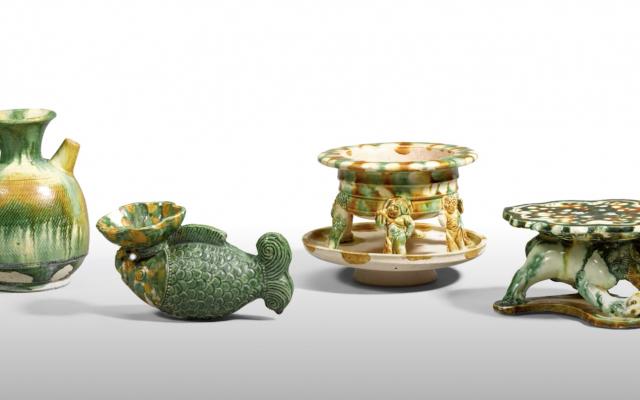
While “sancai” literally means “three colors,” the palette for sancai glazed wares was not rigidly limited to exactly three hues, nor always the same three. The characteristic vibrancy and interaction of these glazes are key to identification. The most common colors are green, amber (yellow-brown), and an off-white or cream. Occasionally, cobalt blue or black glazes were incorporated, significantly raising the rarity and value of a piece.
- Amber/Yellow: This glaze often appears as a rich, translucent honey-like or golden-brown. It typically pools thickly, exhibiting significant depth and often showing subtle variations in tone where it gathers. The lead content in the glaze contributes to its characteristic sheen and fluidity.
- Green: Ranging from a vibrant leafy green to a deeper jade or even olive tone, the green glaze is often derived from copper. It can appear mottled and frequently reacts with the underlying clay body or other glazes, creating unique patterns and color transitions.
- Cream/White: This glaze provides essential contrast to the more intense colors. It can be opaque or semi-translucent, appearing as an off-white or creamy hue. It might be applied thinly or in thicker layers, influencing its interaction with the clay and neighboring glazes.
- Blue (Rare): Cobalt blue was a more expensive pigment during the Tang Dynasty, making blue sancai pieces relatively scarce. When present, the blue is often vibrant and striking, providing a distinct visual accent. Its inclusion typically signifies a piece of higher status or greater expense at the time of production.
- Black (Very Rare): Manganese-derived black glazes are exceptionally rare in sancai, sometimes appearing as small accents or outlines. Their scarcity makes pieces featuring black glazes particularly notable.
The beauty of sancai glazes lies in their semi-transparent quality and tendency to run and blend, creating soft transitions and unique organic patterns. This “flowing” characteristic is a direct result of the lead-fluxed glaze chemistry and the relatively low firing temperatures, which allowed the glazes to melt and spread without fully vitrifying the clay body.
Clay Bodies and Firing: The Substrates of Sancai
The foundation of any sancai glazed piece is its earthenware clay body, which is crucial for its unique aesthetic and structural properties. Understanding this substrate and the firing process it undergoes provides further definitive clues for identification.
Earthenware Clay Characteristics
Unlike stoneware or porcelain, which are fired at high temperatures to achieve vitrification (glass-like hardness), sancai uses a low-fired earthenware clay. This clay is typically:
- Porous: The clay body remains somewhat porous after firing, allowing for slight water absorption. This is a key difference from more vitrified ceramics.
- Coloration: When exposed, the clay body usually presents in shades of buff, light gray, or reddish-brown. The exact hue depends on the local clay sources and mineral content. This color provides a warm, earthy backdrop that can sometimes subtly show through thinner glaze areas.
- Texture: The texture of the unglazed clay can range from slightly sandy to relatively fine, but it will generally lack the smooth, dense feel of high-fired wares.
The choice of earthenware was not accidental. The lead-based glazes characteristic of sancai require a lower firing temperature to achieve their signature fluidity and vibrant colors. A high-fired body would not be compatible with these glazes, or the glazes themselves would burn off or change drastically.
The Sancai Firing Process
Sancai production typically involved a two-stage firing process:
- Bisque Firing: The shaped clay object was first fired at a relatively low temperature (around 700-800°C) to harden the clay into a “bisque” state. This made the piece robust enough to handle the application of glazes without deforming, while still maintaining porosity to absorb the liquid glaze.
- Glaze Firing: After the glazes were applied, the piece underwent a second, slightly higher-temperature firing (often around 800-1000°C). This temperature was sufficient to melt the lead-fluxed glazes, allowing them to flow, blend, and achieve their characteristic translucency and sheen, but not high enough to fully vitrify the earthenware body.
This low-temperature glaze firing is the reason for many of the observable firing marks. The piece would often be placed on small ceramic supports or “spurs” within the kiln to prevent the runny glazes from fusing to the kiln shelf. These supports leave small, unglazed circles or marks on the base or interior of the piece – crucial clues for identification.
Common Pitfalls in Sancai Identification
Even experienced buyers can encounter challenges when evaluating sancai glazed ceramics. Misidentifications often arise from a superficial understanding of what constitutes true sancai. Avoiding these common pitfalls is essential for accurate assessment.
-
Mistake 1: Assuming “Three-Color” Automatically Means Sancai.
- Reasoning: The term “sancai” is often used broadly, but it specifically refers to a historical lead-glazed earthenware tradition, primarily from Tang Dynasty China. Many other cultures and later periods produced ceramics with three or more colors using different techniques and materials.
- Scenario: A piece from the Song Dynasty (e.g., Cizhou ware) or a Japanese piece with a three-color palette, while aesthetically similar, is not historically classified as sancai.
- Limits: This distinction is crucial for historical accuracy and proper classification within a collection or catalog, rather than merely appreciating the aesthetic.
-
Mistake 2: Overlooking the Clay Body’s Importance.
- Reasoning: The low-fired earthenware body is a fundamental characteristic of authentic sancai. Its porosity and specific color are non-negotiable elements.
- Scenario: A piece with a brilliant three-color glaze but a pure white, dense, or fully vitrified footring is almost certainly not sancai, as it likely indicates a porcelain or stoneware body.
- Limits: While some later imitations might attempt to mimic the clay body, discrepancies in glaze chemistry, firing marks, or stylistic elements will usually reveal their true origin.
-
Mistake 3: Ignoring Glaze Chemistry Clues and Behavior.
- Reasoning: Traditional sancai glazes are lead-fluxed, which directly impacts their translucency, flow, and pooling characteristics. Modern lead-free or different glaze formulations behave differently.
- Scenario: Glazes that appear too uniform, lack the characteristic translucency, or do not show the expected crazing (fine network of cracks) or natural flow patterns might suggest modern production or a different glaze type.
- Limits: Glaze degradation over centuries can alter the appearance, making expert assessment with knowledge of historical aging processes crucial.
-
Mistake 4: Not Considering Period-Specific Kiln Technology.
- Reasoning: The relatively primitive kiln technology of the Tang era left specific, observable marks such as spur marks, minor warping, and unevenness.
- Scenario: A perfectly symmetrical, large-scale piece with an unblemished, smooth base, showing no firing marks, should raise suspicion, as it suggests modern, highly controlled kiln technology.
- Limits: Very small or simple pieces might naturally exhibit fewer obvious firing marks, necessitating a closer examination of other identification factors.
Accurate identification of sancai glazed ceramics requires a comprehensive approach, combining aesthetic appreciation with a deep understanding of historical materials and production methods. By diligently examining glaze characteristics, clay bodies, molded forms, and firing clues, B2B buyers can make informed decisions and confidently classify these remarkable historical treasures.
To discuss specific ceramic identification needs or to inquire about our services in evaluating historical export pieces, please contact our technical team.
