Unraveling How White Horse Temple in Luoyang Brought Buddhism to China
How did Buddhism truly arrive in China, and what was the pivotal role of White Horse Temple in Luoyang in this historical transmission? Many narratives surround the introduction of this profound philosophy to the East, some steeped in imperial legend, others pieced together from archaeological evidence and historical texts. Understanding the distinction between these accounts is crucial for appreciating the true legacy of the White Horse Temple as the “Cradle of Buddhism” in China. This article seeks to clarify the transmission route, distinguishing traditional tales from documented historical context, and highlighting the enduring significance of this ancient site.
Fact vs. Folklore: The Transmission of Buddhism to Han China
The story of Buddhism’s arrival in China is often intertwined with a compelling legend, yet historical evidence points to a more gradual, multifaceted process. Separating these narratives is essential for a complete understanding of how a foreign religion took root and flourished, eventually leading to the establishment of the White Horse Temple in Luoyang.
Understanding the distinction between traditional accounts and documented history provides a clearer picture of Buddhism’s foundational journey into China. A buyer considering the historical context of cultural exchange, for example, might misinterpret the speed and directness of transmission if relying solely on the legend. The reality underscores a more organic, sustained interaction that shaped early Buddhist practices.
| Aspect of Transmission | Traditional Account (Legend) | Documented Historical Context |
|---|---|---|
| Initiation of Arrival | Emperor Mingdi of Han Dynasty dreams of a golden man (Buddha) in 64 CE. Interprets this as a divine sign to seek Buddhist teachings. | Gradual introduction via Silk Road trade routes. Merchants, missionaries, and cultural exchanges brought Buddhist ideas and artifacts from Central Asia. |
| Key Figures Involved | Emperor Mingdi dispatches envoys Cai Yin and Qin Jing to the “Western Regions” (India/Central Asia) to retrieve scriptures and monks. | Indian monks Kasyapamatanga (Jia She Moteng) and Dharmaratna (Zhu Falan) arrived in Luoyang, likely accompanying traders or invited by local patrons. |
| Mechanism of Arrival | Imperial envoy mission directly brings back the scriptures (Sutra of Forty-two Sections) and the two monks, carried on white horses. | Buddhism spread incrementally through interactions at trade hubs. Monks traveled independently, sharing teachings and translating texts over time. |
| Timing and Establishment | Direct imperial decree leads to the immediate establishment of White Horse Temple in 67 CE, marking the official beginning of Buddhism in China. | While the White Horse Temple in Luoyang was founded in 68 CE (or slightly later), its establishment was part of a longer period of cultural assimilation, not an instant, singular event. Early Buddhist communities existed before this formal temple. |
| Purpose of Early Temples | Primarily to house the newly arrived scriptures and monks, symbolizing imperial acceptance of the new religion. | Served as centers for scripture translation, scholarly study, and monastic residence, facilitating the adaptation of Buddhism to Chinese culture. |
The legend, while captivating, simplifies a complex historical process into a neat, divinely sanctioned narrative. While Emperor Mingdi’s interest likely played a role in patronizing the new faith, the true transmission was a slower, more organic exchange. The story of the white horses carrying the scriptures provides the temple its iconic name and underscores its symbolic importance, but the groundwork for Buddhism’s reception was laid by generations of interactions along the Silk Road.
The Foundational Role of White Horse Temple and Its Early Operations
Once established in Luoyang, the White Horse Temple (Baima Si) quickly became the epicenter for early Buddhist activities in China. Its name, derived from the white horses said to have carried the first scriptures, cemented its legendary status, but its practical function was far more critical to the religion’s long-term success.
The temple was not merely a place of worship; it was a vibrant hub for scholarship and cultural exchange. Its primary purpose revolved around the monumental task of translating Buddhist sutras from Sanskrit into Chinese. This was a painstaking process that required not only linguistic expertise but also a deep understanding of philosophical and religious concepts to ensure accuracy and cultural resonance. Kasyapamatanga and Dharmaratna, the two Indian monks, were central to this effort, working tirelessly to render complex Buddhist doctrines accessible to the Han Chinese.
Key Stages in the Temple’s Early Development:
- Initial Scripture Translation: The “Sutra of Forty-two Sections” is traditionally cited as the first Buddhist scripture translated at White Horse Temple. This text served as a foundational introduction to Buddhist ethics and teachings for early Chinese adherents.
- Monastic Residence and Training: The temple provided living quarters and a spiritual environment for monks, both foreign and newly converted Chinese. It became a training ground for the first generation of Chinese Buddhist monastics.
- Dissemination Hub: As translations progressed, the temple served as a distribution point for these new texts. Scribes meticulously copied the translated sutras, which were then circulated among scholars, officials, and the burgeoning lay Buddhist community.
- Imperial Patronage: The temple benefited from imperial support, which provided resources and legitimacy. This patronage was crucial for its construction, maintenance, and the continued work of its resident monks.
- Cultural Adaptation: Beyond mere translation, the monks at White Horse Temple also began the long process of adapting Buddhist concepts to fit within existing Chinese philosophical frameworks, particularly Confucianism and Taoism. This early synthesis was vital for the religion’s acceptance.
The meticulous work carried out at the White Horse Temple in Luoyang during these early centuries laid the intellectual and institutional groundwork for Buddhism to evolve from a foreign import into an integral part of Chinese culture. Without this dedicated effort, the religion’s spread and enduring influence would have been far less certain.
The Enduring Legacy and Modern Significance of White Horse Temple Luoyang
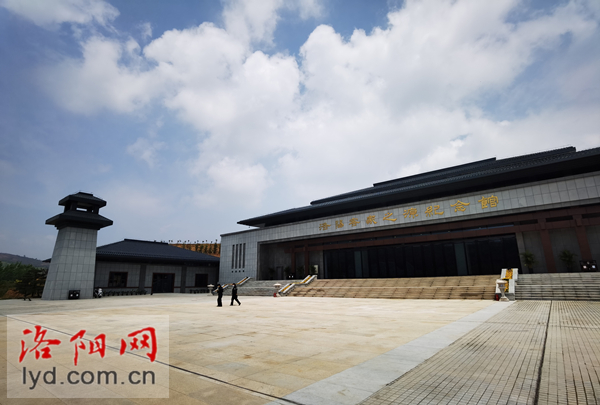
Today, the White Horse Temple in Luoyang remains a site of immense historical and spiritual importance. While its original structures have undergone numerous renovations and reconstructions over the centuries, the essence of its legacy as the cradle of Chinese Buddhism persists. Visitors to the temple can trace the footsteps of history, reflecting on the profound cultural exchange that began nearly two millennia ago.
The temple complex features a blend of ancient architecture and modern additions, including pagodas, halls dedicated to various Buddhas and Bodhisattvas, and memorial stupas for the founding monks. It continues to be an active monastery, attracting Buddhist pilgrims and tourists from around the world. Its significance extends beyond religious practice, serving as a tangible link to China’s deep historical ties with other Asian cultures.
For those researching the origins of Buddhism in China, a visit to White Horse Temple offers invaluable insight. It stands as a testament to the power of cultural dissemination, the dedication of early translators, and the enduring appeal of a philosophy that transcended geographical and linguistic barriers. The temple complex itself, with its serene courtyards and ancient trees, evokes a sense of timelessness, connecting the present-day visitor to the Han Dynasty’s pivotal moment of cultural transformation.
Common Misconceptions About Early Buddhism at White Horse Temple:
- Immediate Mass Conversion: The establishment of White Horse Temple did not lead to an instant mass conversion of the Chinese populace. Buddhism’s spread was gradual, often taking centuries to gain widespread acceptance beyond court circles and intellectual elites.
- Purely Indian Form: Early Buddhism in China, even at White Horse Temple, was not a direct copy of Indian Buddhism. It began a process of syncretism and adaptation, incorporating elements of Chinese thought and culture.
- Sole Entry Point: While the White Horse Temple in Luoyang is symbolically recognized as the first official Buddhist temple, Buddhism may have had earlier, less formal footholds in China through various trade routes and communities before imperial recognition.
- Uninterrupted Existence: Like many ancient sites, the White Horse Temple has faced periods of destruction, neglect, and rebuilding due to wars, political changes, and natural disasters. Its current form is the result of centuries of restoration.
Understanding these nuances helps to paint a more accurate picture of the White Horse Temple’s true historical role. It was a catalyst and a symbol, but also part of a much larger, dynamic historical process. The temple’s continued existence and reverence underscore its unparalleled importance in the narrative of Chinese civilization and its spiritual landscape.
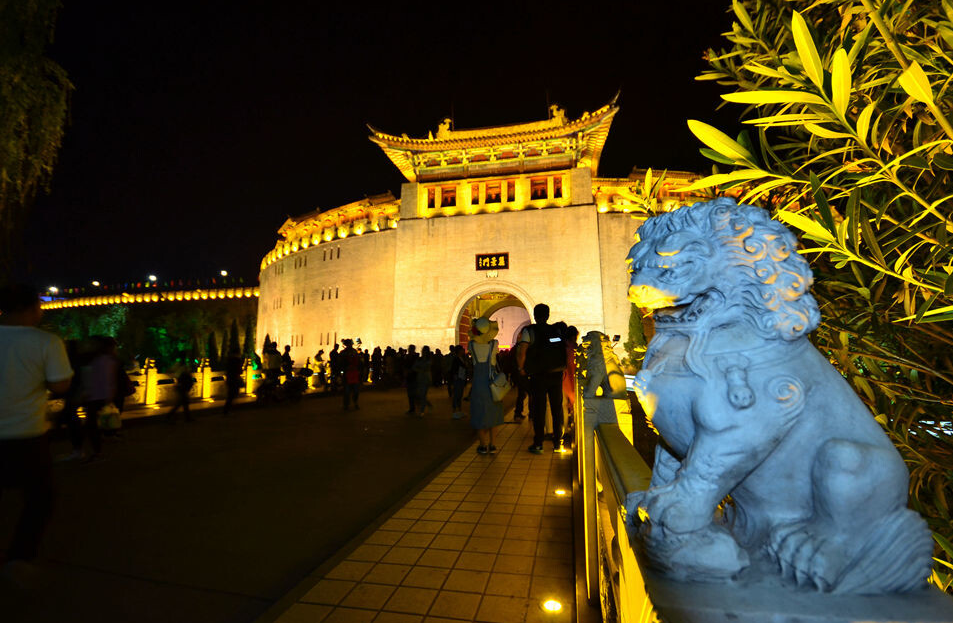
When considering the historical trajectory of Buddhism in China, the White Horse Temple in Luoyang offers a profound starting point for research and understanding. Its narrative, a blend of imperial legend and documented scholarly effort, provides a unique lens through which to view the early stages of a religion’s journey across continents and cultures.
For further insights into the historical and cultural significance of ancient sites and their impact on global trade and philosophy, please reach out to our technical team for detailed information.