
Blog
Can You See Longmen Grottoes in 3 Hours? A Real Answer

You Can See the Core of Luoyang Grottoes Longmen in Three Hours With the Right Plan
If you’ve got a tight layover in Luoyang and a single question — “is three hours enough for Longmen Grottoes?” — the short answer is yes, but only if you skip the full East Hill loop and accept that you’re seeing the highlights, not the whole site. The luoyang grottoes longmen complex stretches roughly a kilometer along the Yi River, with more than 2,000 caves and niches carved into limestone cliffs on both banks. Nobody sees all of it in half a day, let alone three hours. What matters is knowing which 20% of the site delivers 80% of the value, and structuring your walk so you’re not backtracking.
This guide breaks down exactly what a 3-hour visit covers, how that compares to a half-day route, which caves to prioritize, and the mistakes that eat up time without adding much to the experience.
How Much of Longmen Grottoes Can You Actually Cover in Three Hours?
In three hours, a realistic visitor covers the west bank main path from the entrance near Yuwangtang to Fengxian Temple and slightly beyond, then crosses the bridge for a brief look at the east bank from across the river rather than walking it in full. That’s roughly 2 to 2.5 kilometers of walking at a steady but non-rushed pace, including photo stops and the climb up to Fengxian Temple’s terrace.
What you won’t have time for: the full East Hill cave cluster (Kanjing Temple, Xiangshan Temple ruins area), the Baiyuan Temple grounds, or a relaxed riverside lunch. If your schedule is genuinely fixed at three hours — say, a layover between high-speed rail connections — this trade-off is the right one. It stops being the right call if you have transport flexibility and could instead shift to a 4.5-hour window, which opens up the east bank properly.
Three-Hour Visit vs Half-Day Route: What You’ll Actually See
This is the boundary most itinerary guides skip. Here’s the practical difference between the two most common time budgets for this site.
| Factor | 3-Hour Visit | Half-Day Route (5–6 hrs) |
|---|---|---|
| Walking distance | ~2–2.5 km, west bank only | 4–5 km, both banks |
| Priority caves covered | Fengxian Temple, Guyang Cave, Binyang Caves | Above + Wanfo Cave (Ten Thousand Buddha Cave), East Hill Kanjing Temple |
| River crossing | Brief bridge crossing for photos only | Full east bank walk included |
| Pace | Steady, limited stop time | Relaxed, time for the small museum near the entrance |
| Best suited for | Layovers, combined day-trips with other Luoyang stops | Dedicated heritage day, no other sites planned |
If your goal is a single standout memory — the large Vairocana Buddha at Fengxian Temple — the 3-hour version delivers that without compromise. If you want a fuller sense of how the carving style evolved across dynasties, you need the east bank, and that only fits comfortably into the half-day version.
Which Caves Should You Prioritize If Time Is Limited?
Not all caves are equal in terms of visual payoff versus walking effort. Based on the layout of the site, this is the priority order for a short visit:
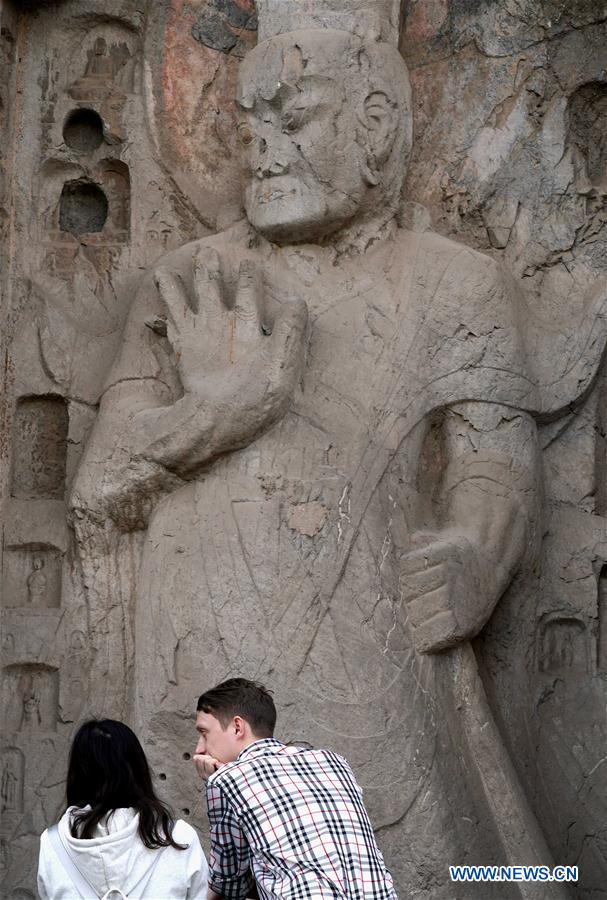
- Fengxian Temple — the signature site, home to the largest carved Buddha figure at Longmen. Non-negotiable even on the shortest visit.
- Binyang Caves — close to the entrance, minimal extra walking, strong relief carving detail.
- Guyang Cave — one of the earliest caves at the site, worth the stop if you’re already passing it on the main path.
- Wanfo Cave (Ten Thousand Buddha Cave) — skip this on a strict 3-hour budget; it’s further along the path and adds 20–30 minutes round trip for a smaller visual difference than Fengxian Temple.
- East Hill caves — skip entirely unless you have the half-day window; the river crossing and climb aren’t worth it for a 3-hour slot.
What Time-Saving Mistakes Do Rushed Visitors Make?
Most people who feel like they “wasted” their short visit made one of these avoidable errors:
- Starting at the wrong entrance gate — arriving at a gate far from the main cave cluster adds 15–20 minutes of walking before you’ve seen anything.
- Trying to cross to the east bank “just to see it” — the bridge crossing and partial walk can eat 40+ minutes for a view that’s visible, in part, from the west bank anyway.
- Not checking entry queue times before arrival — peak-season mornings and national holiday weeks can add a meaningful wait before you even reach the path.
- Treating it as a photo-only stop — rushing past Fengxian Temple without reading the context panels means missing why this particular cave matters historically.
- Underestimating the walk back — the return route to the entrance or shuttle point is often overlooked in time budgets and should be built in as 15–20 minutes, not zero.
Is 3 Hours Enough If You’re Combining Longmen With Other Luoyang Sites?
This is the most common scenario for time-limited visitors: a single day in Luoyang, splitting time between Longmen Grottoes and something like the White Horse Temple or the Luoyang Museum. Here’s a worked example.
Scenario: You arrive in Luoyang by high-speed rail at 9:00 AM and need to catch a connecting train or flight by 4:00 PM. After transit time to and from the station (roughly 40 minutes each way by car), you have a realistic window of about 5.5 hours on the ground. Splitting that into a 3-hour Longmen visit plus a shorter 1.5-hour stop at one additional site is workable. Trying to fit in two heritage sites at full length in the same window is not — you’ll end up rushing both and enjoying neither.
Decision checklist before you commit to a 3-hour Longmen visit:
- Do you have transport already arranged to and from the site entrance?
- Are you visiting during a national holiday week? If yes, add 30–45 minutes buffer for queues.
- Is Fengxian Temple your must-see priority, or are you more interested in cave density and historical range?
- Do you need a sit-down meal, or can you manage with a quick snack stop?
- Is this your only chance to see Longmen, or could a future trip allow the half-day version?
If most answers point toward “limited time, one clear priority,” the 3-hour plan fits. If you’re unsure whether you’ll return to Luoyang, it’s worth weighing whether a half-day visit is worth rearranging other plans around — a tension worth settling before you land in the city, not after.
Step-by-Step 3-Hour Itinerary for Longmen Grottoes
- 0:00–0:15 — Enter from the main west bank gate and walk directly toward the cave cluster; don’t linger at the entrance plaza.
- 0:15–0:35 — Pass through Guyang Cave and Binyang Caves at a steady pace, pausing briefly for the relief carvings.
- 0:35–1:20 — Reach Fengxian Temple. This is your anchor stop — budget 40–45 minutes here, including the climb and time to take in the scale of the carving.
- 1:20–1:40 — Continue along the path toward the bridge crossing point, with a brief stop for river-view photography.
- 1:40–2:00 — Cross partway or stop at the bridge for an east bank view, without committing to the full east-side walk.
- 2:00–2:40 — Return along the west bank path, stopping only at points you missed on the way in.
- 2:40–3:00 — Exit buffer: allow 20 minutes for the walk back to the gate and any transport pickup.
This sequence assumes moderate walking pace and average crowd conditions. On a high-traffic day, shift the Fengxian Temple window earlier if possible, since lines there tend to build through midday.
For broader historical context on the site’s carving periods and listing, the Longmen Grottoes entry documents the dynastic timeline in more depth, and the site’s inscription details are also recorded by UNESCO’s World Heritage program.
Does a 3-Hour Visit Change Depending on Season or Time of Day?
Yes, and this affects whether the 3-hour plan above holds up in practice. Summer mornings before 9:00 AM and weekday visits outside national holidays tend to match the step-by-step timing closely. Weekend afternoons and holiday periods can add significant queue time at Fengxian Temple specifically, since it’s the single most photographed point on the route. If you’re visiting during a peak period and your three-hour window isn’t flexible, consider entering right at opening time rather than mid-morning — the difference in crowd density at the main temple can be substantial enough to protect your schedule.
Winter visits generally move faster since crowds thin out, but shorter daylight hours mean less flexibility if your visit runs long. None of this changes the core recommendation: Fengxian Temple and the near-entrance caves remain the priority regardless of season, and the east bank remains the first thing to cut when time is short.
If you’re mapping out a multi-stop Luoyang day and want a second opinion on whether your timing works, send us your planned schedule and we can help you sanity-check the route before you commit to it.
