 By
By The Evolution of Buddhist Sculpture at the Luoyang Longmen Grottoes
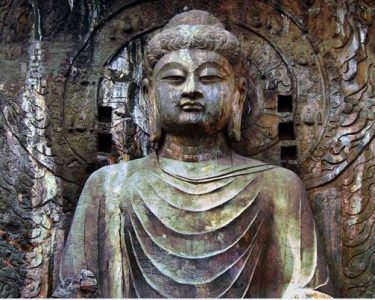
Visitors to the luoyang longmen grottoes often stand in awe before the colossal Vairocana Buddha at Fengxian Temple, yet a key question is frequently overlooked: why does this sculpture feel so profoundly different from the thousands of other figures carved into the same cliffs? The answer lies not just in a shift of artistic style, but in a dramatic change in political power, imperial ambition, and religious ideology between the Northern Wei and Tang dynasties. Understanding this transition is essential for appreciating the site’s full narrative.
The earlier works, primarily from the Northern Wei dynasty, convey a sense of otherworldly asceticism. The later Tang dynasty masterpieces, epitomized by the Vairocana, project an aura of worldly authority and divine majesty. This article breaks down the specific stylistic and ideological differences, revealing how the stone carvings at Longmen serve as a direct reflection of their imperial patrons.
Defining the Foundation: The Artistic Signature of the Northern Wei Dynasty
The initial and most intensive phase of carving at the Longmen Grottoes began under the patronage of the Northern Wei dynasty after they moved their capital to Luoyang in 493 AD. The art from this period is not merely an early or “primitive” form of what came later; it is a distinct and highly sophisticated style with its own specific spiritual and political objectives. The primary goal was to legitimize the rule of the Tuoba Xianbei, a non-Han ethnic group, by aligning themselves with Buddhism, a universalist faith.
This resulted in sculptures that emphasized transcendence and detachment from the material world. The figures were not meant to be realistic portraits of human beings but rather symbols of an enlightened state, far removed from mortal concerns. This spiritual focus is visible in several key artistic conventions.
Key Stylistic Features of Northern Wei Sculpture (c. 493-534 AD)
- Elongated and Attenuated Forms: Bodies are slender, almost stretched, with disproportionately long necks and faces. This verticality was intended to draw the viewer’s gaze upward and create a sense of ethereal grace, minimizing the physicality of the form.
- Schematic Drapery: The robes on Northern Wei figures feature sharp, linear, and often symmetrical folds, sometimes called “waterfall” drapery. This stylized pattern conceals the body beneath, further de-emphasizing human anatomy in favor of a purely spiritual representation.
- The “Archaic Smile”: Faces are characterized by a subtle, enigmatic smile. This is not an expression of human emotion but a signifier of serene, inner enlightenment. The features are often sharp and angular, conveying an air of intellectual and spiritual purity.
- Hieratic Scale: The central Buddha figure is consistently larger than the attendant bodhisattvas and disciples. This rigid hierarchy in size reinforces the theological importance of the central deity, a common feature in devotional art.
These characteristics, clearly visible in caves like Guyang, Binyang, and Lianhua, reflect an art form sponsored by an imperial court seeking to establish its legitimacy through spiritual authority rather than sheer physical power. The sculptures are formal, reserved, and deeply contemplative.
Imperial Power Manifest: Comparing Tang Vairocana to Wei Predecessors
The construction of the Fengxian Temple ensemble (c. 672-676 AD) under the Tang dynasty, particularly with patronage from Emperor Gaozong and the future Empress Wu Zetian, marks a radical departure from the Northern Wei aesthetic. The Tang dynasty presided over a golden age of cosmopolitanism, military strength, and cultural confidence. This new worldview is directly embodied in the art, transforming the spiritual idealism of the Wei into a statement of divine and worldly power. The Vairocana Buddha, representing the ultimate, cosmic aspect of Buddhahood, was the perfect vehicle for this message.
The following table provides a direct monument-to-monument analysis, contrasting the tangible characteristics of the Fengxian Temple group with the earlier Northern Wei sculptures and linking them to their underlying purpose.
| Feature | Northern Wei Buddhas (e.g., Guyang Cave) | Tang Dynasty Vairocana (Fengxian Temple) |
|---|---|---|
| Scale & Proportions | Human-scale to slightly larger-than-life. Proportions are deliberately elongated and non-naturalistic to emphasize spirituality over physicality. | Monumental and colossal (over 17 meters high). Proportions are naturalistic and powerful, with a full, rounded body that conveys substance and presence. This scale asserts imperial grandeur and the empire’s vastness. |
| Facial Expression & Gaze | Abstract and introspective. The “archaic smile” is detached and serene. The gaze is typically downcast or unfocused, suggesting inner contemplation. | Humanized and engaging. The expression is compassionate yet authoritative, serene but aware. The eyes appear to look down upon the viewer, establishing a direct, personal connection and demanding reverence. It is widely believed to be modeled on Empress Wu Zetian. |
| Drapery & Form | Stylized, linear, and flat. Robes feature sharp, repetitive folds that obscure the body, de-emphasizing the physical form. | Fluid, realistic, and revealing. The thin, clinging robes follow the contours of the body, revealing a solid, fleshy form underneath. This naturalism reflects the Tang court’s confidence and interest in the tangible world. |
| Patronage & Purpose | Sponsored by Northern Wei emperors and aristocracy to secure spiritual merit and legitimize their rule through religious piety. The focus is on the next world and demonstrating devotion. | Directly funded by the imperial treasury, with significant contributions from Wu Zetian. The purpose was to create a “Buddhist political theology” where the emperor (and empress) was seen as a terrestrial manifestation of the cosmic Buddha, legitimizing their absolute power in this world. |
This shift from an abstract, spiritual focus to a realistic, powerful one is the most significant development at the luoyang longmen grottoes. The Vairocana is not just a religious icon; it is a political statement, a fusion of divine authority and imperial might carved into the face of a mountain.
A Practical Checklist for Site Analysis
For researchers, educators, or tour operators aiming to provide a deeper understanding of the grottoes, it’s crucial to move beyond simple identification. Misinterpreting the stylistic changes as merely “early” versus “mature” art misses the entire political and religious narrative. Use this checklist to analyze any figure or cave at Longmen to determine its context and significance.
Buyer’s Decision Checklist: Identifying Dynastic Period by Style
- Assess the Body Shape: Is the figure slender, flat, and elongated? This points to the Northern Wei period. Is it full, rounded, and naturalistically proportioned? This is characteristic of the Tang.
- Examine the Robes: Are the folds sharp, symmetrical, and patterned, concealing the body? This is a strong indicator of Northern Wei craftsmanship. Are the robes thin, fluid, and clinging, revealing the form underneath? This signifies the Tang aesthetic.
- Look at the Face: Is the expression a detached, otherworldly “archaic smile”? This is classic Northern Wei. Is the face fleshy, with individualized, human-like features expressing compassion or authority? This is the hallmark of the Tang.
- Consider the Overall Composition: Does the cave feature a rigid, formal arrangement with a strict size hierarchy? This is typical of Wei-era devotional spaces. Is the composition more dynamic and interactive, with figures that seem to engage with each other and the viewer? This reflects Tang confidence and realism.
By applying this framework, one can effectively “read” the stone and understand the profound ideological shifts that occurred over the 250 years separating the main carving periods. The art of the luoyang longmen grottoes is a direct chronicle of how two powerful dynasties used the same medium and location to project vastly different visions of power, faith, and the state.
Our team provides detailed cultural heritage site assessments that can help contextualize artistic and historical assets for academic, commercial, or preservation purposes.
For detailed iconographic analysis or bespoke research on cultural heritage sites, contact our technical team to discuss your project requirements.