By
By Examining the Luoyang White Horse Temple 68 CE Founding Date
The claim is specific. The Luoyang White Horse Temple was founded in 68 CE. It is often called the first Buddhist temple in China. But is that date proven? The short answer is no. The traditional account is a narrative, not a documented fact. For researchers and history-focused travelers, separating the legend from the physical evidence matters.
The 68 CE date comes from a story about Emperor Ming of the Han dynasty. He dreamed of a golden figure. Advisors said it was the Buddha. He sent envoys west. They returned with two monks, Buddhist scriptures, and white horses. The temple was built to house them. It is a compelling origin story. But the earliest written record of this dream comes from centuries later. No contemporary Han dynasty document confirms it.
This does not mean the temple is unimportant. It means the question requires a different kind of answer. We must look at what the physical site and later records can support.
Boundary: The Traditional Account vs. The Surviving Evidence
This is the core distinction. The traditional 68 CE founding account is a literary tradition. The dates supported by surviving buildings, inscriptions, and later records tell a different timeline. One is a story about origins. The other is a physical history of construction and reconstruction.
Here is the boundary in clear terms.
| Aspect | Traditional 68 CE Account | What Surviving Evidence Shows |
|---|---|---|
| Origin | Founded by Emperor Ming after a dream | No contemporary Han dynasty records exist |
| Physical structures | Original temple from the first century | Earliest surviving buildings are from the Ming and Qing dynasties (14th–19th centuries) |
| Inscriptions | Implied to be contemporary with the founding | Earliest significant stone inscriptions date from the Northern Wei (386–534 CE) or later |
| Documentation | A continuous, verified history | The story first appears in texts like the Mouzi Lihuo Lun and later Buddhist catalogs, written centuries after 68 CE |
| Horses | White horses carried the scriptures | The horse motif is common in Buddhist art; no physical evidence ties specific horses to the site |
The boundary is not about calling the story false. It is about recognizing the limits of what we can prove. A visitor walking through the temple today is not walking through a first-century building. They are walking through a site that has been rebuilt and reimagined for nearly two thousand years.
Why the Gap Exists
Buddhism did not arrive in China as a single, documented event. It seeped in through trade routes, foreign communities, and gradual cultural exchange. The 68 CE story serves a purpose. It gives Buddhism an official, imperial origin. That made the religion easier to legitimize in later centuries. The story is a foundation myth, not a historical record.
Wooden structures also burn. They rot. They are replaced. The Luoyang White Horse Temple has been destroyed and rebuilt multiple times. Wars, fires, and political upheavals erased whatever physical layers might have existed from the earliest periods. What remains is a palimpsest of later dynasties.
What the Physical Site Actually Supports
The temple complex is real. Its cultural weight is real. But the evidence points to a different timeline for what you can see and touch.
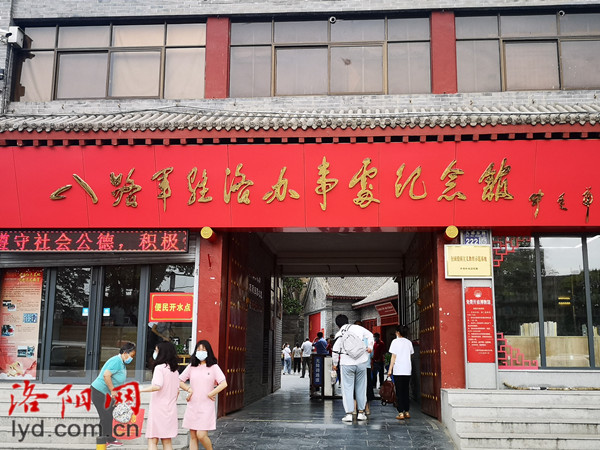
The buildings that stand today are overwhelmingly from the Ming and Qing dynasties. Some elements may incorporate older foundations, but those are not visible to visitors. The Qiyun Pagoda, for example, is often mentioned as an older structure. Its current form is also a later reconstruction, though it may sit on an earlier site.
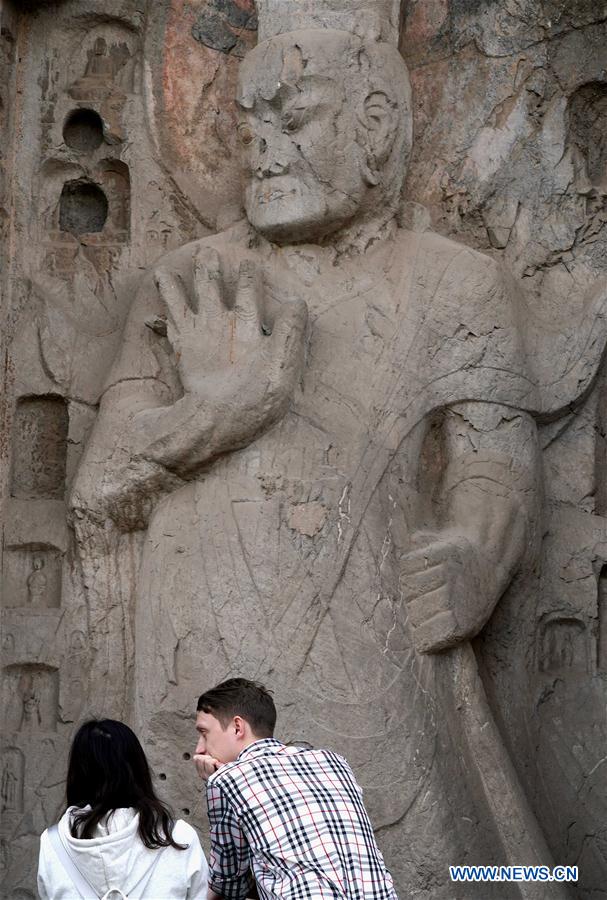
Stone inscriptions offer more concrete evidence. The earliest ones date from the Northern Wei period. That is roughly 400 to 500 years after the traditional founding date. These inscriptions do not prove the temple existed in 68 CE. They prove that by the fifth century, the site was important enough to warrant permanent stone records.
The Role of Later Buddhist Texts
The story of Emperor Ming’s dream appears in several key texts. The Mouzi Lihuo Lun, a defense of Buddhism written around the second or third century CE, mentions the dream. The Sishier Zhang Jing (Sutra of Forty-two Sections) is traditionally linked to this event. Later catalogs, like the Chu Sanzang Jiji compiled by Sengyou in the early sixth century, repeat and expand the story.
Notice the pattern. Each retelling is later than the one before. Each adds detail. None can be traced to a contemporary Han source. This is how foundation myths grow. They become more elaborate over time, not less.
A Practical Checklist for Assessing the Claim
If you are evaluating the 68 CE founding date for research, travel planning, or cultural understanding, use this checklist.
- Ask for contemporary evidence. Is there any document from the Han dynasty that mentions the temple? The answer is no. If a source claims otherwise, ask for the specific document and its date.
- Check the physical structures. Are the buildings you are looking at from the first century? No. The earliest surviving structures are from the Ming and Qing dynasties. Adjust your expectations accordingly.
- Look at the inscriptions. The earliest stone inscriptions are from the Northern Wei. That is the earliest physical proof of the site’s importance, not its founding.
- Trace the story’s development. The dream narrative appears in later Buddhist texts. It is a literary tradition. It is not independent historical confirmation.
- Separate significance from fact. The temple is culturally significant. That significance does not depend on the 68 CE date being literally accurate. You can appreciate the site without accepting the legend as fact.
Common Mistakes When Reading About the Temple
Many popular summaries blur the line between legend and evidence. Here are the most frequent errors.
- Treating “first temple” as a verified fact. The Luoyang White Horse Temple is traditionally called the first Buddhist temple in China. That is a title, not an archaeological conclusion. Other early Buddhist sites may have existed but left no record.
- Assuming the current buildings are ancient. A first-time visitor might think the wooden halls are from the Han dynasty. They are not. They are later reconstructions. The site is old; the buildings are relatively recent.
- Citing the dream as evidence. The dream of Emperor Ming is part of the story. It is not independent evidence for the story. Using the legend to prove the legend is circular reasoning.
- Ignoring the gap in the record. There is a multi-century gap between the claimed founding date and the first written records. That gap is significant. It means the story was transmitted orally or through now-lost texts for generations.
- Confusing religious tradition with historical documentation. Buddhist tradition holds the temple in high regard. That is a matter of faith and cultural memory. Historical documentation is a different standard of proof.
The Evidence in a Broader Context
Buddhism’s arrival in China was gradual. The Silk Road brought more than goods. It brought ideas, art, and religious practices. Foreign merchants and monks lived in Chinese cities. Some likely practiced Buddhism privately before any imperial recognition.
The 68 CE story compresses this long, messy process into a single, neat event. That is what foundation myths do. They create a clear starting point. The reality was probably messier. Buddhism likely entered China through multiple routes and communities over decades or even centuries.
The Luoyang White Horse Temple sits at the intersection of this history. It is a real place with a real, if unprovable, claim to antiquity. The temple’s value does not disappear when you question the date. It deepens. You see the layers of reconstruction, the later inscriptions, the evolving story. You see how a culture remembers its own past.
What This Means for Your Visit or Research
If you plan to visit, do not go expecting a first-century building. Go expecting a living religious site that has been rebuilt many times. The oldest things you will see are not the buildings. They are the stone inscriptions and the cultural memory embedded in the site.
If you are researching, use the 68 CE date as a starting point, not a conclusion. Ask what sources support it. Ask when those sources were written. Ask what the physical evidence shows. The answers will lead you to a more nuanced understanding.
The temple is not a fraud. It is a complex historical site wrapped in a powerful origin story. The story has shaped how Buddhism is understood in China. That influence is real, even if the date is not proven.
To explore the site’s historical layers or plan a visit with accurate expectations, contact our team for a detailed cultural site report and current visitor information.