
Blog
How the White Horse Temple Became a Buddhist Translation Center

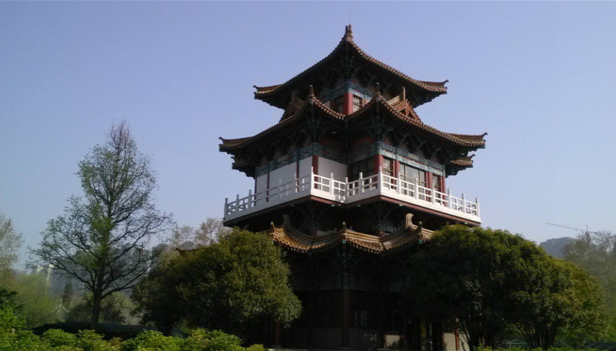
How the White Horse Temple Became China’s First Buddhist Translation Center
Many recognize the White Horse Temple (Baimasi) as the first Buddhist temple established on Chinese soil. While this distinction is significant, its more profound legacy lies in its function as the nation’s inaugural center for the systematic translation of Buddhist scriptures. This foundational work transformed a foreign philosophy into a cornerstone of Chinese culture. But how exactly did an imperial lodging outside ancient Luoyang evolve into a sophisticated hub for cross-cultural scholarship and religious dissemination?
The transition was not accidental. It was the result of direct imperial patronage, the development of a pioneering translation methodology, and a strategic location that supported sustained intellectual work. Understanding this process reveals not just the history of a single temple, but the blueprint for how Buddhism itself took root and flourished across East Asia. For organizations involved in cultural heritage or complex cross-lingual projects, the temple’s story offers a powerful historical case study in managing knowledge transfer.
The Imperial Dream That Sparked a Scholarly Mission
The origin of the White Horse Temple is inseparable from the ambitions of Emperor Ming of the Eastern Han Dynasty. According to traditional accounts, the emperor had a dream in which a golden deity flew across his palace. His advisors interpreted this figure as the Buddha from India. Intrigued, Emperor Ming dispatched a delegation in 64 CE along the Silk Road to seek out Buddhist teachings.
The mission returned years later, not just with information, but with two eminent Indian monks—Kāśyapa Mātanga and Dharmaratna. They arrived on white horses, carrying with them sacred texts and relics. This arrival was a pivotal moment. The emperor, deeply invested in the success of this new spiritual introduction, provided the monks with official lodging and resources at a government building outside the capital city of Luoyang. This building, the Court of State Ceremonials (Honglu Si), was originally used to house foreign dignitaries. It was subsequently converted and renamed the White Horse Temple in honor of the horses that carried the scriptures.
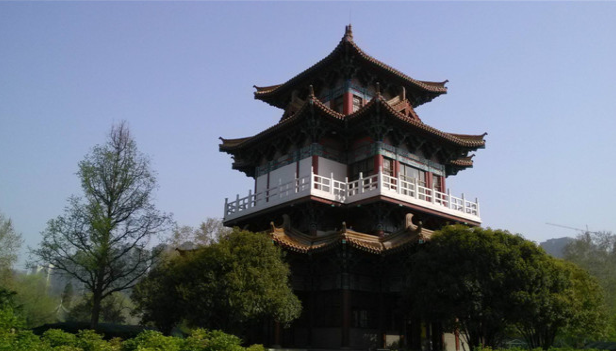
This imperial sponsorship was the critical first step. It elevated the monks’ work from a private endeavor to a state-sanctioned project, providing three essential resources:
- Legitimacy: The emperor’s personal interest gave the new religion an immediate and powerful endorsement, protecting it from potential political or social opposition.
- Resources: The project received funding, facilities, and support staff, including scribes and scholars, which would have been impossible for the foreign monks to secure on their own.
- Security: By housing the monks in a secure, state-run facility, the emperor ensured a stable and quiet environment conducive to the intense intellectual labor of translation.
Without this direct and robust imperial mandate, the initial translation efforts would have lacked the structure and support necessary to establish a lasting foothold. The temple was, from its inception, an institution of scholarship backed by the highest authority in the land.
The Translation Engine: How Monks Turned Sanskrit into Scripture
The core function of the early White Horse Temple was not worship but translation. The process established here became the model for centuries of scholastic work across China. It was a collaborative, multi-stage effort that required linguistic expertise, deep doctrinal understanding, and immense patience. The system involved distinct roles and a clear workflow, transforming oral and written Sanskrit texts into accessible Chinese literature.
The table below breaks down the key stages of this pioneering translation practice, illustrating how the temple functioned as a true production center for religious texts.
| Phase | Key Participants | Primary Activities & Challenges |
|---|---|---|
| 1. Recitation and Exposition | Lead Foreign Monk (e.g., Kāśyapa Mātanga) | The monk, who had memorized the sutras, would recite passages aloud in Sanskrit. He would then provide a detailed oral explanation of the meaning, context, and philosophical nuances in a intermediary language or with the help of a bilingual assistant. The primary challenge was conveying abstract concepts that had no direct equivalent in Chinese thought or language. |
| 2. Transcription and Initial Translation | Chinese Scribes & Scholar-Officials | As the foreign monk explained the text, a “Receiver of the Meaning” or chief scribe would attempt to render the concepts into written Chinese. This was not a word-for-word translation but a conceptual one. This phase was fraught with potential for misinterpretation, as the scribes had to find appropriate Daoist or other native philosophical terms to approximate Buddhist ideas. |
| 3. Polishing and Stylistic Refinement | Chinese Literary Experts | The raw draft was then passed to literary stylists. Their job was to refine the often-clumsy initial translation into elegant, readable, and grammatically correct Chinese that would appeal to an educated audience. This step was crucial for the text’s acceptance and dissemination among the Chinese elite. The challenge was to maintain doctrinal accuracy while improving literary quality. |
| 4. Final Review and Collation | The Entire Translation Team | The polished text was read back to the foreign monk (through an interpreter) to ensure the original meaning had not been lost or distorted. The team would debate specific word choices and phrasing until a consensus was reached. The final, approved text was then copied for preservation and distribution. |
The most famous product of this process at the White Horse Temple was the Sutra of Forty-two Chapters. While likely a compilation of core Buddhist principles rather than a translation of a single Sanskrit text, it was the first Buddhist scripture to be produced in Chinese. Its creation demonstrated the viability of the translation process and provided the Chinese people with their first direct, if elementary, look into Buddhist doctrines.
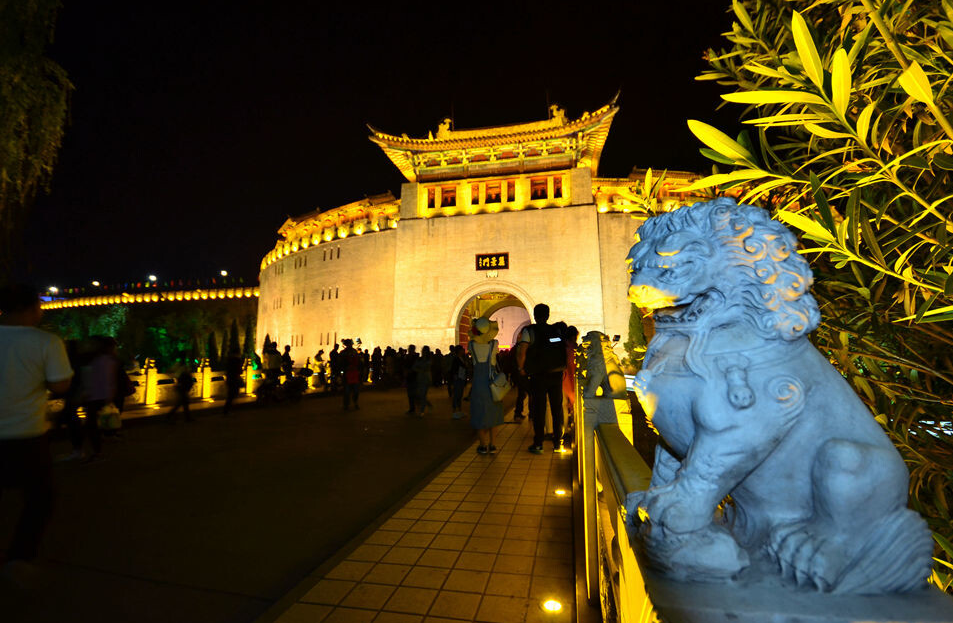
Establishing a Precedent for Future Scholarship
The success of the initial translations at the White Horse Temple did more than just introduce a few texts; it created a durable and replicable model for cultural and religious transmission. The temple’s legacy is not just in the specific sutras it produced, but in the scholarly tradition it founded. This established a pattern of state-sponsored translation that would define the growth of Buddhism in China for the next thousand years.
However, it is crucial to avoid common oversimplifications about this early period. Understanding the realities of this work provides a clearer picture of its true impact.
Common Misconceptions About Early Buddhist Translation
- Myth: Translation was a solitary, monastic activity.
Reality: It was a highly collaborative, state-funded project. The process involved teams of foreign monks, Chinese scribes, bilingual intermediaries, and literary experts working together under imperial patronage. It was more akin to a modern research institute than a secluded monastery. - Myth: The first translations were perfect and definitive.
Reality: Early translations were foundational but often imperfect. Translators struggled with vocabulary, forcing them to borrow and repurpose existing Daoist and Confucian terms (a practice known as geyi, or “matching the concepts”). This led to initial misunderstandings of core Buddhist ideas like emptiness (śūnyatā) and nirvana. These early works were crucial starting points that were refined, re-translated, and debated for centuries. - Myth: The White Horse Temple remained the sole center of translation.
Reality: The temple was the catalyst, not the sole location. Its success proved the concept, inspiring the establishment of larger, more sophisticated translation bureaus in Luoyang and later in other capitals like Chang’an. Figures like An Shigao and Lokakṣema, who arrived in Luoyang shortly after, continued the work, but the temple set the essential precedent.
By serving as the successful pilot project, the temple demonstrated that the immense linguistic and philosophical barriers between India and China could be overcome. It created a demand for more texts and more expert translators, fueling centuries of exchange along the Silk Road and cementing the temple’s role as the cradle of Chinese Buddhism.
For any B2B project involving the transfer of complex technical or cultural knowledge across language barriers, the temple’s history underscores the need for institutional support, collaborative teams with diverse skill sets, and an iterative process of refinement. The initial translation is just the beginning of a much longer journey toward true understanding and adoption.
For further analysis of cultural heritage projects or complex logistical undertakings, please contact our team for insights.
