By
By Understanding the Claim of White Horse Temple Luoyang as China’s First Buddhist Temple
For centuries, the venerable White Horse Temple in Luoyang has been distinguished by a powerful claim: that it is the very first Buddhist temple established on Chinese soil. This tradition, rooted in a compelling story from the Eastern Han Dynasty, has shaped its identity and significance. But for historians, researchers, and discerning visitors, a critical question remains: how does this foundational narrative hold up against the historical and archaeological record? Answering this requires separating revered tradition from verifiable fact.
The story of the White Horse Temple Luoyang is not just about a single building; it represents the pivotal moment of Buddhism‘s formal introduction into China. Understanding the nuances of its origin story provides a clearer perspective on the early, complex process of cultural exchange along the Silk Road and the subsequent development of Buddhism as a major Chinese faith. This article examines the evidence, clarifies common points of confusion, and offers a framework for appreciating the temple’s profound historical importance, regardless of its “first” status.
The Legend of Emperor Ming’s Dream and the Temple’s Founding
The traditional account of the temple’s origin is a dramatic and memorable narrative that firmly places its founding in 68 CE. This story is central to the temple’s identity and has been passed down through generations, becoming a cornerstone of Chinese Buddhist history. It begins with a dream.
According to historical texts like the Book of the Later Han, Emperor Ming of the Eastern Han Dynasty had a vision one night of a golden deity flying near his palace. The figure was tall and radiant, with a bright light emanating from its head. Unsure of the dream’s meaning, the emperor consulted his ministers. One of them, Fu Yi, identified the deity as the Buddha from India, a sage from the West.
Intrigued, Emperor Ming dispatched a delegation of envoys to travel west in search of Buddhist teachings. After a long journey, the delegation reached what is now modern-day Afghanistan, where they encountered two eminent Indian Buddhist monks: Kāśyapa Mātanga and Dharmaratna. The monks agreed to return with the envoys to China, bringing with them sacred texts and statues of the Buddha. They loaded their precious cargo onto white horses, which would later give the temple its name.
Upon their arrival in the capital city of Luoyang, Emperor Ming gave them a warm reception. He arranged for the monks to be housed at the Honglu Temple, an institution responsible for receiving foreign dignitaries. To provide a dedicated space for them to translate the scriptures and preach, the emperor ordered the construction of a new monastery outside the Yongmen gate of Luoyang. This new structure, completed in 68 CE, was named the White Horse Temple (Bái Mǎ Sì) in honor of the horses that carried the sacred texts. This act is traditionally marked as the official state-sponsored introduction of Buddhism to China.
The 68 CE Founding Story vs. The Archaeological Record
While the story of Emperor Ming is a powerful and enduring one, modern historical and archaeological inquiry requires a distinction between traditional accounts and verifiable evidence. The claim that the White Horse Temple is China’s “first” Buddhist temple, founded precisely in 68 CE, presents several complexities. Here, we break down the traditional narrative against what current scholarship can and cannot confirm.
This table contrasts the key elements of the founding legend with findings from historical analysis and archaeology. It serves as a guide for understanding the boundaries of our knowledge.
| Element of the Traditional Story | Historical & Archaeological Assessment |
|---|---|
| The “First” Buddhist Temple | Status: Debated. Evidence suggests Buddhist ideas and possibly even small, informal communities of foreign merchants existed in China before 68 CE. However, White Horse Temple is widely considered the first officially state-sponsored and imperially recognized monastery. The “first” claim is more about official patronage than the absolute first presence of Buddhist practice. |
| The Founding Date of 68 CE | Status: Not directly verifiable. The date comes from later historical texts, not from inscriptions or archaeological layers dated to 68 CE itself. While the Eastern Han Dynasty is the correct period for Buddhism’s formal arrival, the specific year is part of the traditional narrative and cannot be pinpointed with archaeological certainty. |
| Emperor Ming’s Dream | Status: Legendary. The story of the dream is a classic example of a “founding myth.” Such narratives were common in historical accounts to provide a prestigious and divinely inspired origin for significant events. It serves to legitimize the emperor’s actions and the introduction of a foreign religion. |
| Indian Monks Kāśyapa Mātanga & Dharmaratna | Status: Plausible but unconfirmed. The presence of foreign monks in Han-era Luoyang is historically plausible, as the city was a cosmopolitan terminus of the Silk Road. However, there is no contemporary archaeological evidence, such as inscriptions from their time, to confirm their specific identities or activities. Their stories are known from later biographical collections of monks. |
| The Original 1st-Century Structure | Status: No remains found. The current buildings at the White Horse Temple date from the Ming and Qing dynasties (1368-1912) and later restorations. The layout follows traditional patterns, but there are no surviving architectural elements from the original Han Dynasty structure. The site has been continuously used and rebuilt for nearly two millennia, obscuring the earliest layers. |
What Makes White Horse Temple Architecturally and Culturally Significant?
Even with the historical nuances, the White Horse Temple Luoyang remains a site of immense importance. Its value lies not just in its debated origin story but in its continuous role as a center for Buddhist learning and its layered architectural history. For visitors and researchers, observing the site reveals a timeline of Chinese Buddhism itself.
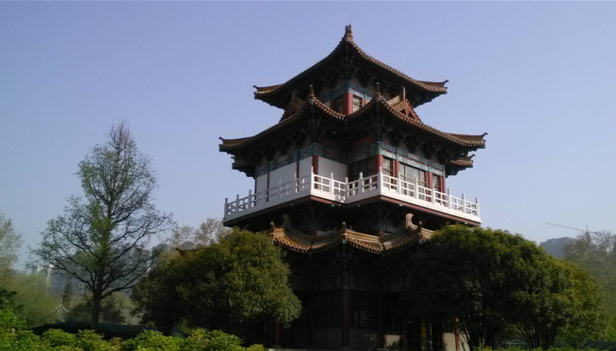
The temple you see today is a living museum of architectural evolution. While no Han Dynasty structures survive, the complex showcases styles from the Yuan, Ming, and Qing dynasties. It has also expanded in modern times to include international sections, such as the Thai and Indian style temples, reflecting its ongoing role in global Buddhist exchange. When visiting, focus on the layers of history preserved in the layout and specific structures.
A Researcher’s Checklist for Visiting White Horse Temple
To appreciate the site’s historical depth, look beyond the main halls and consider these key features. They provide tangible connections to the temple’s long and storied past.
- The Qilun Pagoda (Qi Yun Ta): Located to the southeast of the main temple complex, this is the oldest surviving structure on the site. However, it is not from the Han Dynasty. The brick pagoda’s architectural style dates it to the Jin Dynasty (1115-1234). Its existence proves the temple’s long history of rebuilding and adaptation.
- The Tombs of the Indian Monks: Inside the main gate are two circular tombs, traditionally held to be the final resting places of Kāśyapa Mātanga and Dharmaratna. While their authenticity cannot be definitively proven, they are powerful symbols of the temple’s foundational narrative and the India-China connection.
- The Main Hall (Da Xiong Bao Dian): A classic example of Ming Dynasty architecture, this hall houses important statues and gives a sense of the temple’s appearance during a later imperial golden age. Observe the construction techniques and iconography, which are products of centuries of development in early Buddhist iconography and design.
- The Terrace of Coolness (Qing Liang Tai): Believed to be the original site where the monks translated the scriptures, this elevated terrace behind the main hall feels like the historical heart of the temple. The current buildings on it are more recent, but its location connects directly to the founding legend.
- Historical Steles and Inscriptions: Pay close attention to the numerous stone steles throughout the complex. These inscriptions, left by emperors, officials, and scholars over many dynasties, are primary sources that document the temple’s history, its repairs, and its perceived importance through time. They are a library carved in stone.
By focusing on these elements, a visitor can trace the evolution of the White Horse Temple from a legendary Han Dynasty origin to a tangible, multi-dynastic architectural treasure. The significance of the temple is not diminished by historical inquiry; rather, it is enriched by a deeper understanding of its complex past.
Ultimately, the White Horse Temple’s claim as the “first” is best understood as celebrating its role as the first major, royally-sanctioned Buddhist institution in China. This imperial patronage provided the critical foundation from which Buddhism could grow and flourish across the nation, making the temple’s historical title, if not literally precise, then certainly spiritually and culturally true.
If your organization requires detailed analysis of historical sites or cultural heritage assets, contact our team to discuss your project requirements.