 By
By The Deep Significance of White Horses at Luoyang White Horse Temple
The Luoyang White Horse Temple stands as a pivotal landmark in the history of Buddhism in China. Often cited as the “Cradle of Chinese Buddhism,” its very name, which translates to “White Horse Temple,” immediately draws attention to the iconic white horses. For heritage travelers, historians, and cultural programs, understanding the specific meaning behind these white horses is crucial for appreciating the temple’s profound historical and spiritual layers. This exploration delves into the foundational narratives and enduring symbolism that define this ancient site and its equine motif.
Decoding the Founding Narratives: Tradition, Legend, and History at Luoyang White Horse Temple
When considering the Luoyang White Horse Temple, it is essential to distinguish between its layered origin stories. Professional buyers of cultural content, educational materials, or tourism experiences must understand these distinctions to accurately convey the temple’s significance. Misrepresenting these narratives can lead to an incomplete or misleading understanding of early Buddhist transmission. Here, we outline the key differences:
| Narrative Aspect | Description | Practical Implication for Understanding |
|---|---|---|
| Temple’s Founding Tradition | This refers to the widely accepted narrative within Chinese Buddhist circles and popular culture. It posits that Emperor Ming of the Eastern Han Dynasty (58-75 CE) had a dream of a golden man flying in front of his palace. Interpreters identified this figure as the Buddha. The emperor then dispatched envoys to the West to seek Buddhist scriptures. | Forms the primary narrative for popular tours and initial public engagement. Focuses on the emperor’s vision as the divine impetus for Buddhism’s arrival. Emphasizes the continuity of faith and imperial endorsement. Getting it wrong might mean overlooking the spiritual genesis story that resonates with many visitors. |
| White-Horse Sutra Legend | Following the emperor’s decree, the envoys reportedly returned from Central Asia (often identified as India) around 67 CE, accompanied by two Indian monks, Kasyapa Matanga and Dharmaratna. They brought Buddhist scriptures and statues, carried on two white horses. The first Buddhist temple in China was then built in their honor, named “White Horse Temple” to commemorate these animals. The Sutra of Forty-two Sections is often cited as the first scripture brought. | Provides the evocative, memorable imagery and the direct explanation for the temple’s name. It highlights the physical journey and the role of the horses as carriers of sacred knowledge. Essential for explaining the “white horse” aspect directly. Failing to convey this legend strips the temple of its most direct and charming origin story, diminishing its cultural appeal. |
| Historically Documented Early Buddhist Transmission | Academic historical accounts suggest a more gradual, less dramatic introduction of Buddhism into China, likely through trade routes and cultural exchanges during the Han Dynasty, possibly even before Emperor Ming’s dream. Archaeological evidence and early texts indicate a presence of Buddhist communities and practices in China by the 1st century CE, with more significant institutionalization occurring later. The white horse legend, while powerful, is seen by scholars as a foundational myth designed to legitimize and popularize Buddhism’s early presence. | Offers a critical, evidence-based perspective, differentiating historical fact from legend. Crucial for academic research, detailed educational programs, and nuanced historical interpretations. It provides context for how religious narratives are constructed. If a buyer focuses solely on the legend without acknowledging historical scholarship, they risk presenting an incomplete or anachronistic view of early Chinese history and religious development. |
Understanding these distinct layers is not merely an academic exercise; it’s a practical necessity for anyone disseminating information about the Luoyang White Horse Temple. It ensures that the narrative is rich, accurate, and respectful of both its spiritual significance and its historical context. Buyers seeking to develop comprehensive B2B content or experiences related to Chinese cultural heritage must appreciate this nuanced interplay.
The Enduring Symbolism of White Horses in Buddhist Transmission
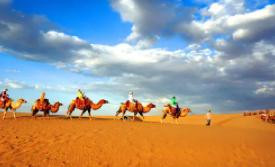
Beyond their role in the founding legend, white horses carry profound symbolism within Buddhist and broader Asian cultures, contributing layers of meaning to the Luoyang White Horse Temple. This symbolism is not accidental; it reinforces the temple’s identity as a beacon of enlightenment and a gateway for new spiritual understanding. For B2B partners, recognizing these symbolic elements can enrich narratives and provide deeper engagement points for audiences.
- Purity and Enlightenment: In many traditions, white animals, especially horses, symbolize purity, sanctity, and the untainted nature of spiritual truth. The white horses bringing the scriptures represent the uncorrupted message of the Dharma, arriving pristine and profound. This resonates with the Buddhist goal of achieving a pure, enlightened state of mind, free from defilements.
- Speed and Efficiency of Dharma Transmission: Horses are known for their speed and ability to cover vast distances. The white horses symbolize the swift and effective transmission of the Dharma from its origins in India to China. This imagery conveys the idea that Buddhist teachings traverse geographical and cultural barriers with divine momentum, spreading rapidly and transforming lands.
- Royal Patronage and Dignity: Historically, horses were animals of prestige, often associated with royalty, nobility, and significant journeys. The image of two white horses carrying sacred texts elevates the stature of Buddhism’s introduction, implying imperial endorsement and a dignified, momentous arrival. It suggests that Buddhism was welcomed into China with the highest respect and honor.
- Sacrifice and Service: While not explicitly stated as a sacrifice, the horses’ role in carrying the heavy burden of scriptures over immense distances underscores their service to a higher purpose. They become symbols of dedication and commitment to the spread of spiritual knowledge, embodying the selflessness often found in Buddhist teachings.
- Mythical and Celestial Connections: White horses often appear in mythology as celestial beings or mounts of gods and enlightened figures. This mythical dimension imbues the temple’s origin story with a sense of the miraculous and divine intervention, suggesting that the arrival of Buddhism was not merely a human endeavor but a preordained event of cosmic significance.
These layers of symbolism, whether consciously or subconsciously absorbed, contribute significantly to the emotional and spiritual resonance of the Luoyang White Horse Temple. For educators and cultural program developers, incorporating these symbolic interpretations can transform a simple historical account into a rich, multi-dimensional narrative that captivates and informs.
Luoyang White Horse Temple’s Legacy: A Historical Anchor for Chinese Buddhism
The Luoyang White Horse Temple is more than just a site of ancient legends; it is a living testament to the enduring impact of Buddhism on Chinese culture and society. Its legacy extends far beyond its initial founding, influencing religious practice, art, architecture, and intellectual thought for nearly two millennia. For organizations engaged in cultural export or historical research, understanding this continuous legacy is vital for presenting a complete picture of China’s spiritual heritage.
The temple’s strategic location in Luoyang, a historical capital of numerous Chinese dynasties, amplified its importance. It served as a primary translation center for Buddhist scriptures, where Indian and Central Asian monks collaborated with Chinese scholars to render complex Sanskrit and Pali texts into Chinese. This meticulous work was foundational, making Buddhist philosophy accessible to a wider Chinese audience and shaping the vocabulary of Chinese Buddhism. The sheer volume and intellectual rigor of these translation efforts highlight the temple’s role as an academic and spiritual hub.
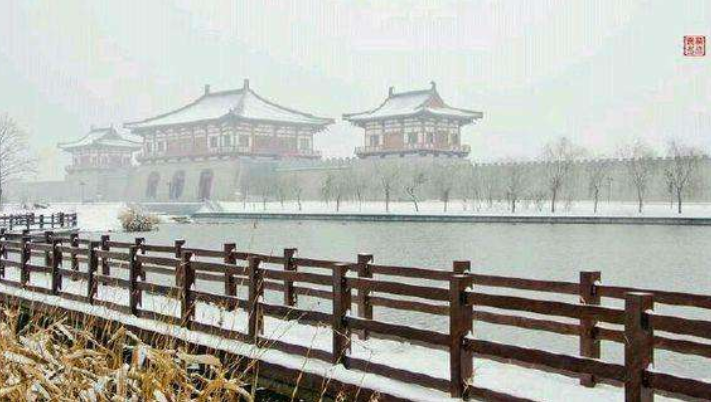
Over centuries, the Luoyang White Horse Temple underwent numerous renovations and expansions. While much of the original Han Dynasty architecture has been lost to time, war, and natural decay, subsequent dynasties rebuilt and re-consecrated the site, ensuring its continuous function as a place of worship and learning. The existing structures, largely rebuilt during the Ming and Qing dynasties and restored in modern times, reflect a blend of architectural styles that tell a story of resilience and adaptation. The complex features various halls, courtyards, and pagodas, each contributing to the temple’s multi-faceted identity. Key features include the Hall of the Great Buddha, the Hall of the Thousand Buddhas, and the Qiyun Pagoda, one of the oldest brick pagodas in China.
The temple’s influence also extended to the development of various Buddhist schools and traditions within China. It was a place where different interpretations and practices converged, fostering an environment of intellectual exchange that contributed to the unique flavors of Chinese Buddhism. Its status as the “first temple” lent it unparalleled prestige, making it a pilgrimage site for devout Buddhists and a symbol of their faith’s deep roots in the country.
Beyond the Physical: The Temple’s Cultural Resonance
The cultural resonance of the Luoyang White Horse Temple is profound. It serves as a tangible link to China’s past, embodying the moment a foreign religion took root and began its transformation into an integral part of Chinese identity. Its stories, both legendary and historical, are woven into the fabric of national consciousness, teaching lessons of cultural exchange, spiritual perseverance, and the timeless search for wisdom. For any entity dealing with Chinese cultural export, the temple offers a rich narrative of integration and adaptation, demonstrating how external influences can be embraced and reshaped to enrich a civilization.
Understanding the full spectrum of meaning behind the white horses at Luoyang White Horse Temple, from their legendary role in transportation to their symbolic representations of purity and transmission, provides a richer, more accurate context for this monumental site. For any B2B stakeholder engaged with cultural heritage, this depth of knowledge is invaluable.
To deepen your understanding of the Luoyang White Horse Temple or explore its significance for your next cultural project, we invite you to reach out for further insights and historical resources.
===BODY===