 By
By How Luoyang China Compares to Xi’an as an Ancient Capital
Most travelers and history enthusiasts know Xi’an. The Terracotta Army makes it famous. But when someone asks which city served as China’s capital more often, the answer surprises many. Luoyang China held that role across more dynasties and for longer cumulative periods than almost any other city. This article breaks down the comparison using three practical lenses: dynastic succession, geographic logic, and what you can actually see today.
If you are planning a heritage-focused itinerary or researching early imperial China, understanding the difference between these two capitals matters. They are not interchangeable. Each represents a distinct phase of Chinese political geography.
Dynastic Matrix: Who Ruled From Where
The simplest way to compare the two cities is to list which dynasties used them as primary or secondary capitals. The pattern that emerges is not random. It reflects shifting power bases, threats, and economic centers.
| Dynasty | Primary Capital | Secondary / Alternate Capital | Key Period |
|---|---|---|---|
| Western Zhou | Haojing (near Xi’an) | Luoyang (Chengzhou) | 1046–771 BCE |
| Eastern Zhou | Luoyang | — | 770–256 BCE |
| Qin | Xianyang (near Xi’an) | — | 221–206 BCE |
| Western Han | Chang’an (Xi’an) | Luoyang | 206 BCE–9 CE |
| Eastern Han | Luoyang | — | 25–220 CE |
| Wei / Western Jin | Luoyang | — | 220–316 CE |
| Northern Wei | Luoyang (after 493) | — | 493–534 CE |
| Sui | Luoyang (eastern capital) | Chang’an | 581–618 CE |
| Tang | Chang’an | Luoyang (eastern capital) | 618–907 CE |
| Later Tang / Later Jin | Luoyang | — | 923–937 CE |
| Northern Song | Kaifeng | Luoyang (western capital) | 960–1127 CE |
What does this table actually tell you? Luoyang China was never a single-dynasty city. It served as a fallback capital, an eastern capital, and a primary capital across different eras. Xi’an, by contrast, dominated during the Qin, Western Han, and Tang — periods of outward expansion and strong centralized control.
If you are deciding which city to prioritize for a research trip, ask yourself: which dynasties interest you most? Eastern Han and Northern Wei history is far more accessible in Luoyang. Qin and Tang imperial court culture is stronger in Xi’an.
Geography: Why Two Capitals Instead of One
The location of each city explains its political role. Xi’an sits in the Wei River valley, protected by mountain passes on all sides. It is a natural fortress. Luoyang China sits further east, on the Yellow River’s southern bank, where the river meets the Luo River. It is a transportation hub, not a fortress.
This distinction created a repeating pattern in Chinese history. When a dynasty needed defense against steppe nomads from the northwest, it chose Xi’an. When it needed to administer a large agricultural population and move grain efficiently, it shifted east to Luoyang.
The Sui and Tang dynasties formalized this with a two-capital system. Chang’an served as the political and ritual center. Luoyang functioned as the economic and logistical center. Grain from the fertile eastern plains could be shipped up the Grand Canal and Yellow River to Luoyang far more easily than overland to Chang’an. In years of famine or flood, Tang emperors routinely relocated their entire court to Luoyang.
For a modern visitor, this geographic difference still shapes the experience. Xi’an feels enclosed, with its massive surviving city wall and surrounding mountains. Luoyang feels more open, spread along river terraces, with sites scattered across a wider area.
Surviving Heritage: What You Can Actually See
Here is where the comparison becomes practical. What remains today differs dramatically between the two cities. This affects itinerary planning, research focus, and time allocation.
Xi’an’s Visible Heritage
- Terracotta Army: A single site that dominates most itineraries. It is a Qin dynasty (3rd century BCE) funerary complex, not a Tang or Han site.
- City Wall: One of the best-preserved Ming dynasty fortifications in China, but it dates from the 14th century — long after Xi’an’s peak as an imperial capital.
- Big Wild Goose Pagoda: A Tang dynasty structure, genuinely from the 7th century, associated with the monk Xuanzang.
- Shaanxi History Museum: Excellent for Tang gold, silver, and mural art.
Luoyang’s Visible Heritage
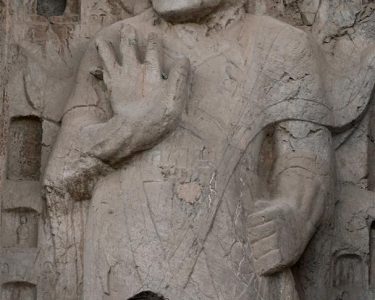
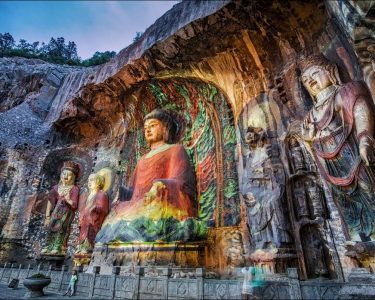
- Longmen Grottoes: A UNESCO World Heritage site with over 100,000 Buddhist statues carved into limestone cliffs. Work began under the Northern Wei (493 CE) and continued through the Tang. This is the single most important surviving monument of Luoyang China’s imperial patronage.
- White Horse Temple: Traditionally dated to 68 CE, considered the first Buddhist temple in China. The current buildings are mostly Ming and Qing reconstructions, but the site’s historical significance is unmatched.
- Guanlin Temple: A Ming-era complex dedicated to Guan Yu, but built on a site associated with Eastern Han history.
- Luoyang Museum: Strong collections of Eastern Zhou, Eastern Han, and Northern Wei artifacts, including ceramics and tomb figurines.
- Erlitou Site Museum: Located east of the city, this museum presents the Erlitou culture (c. 1900–1500 BCE), often associated with the legendary Xia dynasty. This pushes Luoyang’s claim as a capital far earlier than any Xi’an site.
The key difference: Xi’an’s most famous site (Terracotta Army) predates its most famous dynasty (Tang) by nearly a thousand years. Luoyang’s most famous site (Longmen Grottoes) directly reflects the city’s role as an imperial capital during the Northern Wei and Tang. If your interest is in how capitals shaped religious and artistic patronage, Luoyang offers a more direct connection.
Comparison Matrix: Luoyang China vs. Xi’an
This section distills the comparison into a decision-oriented format. Use it to determine which city fits your research or travel goals.
| Parameter | Luoyang China | Xi’an | What This Means for You |
|---|---|---|---|
| Dynastic breadth | Served as capital for 13+ dynasties across 1,500+ years | Primary capital for Qin, Western Han, Tang; secondary for others | Luoyang offers a longer chronological sweep; Xi’an offers deeper Tang-era focus |
| Geographic logic | Transportation hub, grain distribution center | Defensive fortress against northwest threats | Luoyang explains economic administration; Xi’an explains military strategy |
| Most iconic site | Longmen Grottoes (Northern Wei–Tang) | Terracotta Army (Qin) | Choose Luoyang for Buddhist art patronage; choose Xi’an for funerary archaeology |
| Site density in city center | Lower — sites spread across 15–30 km radius | Higher — walled city, pagodas, and museums cluster tightly | Luoyang requires more transport planning; Xi’an is more walkable |
| Tang dynasty presence | Eastern capital, used seasonally by emperors | Primary capital, permanent court | Tang court culture and ritual are stronger in Xi’an; Tang economic and canal history is stronger in Luoyang |
| Earliest capital claim | Erlitou (c. 1900 BCE) and Eastern Zhou (770 BCE) | Western Zhou Haojing (1046 BCE) | Luoyang pushes the timeline earlier, especially for pre-Qin history |
Common Mistakes When Comparing the Two Cities
Based on how these cities are often presented in travel guides and online forums, several recurring errors distort the comparison. Avoid these if you are making itinerary or research decisions.
- Mistake 1: Assuming Xi’an was China’s only ancient capital. This is the most common error. Xi’an is the most famous, not the most frequent. Luoyang China held capital status across more dynasties and for a longer total span.
- Mistake 2: Treating the Terracotta Army as a Tang dynasty site. It is Qin dynasty (221–206 BCE). Tang Xi’an is represented by the Big Wild Goose Pagoda and museum collections, not the warriors.
- Mistake 3: Expecting Luoyang to feel like Xi’an. Luoyang does not have a massive intact city wall or a single overwhelming monument like the Terracotta Army. Its heritage is distributed, quieter, and requires more background reading to appreciate.
- Mistake 4: Skipping Luoyang because “there is less to see.” Longmen Grottoes alone justifies a visit. Add the Luoyang Museum and White Horse Temple, and you have a full two-day itinerary focused on Eastern Han through Tang Buddhist patronage.
- Mistake 5: Assuming the two capitals were rivals. They were often complementary. The Sui and Tang operated them as a paired system. Understanding one without the other gives an incomplete picture of how imperial China managed territory.
Step-by-Step: Choosing Which City to Prioritize
If you have limited time and must choose one city as your base for a history-focused trip, use this procedure.
- List your top three dynasties or periods of interest. Write them down. Eastern Han, Northern Wei, or Sui-Tang economic history points to Luoyang. Qin, Western Han, or Tang court ritual points to Xi’an.
- Check the surviving site list for each dynasty. Not every dynasty left visible remains in its capital city. Eastern Han has almost no standing architecture in Luoyang — its presence is in the museum and tomb sites. Tang Xi’an has standing pagodas and extensive museum collections.
- Assess your tolerance for travel logistics. Luoyang’s sites require buses, taxis, or a hired car. Xi’an’s core sites are accessible by metro and walking. If you have two days or fewer, Xi’an is easier. If you have three days or more, Luoyang becomes manageable and rewarding.
- Decide whether you want the famous experience or the deeper chronological one. Xi’an delivers the iconic postcard image of ancient China. Luoyang delivers a longer, more layered narrative that many visitors find more intellectually satisfying.
- If possible, visit both. The high-speed rail connection between Luoyang and Xi’an takes roughly 1.5 to 2 hours. A combined itinerary is feasible and gives the most complete picture of China’s dual-capital system.
Worked Example: A 5-Day Heritage Itinerary
Here is a concrete scenario. A researcher wants to understand how the Tang dynasty used its two capitals. They have five full days.
Days 1–2: Xi’an. Visit the Big Wild Goose Pagoda and Shaanxi History Museum on day one. Focus on Tang dynasty galleries. Day two: visit the Terracotta Army in the morning (for the Qin context that preceded Tang) and the Tang-era Small Wild Goose Pagoda in the afternoon.
Day 3: Travel to Luoyang. Take the morning high-speed train. Spend the afternoon at the Luoyang Museum, focusing on the Sui-Tang galleries and the Grand Canal exhibits.
Day 4: Longmen Grottoes. Spend a full day. The Tang dynasty caves, especially the Fengxian Temple with its colossal Vairocana Buddha, show how Luoyang China functioned as a center of imperial Buddhist patronage during the same period when Chang’an was the political capital.
Day 5: White Horse Temple and departure. Morning visit to White Horse Temple for the early Buddhist transmission context. Afternoon train onward.
This itinerary works because it uses each city for what it does best. Xi’an provides the Qin and Tang court context. Luoyang provides the Eastern Han through Tang religious and economic context. Together they explain the dual-capital system more effectively than either city alone.
Limits of This Comparison
No framework is perfect. This comparison has boundaries you should know.
First, the dynastic count for Luoyang China varies depending on how you define “dynasty” and whether you count short-lived regimes. Different scholarly sources give different totals. The table above includes the most commonly cited major dynasties.
Second, surviving heritage is not a perfect proxy for historical importance. Some periods left almost nothing standing, not because they were unimportant, but because of destruction cycles. Luoyang was sacked and burned multiple times, most devastatingly during the An Lushan Rebellion (755–763 CE) and the fall of the Tang. Xi’an’s Tang wooden palaces are also gone. Both cities’ visible heritage is a fragment of what existed.
Third, this comparison focuses on pre-modern capital status. Neither city is a national capital today. Their modern roles as provincial cities and industrial centers are outside the scope of this analysis.
For a deeper dive into early Chinese capitals, the Wikipedia entry on historical capitals of China provides a useful cross-dynasty overview. The UNESCO World Heritage listing for the Longmen Grottoes offers detailed documentation of the site’s Northern Wei and Tang phases.
Final Decision Checklist
Before you finalize your research plan or itinerary, run through this checklist.
- Have I identified which dynasties matter most to my project?
- Do I understand that Luoyang China and Xi’an were often complementary, not competing, capitals?
- Have I checked which surviving sites actually date from my period of interest?
- Am I allocating enough time for Luoyang’s dispersed sites if I include it?
- Have I considered visiting both cities given the short rail connection?
- Am I avoiding the common mistake of treating Xi’an as the only ancient capital?
If you are planning a heritage-focused research trip or need help building an itinerary that balances these two capitals, send us your draft schedule and specific dynastic interests. We can suggest a site sequence that matches your research goals and time constraints.