 By
By What Survives From White Horse Temple China’s Han Origins?
Visitors arrive at White Horse Temple China expecting to touch walls that witnessed the first Buddhist scriptures on Chinese soil. The temple’s founding story is precise: two envoys, white horses carrying sutras and statues, arriving from the Western Regions in 68 CE. But the physical evidence tells a different story. Almost nothing visible at the site today dates to the Eastern Han. What you see is a palimpsest of Ming, Qing, and modern reconstruction. The question that matters for a heritage-focused visit is not whether the founding happened, but which physical elements can be verified as Han and which cannot.
The temple sits twelve kilometers east of Luoyang. Its historical claim is unmatched — the first Buddhist temple in China. But that claim rests on textual records, not surviving architecture. For a visitor planning a research-driven trip, the boundary between founding tradition and rebuilt reality is the single most important thing to understand before walking through the gate.

The Eastern Han Founding Tradition Versus Later Rebuilt Structures
The core of any visit to White Horse Temple China is separating what the Eastern Han founding tradition claims from what later dynasties actually built. This boundary is not a minor footnote — it defines the entire interpretive experience. Without it, a visitor risks mistaking a 16th-century hall for a 1st-century original.
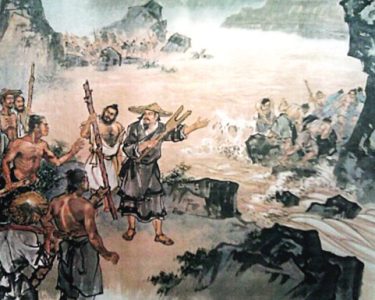
The founding narrative, recorded in texts like the Book of Later Han and the Mouzi Lihuo Lun, describes Emperor Ming dreaming of a golden figure, sending envoys westward, and receiving two monks — Kasyapa Matanga and Dharmaratna — who arrived on white horses. The temple was established to house the sutras they carried. That story is foundational. But it is a story about an event, not a building.
What can a visitor verify on site? Very little from the Han period. The oldest standing structure at White Horse Temple China is the Qiyun Pagoda, and even that is a matter of debate. Most scholars date the current brick pagoda to the Jin dynasty (1115–1234) or later, possibly incorporating an earlier Tang foundation. No timber hall, no stone stele, no gate survives from the Eastern Han. The earliest datable stone inscriptions on site come from the Tang dynasty or later.
| Element | Claimed Origin | Physical Evidence | Visitor Verification |
|---|---|---|---|
| Founding event (68 CE) | Eastern Han | Textual only | Cannot be verified on site |
| Qiyun Pagoda | Often attributed to Han | Brick structure, Jin/Tang foundation | Partial — foundation may predate visible brickwork |
| Main halls (Tianwang, Great Buddha) | Ming/Qing reconstruction | Timber frame, 16th–17th century | Clearly later; no Han fabric |
| Stone steles | Various | Earliest Tang or later | None from Han period |
| White horse statues | Symbolic | Modern stone carvings | Modern additions |
This boundary matters for a specific reason: the temple’s authority as “first in China” rests on continuity of place, not continuity of fabric. A visitor who understands this will read the site differently — looking for evidence of ritual continuity, spatial layout, and archaeological layers rather than expecting Han bricks.
What the Qiyun Pagoda Actually Tells Us
The Qiyun Pagoda is the most contested structure at White Horse Temple China. It stands southeast of the main complex, a 13-story brick tower rising about 35 meters. Local guides often call it the “Han pagoda.” That label is misleading.
The visible brickwork is not Han. Brick pagodas as a structural type did not emerge in China until the Tang dynasty at the earliest. The current pagoda’s architectural details — the corbelled eaves, the brick bracket imitations, the door and window placements — are consistent with Jin dynasty work. Some scholars suggest a Tang foundation beneath the Jin rebuild. No published archaeological excavation has confirmed a Han layer directly beneath the pagoda.
So why does the Han attribution persist? Because the pagoda occupies a position that may have been sacred since the temple’s founding. Early Buddhist sites in China often placed a stupa or reliquary mound at a central or elevated point. The Qiyun Pagoda may stand on the site of an earlier Han-era stupa, now lost. But “may stand on” is not the same as “survives from.” A visitor evaluating the temple’s Han origins should treat the pagoda as a later structure on a possibly ancient site.
For a heritage-focused visitor, the pagoda’s value is not its Han authenticity but its evidence of continuous rebuilding. Each dynasty rebuilt the temple in its own architectural language. The pagoda is the clearest example of that layering. If you want to see a structure that could plausibly have a Han ancestor, this is the one. If you want to see a structure that is verifiably Han, you will not find it anywhere at White Horse Temple China.
A Practical Verification Checklist for Visitors
Most visitors arrive at White Horse Temple China with a single question: is this really the first Buddhist temple in China? The answer is yes — but the evidence is textual, not architectural. To verify what you are seeing, use this checklist on site.
- Check the stele dates before reading the text. The earliest steles at White Horse Temple China date to the Tang dynasty or later. A stele describing the Han founding is a later commemoration, not a Han artifact. Note the reign date inscribed on the stone. If it is not from 25–220 CE, it is not Han.
- Look at timber joinery and roof style. The main halls use Ming and Qing bracket systems. Han timber buildings, known from tomb models and reliefs, used simpler bracket forms and different roof profiles. If the roof has elaborate curved eaves and multi-tier brackets, it is post-Han.
- Examine brick size and mortar. Han bricks are typically large, thin, and stamped with patterns. The bricks in the Qiyun Pagoda are smaller and thicker, consistent with later periods. A close look at the brick surface can tell you more than any plaque.
- Ask about excavation reports. The temple has undergone archaeological survey, but published stratigraphic data from Han layers is limited. If a guide claims a specific wall or foundation is Han, ask for the excavation report. Without one, the claim is unverified.
- Compare the spatial layout to Han precedents. The current axial layout — gate, hall, hall, pagoda — is a mature Chinese Buddhist plan that developed centuries after the Han. Early Buddhist sites were often centered on a stupa, not a hall. The layout itself is evidence of later reconfiguration.
This checklist does not diminish the temple. It sharpens the visit. Knowing that the halls are Ming and Qing reconstructions lets you focus on what is genuinely old: the ritual continuity, the accumulated stone inscriptions, and the archaeological potential beneath the surface.
Common Mistakes When Evaluating the Temple’s Han Origins
Visitors and even some published sources make the same errors when assessing White Horse Temple China. Avoiding these mistakes will save you from false conclusions.
- Mistaking the founding story for the founding building. The story of Emperor Ming’s dream is well attested in later texts. But no text claims that any specific standing building dates to 68 CE. The story is about an event; the buildings are about later patronage.
- Treating the Qiyun Pagoda as a Han original. This is the most common error. The pagoda is the oldest visible structure, but “oldest visible” at White Horse Temple China means Jin or Tang at the earliest, not Han. Calling it a Han pagoda collapses a 1,000-year gap.
- Assuming continuous use means continuous fabric. The temple has been active for nearly two millennia. But active use means active rebuilding. Wooden structures rot, burn, and are replaced. Continuity of worship is not continuity of walls.
- Ignoring the archaeological record. The ground beneath White Horse Temple China may hold Han layers, but those layers are not visible and not fully published. A visitor cannot verify what has not been excavated. Claims about Han foundations require archaeological evidence, not tradition.
- Reading later steles as contemporary accounts. A Tang or Song stele describing the Han founding is a later interpretation. It tells you how later generations understood the temple’s origins, not what the Han actually built.
What a Heritage-Focused Visit Should Prioritize
If your goal is to understand the temple’s first-in-China claim and its historical authenticity, prioritize these elements over the famous halls.
First, spend time at the Qiyun Pagoda. Not because it is Han — it is not — but because it is the clearest physical evidence of the temple’s long rebuilding history. Its position, its form, and its repeated reconstruction tell the story of how a Han founding became a Jin brick tower.
Second, read the stone steles in chronological order. The earliest inscriptions show how the temple was understood in the Tang and Song. Later steles show how the Han founding was mythologized and reinforced. The gap between the founding date and the earliest stele is itself a historical fact worth noting.
Third, look for spatial clues. The current temple is oriented north-south with a pagoda to the southeast. Early Buddhist sites in China were often stupa-centered. If the temple’s earliest phase was stupa-centered, the current layout is a later transformation. Walking the site with this question in mind changes how you see the space.
Fourth, visit the international temples built on the temple grounds in recent decades — the Thai, Indian, and Burmese halls. They are modern, but they demonstrate the temple’s continuing role as a node in Buddhist exchange. They are not Han, and they do not pretend to be. That honesty is instructive.
For a visitor evaluating historical authenticity, the most important realization is that White Horse Temple China is a place of layered memory, not preserved fabric. The Han founding is real as an event. The Han buildings are gone. What remains is the continuous act of rebuilding, which is itself a form of evidence — evidence that the site mattered enough to rebuild for 1,900 years.
Boundary: Separating Eastern Han Founding Traditions From Later Rebuilt Structures
The central interpretive boundary at White Horse Temple China is this: the Eastern Han founding tradition is a textual and ritual claim, while the physical structures are almost entirely later reconstructions. This section makes that boundary explicit, element by element, so a visitor can identify what can and cannot be verified on site.
What the Eastern Han Founding Tradition Claims
The tradition claims that in 68 CE, Emperor Ming of the Eastern Han established a monastery to house Buddhist scriptures brought from the Western Regions by two monks traveling with white horses. The temple’s name, its founding date, and its status as the first Buddhist temple in China all derive from this claim. The claim is supported by later historical texts, including the Book of Later Han and the Gaoseng Zhuan. No contemporary Han inscription or document has been found at the site confirming the founding.
What Visitors Can Verify on Site
A visitor can verify very little from the Han period. No standing wall, gate, hall, pagoda, or stele dates to 25–220 CE. The earliest datable elements are Tang or later. The spatial layout is a mature Chinese Buddhist plan, not an early Han layout. The timber halls are Ming and Qing. The Qiyun Pagoda is Jin or later, possibly on a Tang foundation. The white horse statues at the entrance are modern.
What Cannot Be Verified on Site
The founding event itself cannot be verified on site. No Han-era artifact, inscription, or architectural fragment is visible. The claim that the temple is the first in China rests on textual tradition, not physical evidence. A visitor cannot point to any single object and say, “This is from 68 CE.” That absence is not a refutation of the founding — many early Buddhist sites have no surviving Han fabric — but it is a boundary that honest interpretation must respect.
How to Hold Both Truths at Once
The most productive way to visit White Horse Temple China is to hold both truths simultaneously: the founding tradition is historically significant and probably reflects a real event, while the physical site is a later reconstruction that cannot be presented as Han. The temple’s authenticity lies in its continuity — the fact that a site founded in the Eastern Han has been continuously rebuilt and reoccupied for nearly two millennia. That continuity is verifiable. The Han bricks are not.
| Question | Direct Answer | On-Site Evidence |
|---|---|---|
| Was White Horse Temple founded in the Eastern Han? | Textual tradition says yes, 68 CE | No contemporary Han inscription on site |
| Does any Han building survive? | No | Oldest visible structure is Jin/Tang at earliest |
| Is the Qiyun Pagoda Han? | No, despite common claims | Brick style and construction are post-Han |
| Can a visitor verify the first-in-China claim? | Only through later texts, not physical fabric | Earliest steles are Tang or later |
| What is genuinely old at the site? | Ritual continuity, not building fabric | Rebuilding layers, accumulated steles, spatial memory |
This boundary is not a reason to skip White Horse Temple China. It is a reason to visit with clearer eyes. The temple’s power comes from its role as a living site — a place where each dynasty rebuilt the founding story in its own image. That layering is the real history. The Han origin is the seed; the Ming halls, the Jin pagoda, and the modern international temples are the tree.
If you are planning a heritage-focused visit to Luoyang and want to map the temple’s layered history against verifiable evidence, contact our team for a research briefing or site-specific itinerary guidance. We can help you separate founding tradition from rebuilt fabric before you arrive.