China Luoyang Has a Distinct Place in Henan and Chinese History
Is China Luoyang a historic capital, a modern city, or a travel destination in Henan Province? The accurate answer is that it is all three, but each description serves a different purpose. First-time researchers often confuse Luoyang with nearby place names, treat its ancient status as its current political role, or assume that every attraction is located in one compact urban area.
China Luoyang is a city in western Henan Province in central China. It is widely associated with Chinese imperial history, Buddhist heritage, and the Luo River area. For travel research, history reading, or itinerary building, the key is to separate the city’s historic identity from its present-day administrative function.

Locate Luoyang correctly before researching sites or transport
The clearest starting point is to place China Luoyang within Henan Province rather than treating it as a separate region. Henan is a major inland province of China, and Luoyang lies toward its western side. The city is connected historically and geographically to the Luo River, while the broader region is also associated with the Yellow River civilization area.
This distinction matters because search results may mix municipal locations, archaeological areas, scenic sites, railway stations, and nearby cities. A traveler who searches only for “Luoyang” may see attractions spread across different districts and county-level areas within the municipality. A reader researching Chinese history may also encounter ancient place names that do not match modern map labels exactly.
| Research question | Practical answer | Why it matters | Limit or caution |
|---|---|---|---|
| Which province contains China Luoyang? | Henan Province | Use Henan when checking regional transport, weather, and provincial travel information. | Provincial information does not always identify the exact district or attraction entrance. |
| Is Luoyang the same as Luohe? | No. They are separate cities in Henan. | Confirm the city name before booking tickets, accommodation, or transport. | Both names may appear in broad Henan travel searches. |
| Does “historic capital” mean it is China’s current capital? | No. It describes an earlier historical role. | It prevents incorrect assumptions about present-day government functions. | Ancient capital periods must be studied in their historical context. |
| Is China Luoyang only an old city area? | No. It is a present-day municipality with urban, suburban, and wider administrative areas. | Plan site visits by exact location rather than by city name alone. | Travel time between sites can vary by route and starting point. |
For a general geographic reference, Henan Province is the correct provincial context for China Luoyang. When comparing maps, use the modern municipal name first, then identify the specific attraction, transport hub, or district you need.
Distinguish Luoyang, Luohe, historic capital status, and the modern municipality
This section answers the most common naming questions directly. The practical distinction is simple: China Luoyang is a modern city with a major historical legacy; Luohe is a different modern city; and “historic capital” describes Luoyang’s role in earlier Chinese history rather than its current political status.
Is Luoyang the same place as Luohe?
No. Luoyang and Luohe are separate cities in Henan Province. Their names may look similar to first-time searchers because both begin with “Luo,” but they should not be used interchangeably. If you are checking a train route, hotel address, attraction ticket, or meeting point, match the full city name exactly.
Why is China Luoyang called a historic capital?
China Luoyang served as a capital during several periods of Chinese history. This is why it appears in discussions of dynasties, imperial governance, archaeology, religion, literature, and traditional culture. Its historical importance is real, but it does not mean that every surviving landmark belongs to the same era or that all ancient remains are in one location.
Is Luoyang China’s capital today?
No. China Luoyang is not the present-day national capital. Its “ancient capital” identity is historical and cultural. Researchers should use that phrase when discussing former political importance, rather than when describing current national administration.
What is Luoyang’s present-day municipal role?
China Luoyang functions as a modern prefecture-level city in Henan Province. In practical terms, that means the municipal area includes more than a historic core. It covers urban districts and wider surrounding areas under its administration. This matters for travel planning because a site listed under Luoyang may not be within walking distance of another landmark carrying the same city name.
What should a first-time searcher type into a map?
- Use “Luoyang, Henan, China” when you need the modern city. This fits hotel, airport, rail, road, and general map searches.
- Use the exact attraction name plus “Luoyang” when planning a visit. This reduces the risk of navigating only to the city center.
- Add “Luohe” only when you specifically mean Luohe. It does not refer to China Luoyang.
- Add historical terms carefully. Search for the relevant dynasty, temple, grotto, museum, or archaeological site rather than assuming all history is concentrated in one neighborhood.
The conclusion is straightforward: use “Luoyang” for the city, “Luohe” for a separate city, “historic capital” for the past, and “municipality” for the current administrative reality. This framework fits early-stage travel and history research. It does not replace checking the official address, access rules, or operating arrangements for a specific site.
Use the city’s historical identity without confusing it with a single attraction
China Luoyang has an unusually broad historical profile. It is connected with former capital periods, early Buddhist traditions, stone-carving heritage, museums, old city areas, and cultural landscapes. A useful research method is to treat each theme separately before building a route.
For example, the Longmen Grottoes are a major cultural heritage site associated with the Luoyang area. They should be researched as a specific destination, not merely as a generic item on a city-center walking list. The same principle applies to temples, museums, ancient city remains, and seasonal cultural events.
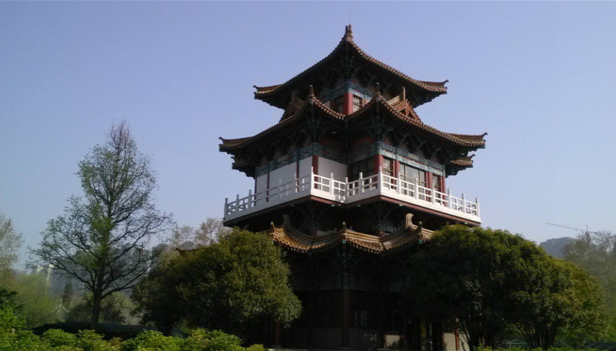
| Interest area | Best research focus | Useful search approach | When this approach does not apply |
|---|---|---|---|
| Imperial history | Former capital periods and archaeological context | Search by dynasty, historic period, and museum collection. | Do not assume every historical site is open, restored, or centrally located. |
| Buddhist heritage | Specific temples, grottoes, and religious art sites | Search the site name, visitor rules, and transport access. | Do not rely on broad city-level descriptions for entry details. |
| Urban travel | District, station, hotel, and attraction addresses | Check the exact map pin and route from your arrival point. | Do not use historical references as navigation instructions. |
| Seasonal travel | Flower viewing, public holidays, and visitor demand | Check current local announcements before committing to dates. | Past festival descriptions are not a guarantee of current programming. |
This method is especially useful for China Luoyang because the city’s cultural identity is layered. A visitor interested in Buddhist art may need a different route from someone focused on ancient capitals. A researcher interested in political history may need museum and archive sources rather than scenic-area information.
Follow a practical first-time research process
The best initial plan for China Luoyang is to move from broad orientation to specific addresses. Start with the city and province, then narrow the search to your actual purpose. This avoids a common error: building an itinerary from famous names before confirming where those places are located.
- Confirm the place name. Write down “Luoyang, Henan, China” and verify that you are not looking at Luohe or another similarly named destination.
- Choose a research purpose. Select history, religious heritage, family travel, photography, transport planning, or business travel. A broad list of attractions is less useful than a defined purpose.
- Create a short site list. For each site, record its formal name, map location, access route, and whether it belongs to the central urban area or a wider municipal area.
- Check present-day information. Confirm official visitor notices, transport conditions, closures, and booking requirements close to your travel date.
- Group sites by geography. China Luoyang is not a single walkable historic exhibit. Build each day around nearby areas rather than historical importance alone.
- Keep historic and administrative terms separate. Use “historic capital” for historical interpretation and “Luoyang municipality” for current maps and logistics.
Avoid the mistakes that create poor Luoyang research
- Mistake: treating Luohe as an alternative spelling of Luoyang. It is not. Confirm the Chinese city name before arranging transport or reservations.
- Mistake: assuming a historic capital is a current national capital. Luoyang’s capital status belongs to historical periods, not present national administration.
- Mistake: searching only “old town.” China Luoyang’s historical resources include different kinds of sites in different locations, so use exact attraction names.
- Mistake: using a heritage label as a route plan. A designation explains significance, but it does not provide opening details, transport instructions, or visitor requirements.
- Mistake: relying on undated travel posts. Current access arrangements can change, so verify practical details through current official sources.
China Luoyang is easiest to understand when its names and roles are kept separate. It is a modern city in Henan, a historically important former capital, and a base for researching several distinct cultural destinations. Start with the correct city name, identify the exact site, and then verify the current travel details.
Request itinerary selection advice if you need help narrowing China Luoyang research into a practical travel plan.