By
By Horse Temple Meaning and White Horse Temple Explained
Horse temple is a broad English phrase that usually refers to a Buddhist temple associated with a horse, most often White Horse Temple in Luoyang, China. It may describe a translated name, a cultural reference, or a search term rather than a single universally defined building.
That distinction is important. Readers researching Chinese Buddhist heritage, Luoyang culture, or travel destinations may encounter “horse temple” in several contexts. Some references point directly to White Horse Temple, while others use the phrase as a loose translation of a Chinese place name. For accurate research, it helps to distinguish the generic expression from the specific historic site.
What does horse temple mean?
The question “what does horse temple mean” has a straightforward answer. In everyday English, it refers to a temple whose name or story is connected with a horse. In discussions of Chinese Buddhist history, however, it most often points to the English name White Horse Temple.
The phrase may appear in several forms:
- Horse temple as a general description of a religious site connected with a horse.
- White Horse Temple as the established English name of a major Buddhist heritage site in Luoyang.
- Baima Temple as a romanized form of the Chinese name.
- Horse temple China as a search phrase used by travelers and researchers looking for the Luoyang site.
These terms overlap, but they are not interchangeable. “Horse temple” does not automatically identify every temple that features horses in its legends, artwork, or name. “White Horse Temple” is far more specific, while “Baima Temple” is another commonly used name for the same well-known site.
The word “white” is also significant. It is more than a descriptive travel label: it connects the temple’s traditional origin story with two white horses associated with the arrival of Buddhist scriptures and teachers in China. The story gives the site its memorable name and explains why horse imagery is central to its historical identity.
Why is White Horse Temple called horse temple?
Many readers ask, “why is White Horse Temple called horse temple?” The answer comes from a traditional account of Buddhist transmission during the Eastern Han period. According to the story, Buddhist monks and sacred texts reached the imperial capital with the help of white horses. The temple was then named in recognition of those animals.
The Chinese name is commonly written as Baima Si. “Baima” means “white horse,” while “si” refers to a Buddhist temple or monastery. As a result, Baima Temple and White Horse Temple are direct naming equivalents in common English usage.
The story is best understood as cultural and religious tradition. It explains the symbolic meaning of the name, while historical accounts may differ in their treatment of the people, journeys, and early Buddhist communities involved. For general readers, the central point is clear: the horse reference comes from the temple’s origin narrative, not from a role as a stable, horse market, or animal sanctuary.
This distinction helps prevent a common misunderstanding. Someone searching for a “horse temple” might picture a site devoted to equestrian worship or horse deities. White Horse Temple belongs to the history of Buddhism in China. The horse serves as a naming symbol tied to the transmission of Buddhist teachings.
The white horse as a cultural symbol
In the temple’s traditional narrative, the white horse represents movement, trust, and the arrival of knowledge from a distant region. It carries texts and supports the journey of religious teachers, linking transportation with cultural exchange.
That image remains useful for modern readers. Chinese Buddhist heritage developed through contact among regions, languages, courts, translators, and monastic communities. The white horse story offers a concise and memorable way to understand that complex process.
For researchers, this is why the White Horse Temple meaning extends beyond a literal translation. The name identifies a place, but it also recalls the movement of Buddhism into China and the role of translation in making religious texts accessible to new communities.
Where is the horse temple in China?
For the long-tail question “where is the horse temple in China,” the expected answer is Luoyang in Henan Province. The site commonly intended by this search is White Horse Temple, also known as Baima Temple.
Luoyang is a historic city associated with several periods of Chinese political and cultural development. Its setting makes the temple especially relevant to readers exploring the relationship between ancient capitals, religious institutions, and long-distance cultural exchange.
Search results may use different wording, including “horse temple China,” “White Horse Temple Luoyang,” or “Baima Temple Luoyang.” These phrases generally lead readers toward the same principal destination. Confirming the city is useful because similarly translated temple names can appear in travel writing, heritage discussions, and informal online references.
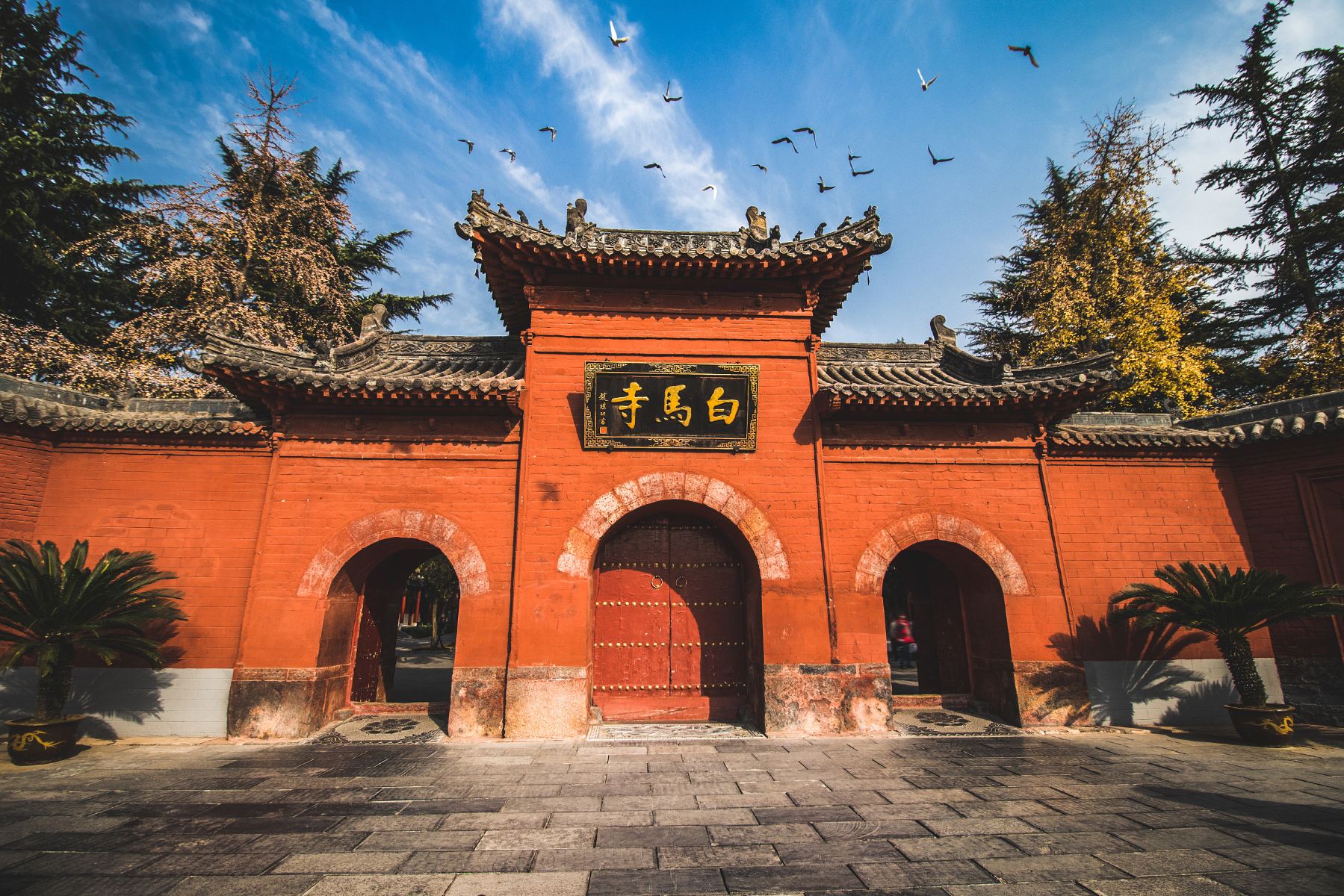
When planning research or a visit, use the formal name first. Search for “White Horse Temple Luoyang” or “Baima Temple Luoyang” instead of relying only on “horse temple.” More precise wording reduces the chance of confusing the site with another temple, a local landmark, or a modern venue with a similar English translation.
Horse temple versus White Horse Temple
The terminology map below shows how the main expressions relate to one another.
| Term | Typical meaning | How precise is it? |
|---|---|---|
| Horse temple | A general English phrase for a temple associated with a horse | Broad |
| White Horse Temple | The established English name of the historic Buddhist temple in Luoyang | Specific |
| Baima Temple | A romanized name based on the Chinese name for White Horse Temple | Specific |
| Horse temple China | A search phrase commonly used to find the Luoyang site | Useful but informal |
This comparison is useful for B2B readers working in travel content, cultural publishing, translation, destination marketing, and heritage research. A broad keyword may attract attention, but precise naming supports clearer visitor information, stronger indexing, and fewer misunderstandings between related sites.
For example, a destination page can introduce the location as “White Horse Temple, also known as Baima Temple,” then note that some English-language searches use “horse temple” as a shortened phrase. This format serves readers who know the formal name as well as those beginning with a less precise query.
The historical and cultural context of Baima Temple
White Horse Temple is traditionally regarded as one of the earliest Buddhist temples established in China. Its importance stems from its association with the early development of Buddhism under imperial patronage and the translation of Buddhist materials for Chinese audiences.
The temple’s significance is therefore layered:
- It is a religious site connected with Chinese Buddhism.
- It is a historical reference point for the arrival and translation of Buddhist teachings.
- It is part of Luoyang’s wider cultural and historical landscape.
- Its name preserves a traditional story about white horses and cross-regional exchange.
Readers should avoid reducing the site to a single claim such as “the first temple” without context. Historical institutions often develop over time, and terms such as “first,” “oldest,” or “original” can depend on the source, definition, and continuity under discussion. A careful article can describe White Horse Temple as traditionally regarded as an early and highly significant Buddhist temple in China without overstating a disputed detail.
This measured language is particularly useful in professional content. Heritage audiences expect clarity, but they also value clear distinctions between documented history, religious tradition, and later interpretation.
How to use the term accurately in content
If you are writing a travel page, museum description, educational resource, or destination guide, introduce the specific name early. A strong opening might read: “White Horse Temple, also known as Baima Temple, is a historic Buddhist site in Luoyang, China. Some readers refer to it informally as a horse temple because of its name and origin story.”
This approach offers several benefits. It answers the reader’s question immediately, supports search visibility for related terms, and prevents the generic phrase from becoming misleading. It also makes later references easier: the article can use “White Horse Temple” for the site and “horse temple” when discussing the broader wording.
Use these editorial practices:
- Define the phrase before discussing the site.
- State that White Horse Temple is in Luoyang, China.
- Explain that Baima Temple is a common alternate name.
- Describe the white horse story as a traditional origin narrative.
- Avoid suggesting that the temple is dedicated to horses as a separate religious subject.
- Use the formal name in maps, itineraries, headings, and location data.
Translation also requires care. A literal translation can help explain the name, but it does not always convey the full historical meaning of a place. “White Horse Temple” communicates the visible wording; the wider cultural context explains why that wording became important.
Frequently asked questions about the horse temple meaning
What does horse temple mean?
“Horse temple” is a broad English phrase. In discussions of Chinese Buddhist heritage, it usually refers to White Horse Temple in Luoyang, also called Baima Temple. The phrase comes from the temple’s traditional connection with white horses said to have carried Buddhist texts and teachers.
Why is White Horse Temple called horse temple?
White Horse Temple is called a horse temple because its traditional origin story links the site’s name with two white horses involved in the arrival of Buddhism and Buddhist scriptures in China. “White Horse Temple” is the specific English name, while “horse temple” is a shorter and less precise expression.
Where is the horse temple in China?
The site usually meant by “the horse temple in China” is White Horse Temple, or Baima Temple, in Luoyang, Henan Province. Using the full name with “Luoyang” is the clearest way to locate it and distinguish it from other temples with similar translations.
Is Baima Temple the same as White Horse Temple?
Yes. Baima Temple is a commonly used romanized name for White Horse Temple. “Baima” means “white horse,” and “temple” translates the religious institution identified by the Chinese name.
Is horse temple the official name?
Usually, no. “Horse temple” is best treated as a generic or informal search phrase. White Horse Temple and Baima Temple are more precise names for the historic Buddhist site associated with Luoyang.
Key takeaway
The horse temple meaning becomes clearer when language and history are considered together. The phrase generally points to White Horse Temple, a significant Buddhist heritage site in Luoyang, China. Its alternate name, Baima Temple, reflects the same “white horse” meaning in the Chinese name.
For accurate communication, use “horse temple” when explaining the search term or general idea, and use “White Horse Temple” or “Baima Temple” when identifying the specific location. That simple distinction gives readers the historical reference they need while keeping travel, heritage, and cultural content precise.