 By
By China Longmen Grottoes Reveals How UNESCO Judges World Heritage Sites
Why did UNESCO inscribe the Longmen Grottoes as a World Heritage Site in 2000, and what actually separates a regionally important cave-temple complex from a globally protected monument? Anyone researching China Longmen Grottoes before booking a trip to Luoyang often assumes the honor comes down to age or sheer scale. It doesn’t. UNESCO’s decision rests on documented, specific criteria — and understanding them changes how a visitor reads the site once standing in front of the cliffs.
This matters for two groups: travelers who want to know which caves deserve the most time, and researchers or content creators who need to cite the site’s significance accurately rather than repeating vague claims about “ancient Chinese art.”
What UNESCO’s World Heritage Criteria Actually Measure
UNESCO does not award status for beauty alone. Sites are evaluated against a fixed set of cultural and natural criteria defined under the World Heritage Convention. For cultural properties, inspectors look for things like: a masterpiece of human creative genius, evidence of an important interchange of values over a span of time, or a direct association with events, traditions, or beliefs of outstanding universal significance.
Longmen was inscribed under criteria tied to artistic mastery and to its role as physical evidence of a cultural and religious tradition that shaped East Asia over several centuries. That distinction matters practically: it tells a visitor that the site’s value isn’t concentrated in one dramatic statue, but distributed across a continuous carving record spanning multiple dynasties.
The Three Pillars Behind Longmen’s UNESCO Cultural Listing
Three factors do the actual work of qualifying the site. Each one answers a different evaluation question, and misunderstanding any of them leads to a shallow visit or an inaccurate write-up.
1. The Limestone Carving Program
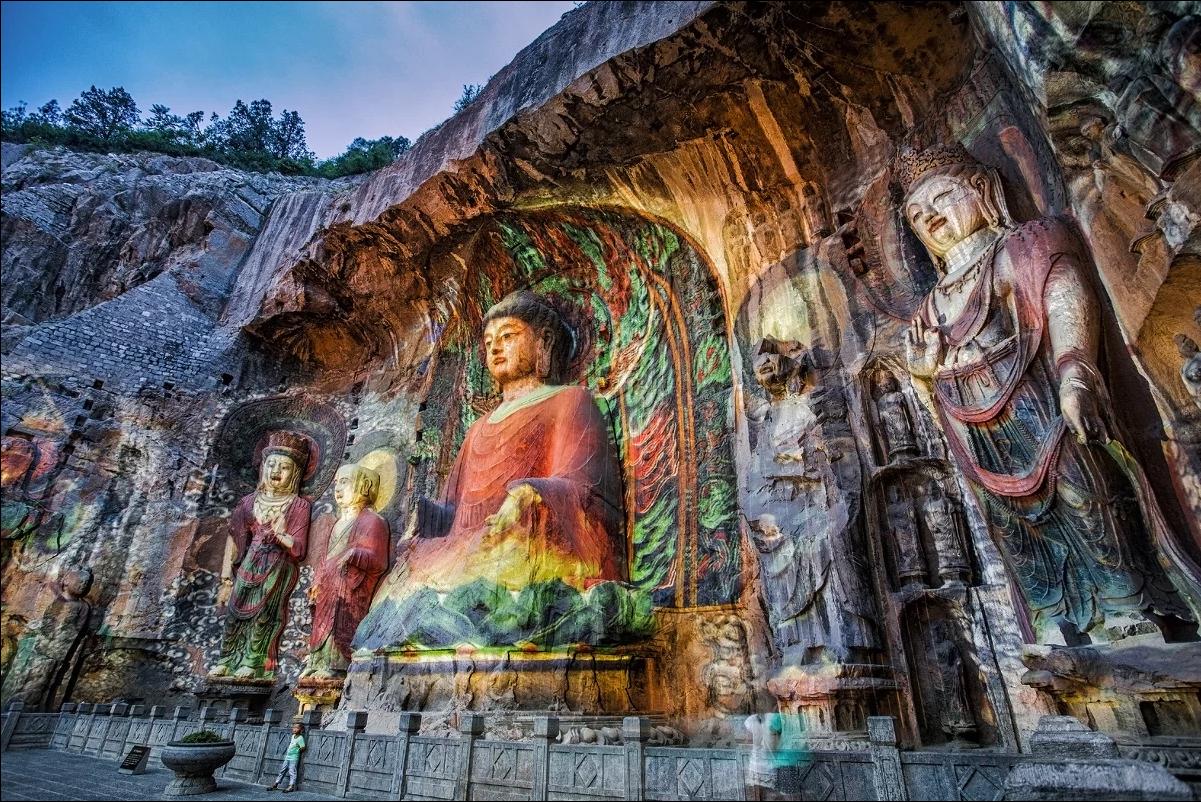
What it affects: Longmen’s grottoes were carved directly into limestone cliffs along the Yi River, producing tens of thousands of niches, statues, and inscriptions over hundreds of years. UNESCO evaluators weigh this as a continuous artistic record — not isolated monuments — because the stone itself preserves a sequence of stylistic change from one century to the next.
If you get it wrong: Treating Longmen as “one big Buddha statue” (referring only to the Fengxian Temple’s colossal figure) means missing the smaller Guyang Cave niches that actually document the earliest phase of carving. Researchers who cite only the largest statue misrepresent why the site qualifies at all — the criterion rewards the sequence, not a single centerpiece.
2. Imperial Patronage
What it affects: Multiple ruling dynasties, starting with the Northern Wei dynasty and continuing through the Tang period, sponsored carving work at Longmen. This patronage record is what gives the site its “interchange of values over time” weight — it shows how state power, religion, and artistic style intersected across a documented political timeline.
If you get it wrong: Assuming the caves are the product of one era or one royal court flattens the historical narrative UNESCO specifically cites. A traveler who skips the Guyang Cave (Northern Wei) to spend all their time at Fengxian Temple (Tang) sees only half the political story the site was inscribed to preserve.
3. Buddhist-Art Significance
What it affects: The grottoes trace stylistic transitions in Buddhist sculpture as the tradition moved through China, absorbing and reshaping earlier Central and South Asian conventions. This is the “outstanding universal value” component — the site functions as physical evidence of how Buddhist iconography evolved regionally.
If you get it wrong: Viewing the statues purely as religious decoration, without noting how facial features, drapery, and posture shift between caves, means missing the exact evidence UNESCO evaluators used to justify inscription. The art-historical progression is the point, not just the religious subject matter.
Longmen Compared to Other Chinese Buddhist Cave Sites
Longmen isn’t the only Chinese Buddhist cave complex on the World Heritage list. Comparing it against Mogao and Yungang clarifies what makes each one distinct — useful context before deciding which site fits a research trip or itinerary.
| Site | Primary Material | Dominant Dynastic Period | Distinguishing UNESCO Emphasis |
|---|---|---|---|
| Longmen Grottoes | Limestone cliff carving | Northern Wei through Tang | Continuous stylistic sequence and imperial patronage record |
| Mogao Caves (Dunhuang) | Painted clay sculpture and murals | Northern Liang through Yuan | Silk Road exchange and manuscript preservation |
| Yungang Grottoes | Sandstone cliff carving | Northern Wei | Early large-scale Buddhist sculpture, single dominant era |
The practical takeaway: if a research project is centered on how imperial politics shaped religious art across multiple centuries, China Longmen Grottoes offers the longest continuous record among the three. If the focus is Silk Road trade and manuscript history, Mogao is the stronger case study.
Common Mistakes When Researching or Visiting Longmen Grottoes
- Treating it as a single-day photo stop. The carving program spans a river-length cliff face; rushing through misses the dynastic contrast that gives the site its listing.
- Citing only the Fengxian Temple statue in written content. It’s the most photogenic feature, but it represents Tang-era patronage only — leaving out the earlier Northern Wei caves skews the historical picture.
- Confusing Longmen with Yungang or Mogao in secondary sources. All three are Buddhist cave complexes, but their UNESCO justifications differ, and conflating them produces inaccurate claims.
- Ignoring the inscriptions. Many niches include dedicatory texts that document who commissioned the carving and why — skipping these loses the patronage evidence entirely.
A Step-by-Step Plan for a Heritage-Focused Visit
- Start research with the site’s inscription rationale, not just travel photos, so you know which caves correspond to which dynasty.
- Identify two or three anchor caves spanning different periods — for example, an early Northern Wei niche and a Tang-era hall — rather than one “must-see” statue.
- Allocate walking time along the full cliff path; the west bank alone stretches over a kilometer of carved niches.
- Note inscription locations in advance if documentation or academic citation is part of the goal.
- Cross-check any claims made in guidebooks or blog posts against the dynastic sequence described above before republishing them.
Decision Checklist Before You Go
- Do you know which dynasty carved the caves you plan to prioritize?
- Have you allotted enough time to see both early Northern Wei work and later Tang-era halls?
- If writing about the site, have you separated its criteria from those of Mogao or Yungang?
- Are you prepared for outdoor walking along an extended riverside path rather than an indoor museum layout?
China Longmen Grottoes rewards visitors and researchers who look past the single famous statue and engage with the full carving sequence — that sequence is precisely what earned the site its UNESCO cultural status. For teams preparing published travel content, academic references, or itinerary materials on the site, feel free to request a fact-check summary or supporting source list before finalizing your material.