Blog
How Luoyang City Served Nine Chinese Dynasties


How Luoyang City Served Nine Chinese Dynasties
How could one inland center repeatedly return to political importance after dynasties rose, fell, and moved their courts elsewhere? The answer lies in geography, transport, ritual authority, and the changing needs of imperial rulers. Luoyang city was not always China’s sole capital, but it repeatedly functioned as a royal seat, an imperial capital, an eastern capital, and a strategic secondary court.
For travelers, this distinction matters. A visit to Luoyang city makes more sense when each historic site is connected to the political role it served at the time. The Eastern Zhou court, the Han imperial bureaucracy, Northern Wei Buddhist patronage, and Tang-era eastern administration all left different traces. They should not be treated as one undifferentiated “ancient capital” story.

A dynasty-by-dynasty timeline of Luoyang’s changing political role
The phrase “capital of nine dynasties” depends on how historians count dynastic transitions and whether they treat the Wu Zhou regime separately from the Tang. The timeline below uses a practical nine-dynasty reading: it follows the major periods in which Luoyang city held a defined political role, from the Eastern Zhou through the later imperial era.
| Dynasty or regime | Approximate period of Luoyang’s political role | How the city served the ruling power | What this means for a visitor |
|---|---|---|---|
| Eastern Zhou | From 770 BCE | Luoyang became the royal center after the Zhou court moved eastward from the Wei River region. The king retained ritual legitimacy, but real military power was increasingly divided among regional states. | Read this period as a transition from centralized royal authority to the interstate world of the Spring and Autumn and Warring States eras. |
| Eastern Han | 25–190 CE | The city became the main imperial capital of the restored Han dynasty. Court administration, elite families, learning, and palace politics were concentrated here. | Focus on the scale of imperial government rather than expecting a surviving intact palace complex. |
| Cao Wei | 220–265 CE | After the Han collapse, Cao Wei ruled from Luoyang. The city remained the political core of a northern state during the Three Kingdoms period. | Use this era to understand why control of the north remained closely tied to control of the Central Plains. |
| Western Jin | 265–316 CE | The Jin court inherited Luoyang as its capital and briefly reunified much of China before internal conflict and northern invasions destabilized the regime. | Consider the city as both a symbol of reunification and a warning that a prestigious capital could still be vulnerable. |
| Northern Wei | 493–534 CE | The Northern Wei court moved south from Pingcheng to Luoyang. The relocation supported political integration, administrative reform, and closer engagement with Central Plains traditions. | Pair the period with Buddhist art, especially the cultural environment that supported the Longmen Grottoes. |
| Sui | 581–618 CE | Luoyang functioned as the Eastern Capital alongside the main western capital at Daxing, later Chang’an. It strengthened the dynasty’s access to the east and to major transport routes. | Look for the logic of a dual-capital system rather than assuming one city replaced the other completely. |
| Tang | 618–907 CE | The Tang maintained Luoyang as an eastern political center. It could host the court and support administration of the populous eastern regions even when Chang’an remained the principal capital. | Interpret Tang Luoyang as a working imperial counterpart, not merely a ceremonial outpost. |
| Wu Zhou | 690–705 CE | Empress Wu established her own Zhou dynasty and elevated Luoyang to primary political importance. The city became closely associated with her court and religious-political legitimacy. | Separate this short but influential regime from the broader Tang story when planning site interpretation. |
| Later Tang | 923–936 CE | The Later Tang used Luoyang as its capital during the Five Dynasties period, demonstrating that the city still carried political prestige after the Tang collapse. | See this as a later reuse of an established capital rather than a return to the stability of earlier unified empires. |
The key conclusion is that Luoyang city did not serve every dynasty in the same way. It was sometimes the principal seat of government, sometimes an eastern counterpart to another capital, and sometimes a court chosen to claim continuity with earlier imperial traditions. A cultural itinerary should therefore identify the dynasty first and the monument second.
Why rulers repeatedly chose this location
The political value of Luoyang city came from its position in the Central Plains. It stood near routes linking the Yellow River basin, eastern agricultural regions, and approaches toward the west and north. That location could help a ruler administer a broad territory, but it also exposed the capital to conflict when northern frontiers became unstable.
- Central position: The city offered access to the political and agricultural heartland. This suited dynasties seeking to govern the Central Plains. It was less suitable when a regime’s main military pressure or resource base lay far to the northwest or south.
- Transport connections: The Sui and Tang use of an Eastern Capital reflected the value of governing eastern regions without relying only on a western court. This matters when comparing Luoyang with Chang’an: the two cities performed different administrative and logistical roles.
- Dynastic legitimacy: Establishing a court in a former capital allowed rulers to associate themselves with earlier dynasties. The Later Tang example shows that historical prestige itself could be politically useful. Prestige, however, did not guarantee security or lasting unity.
- Cultural authority: Court patronage could draw scholars, officials, religious institutions, and artisans to the city. Northern Wei and Wu Zhou periods are particularly useful for understanding the connection between state power and religious expression.
- Military exposure: A central location was also contestable. Western Jin’s fall demonstrates the limit of geography: a capital can be administratively well placed yet difficult to defend during major internal and frontier crises.
For a first-time visitor, the practical lesson is simple: do not ask only, “Which dynasty built this?” Ask, “Was the court using Luoyang city as its main capital, a secondary capital, or a source of legitimacy?” That question changes how you read ruins, museums, tombs, and religious sites.
How to build a historically coherent cultural itinerary
A strong visit to Luoyang city should follow a political sequence rather than a random list of attractions. Begin with the earliest capital tradition, then move toward imperial administration, religious patronage, and later dynastic reuse. This approach fits travelers who want historical context before choosing individual sites. It is less necessary for visitors focused only on scenery or a single museum collection.
- Start with the Eastern Zhou question. Establish why the royal court moved east and why Luoyang became a center of ritual legitimacy even as regional powers gained influence.
- Move to the Han, Wei, and Jin capital sequence. These periods show continuity in the use of the city as an administrative center after the Han empire fractured.
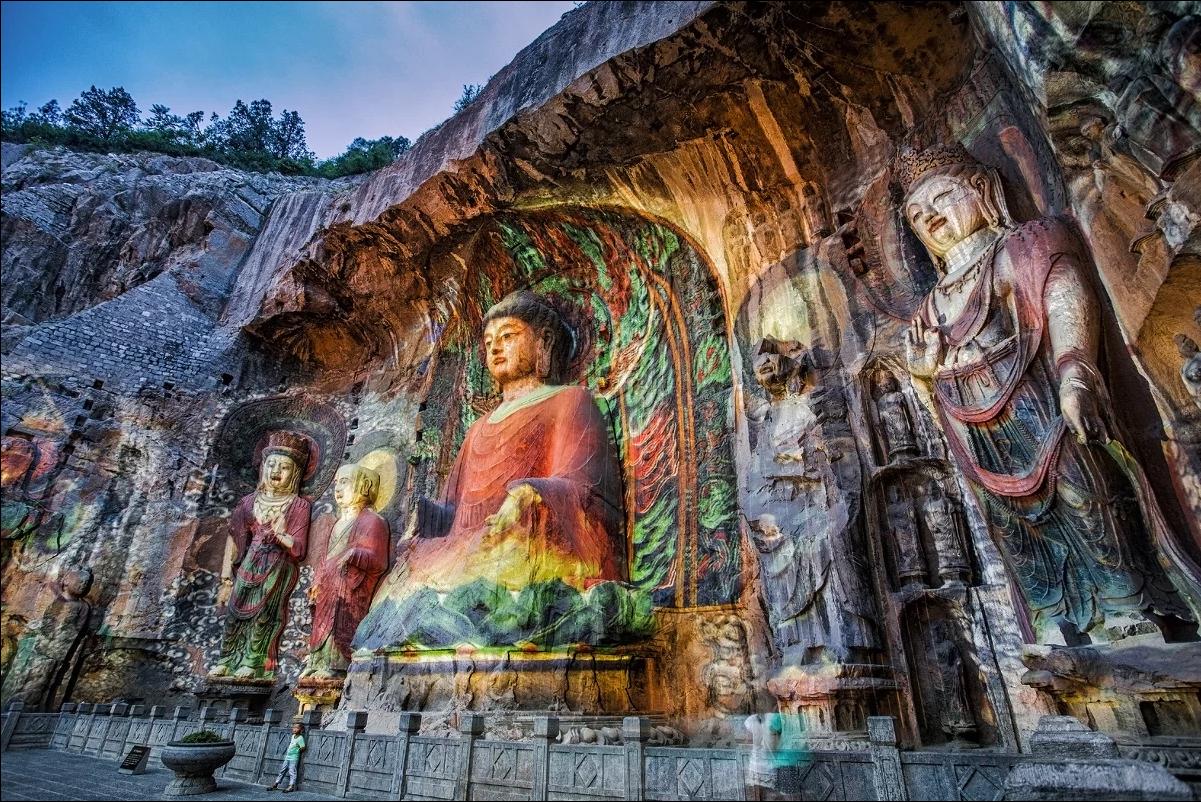
- Use Northern Wei to connect politics and Buddhism. This is the best point to include the Longmen Grottoes because the artistic program cannot be separated from court sponsorship and elite culture.
- Compare the Sui and Tang dual-capital model. Treat Luoyang and Chang’an as complementary political spaces, not as identical rivals.
- End with Wu Zhou and Later Tang. These periods explain how the city’s older imperial status remained valuable long after earlier dynasties disappeared.
This sequence helps prevent a common error: assuming every monument represents the same kind of political power. In Luoyang city, a Buddhist site may reflect court patronage, while a palace-site interpretation may explain administrative control, and a tomb context may reveal elite life after a capital changed hands.
What travelers often misunderstand about the nine-dynasty story
The “nine dynasties” label is useful, but it can become misleading when it is repeated without context. Use the following checks when reading museum labels, guide descriptions, or itinerary summaries for Luoyang city.
- Mistake: treating all nine as uninterrupted rule.
The city’s role changed across long gaps and political upheavals. The correct approach is to identify whether each dynasty made it a principal capital, an eastern capital, or a temporary political center. - Mistake: counting Tang and Wu Zhou without explanation.
Wu Zhou emerged from the Tang political world but is often counted separately because Empress Wu proclaimed a distinct dynasty. Use that distinction when discussing why the city’s rank changed around 690. - Mistake: assuming a capital must have been secure.
Western Jin shows the opposite. A capital may be prestigious and centrally located while still facing severe military risk. - Mistake: viewing Buddhist heritage only as art.
Northern Wei patronage linked religious imagery, court culture, and political authority. A site visit is richer when those connections are considered together. - Mistake: reducing later eras to decline.
The Later Tang selection of Luoyang shows continued political value. Later reuse was not a copy of Han or Tang rule; it was a deliberate choice shaped by a different political landscape.
A practical checklist for interpreting major sites
Before adding a museum, archaeological area, temple, or grotto complex to your plan for Luoyang city, use this short checklist. It turns a broad history theme into an immediately usable research method.
| Question to ask | Why it matters | Best use case |
|---|---|---|
| Which dynasty does the site primarily represent? | It prevents mixing Eastern Zhou, Han, Northern Wei, and Tang evidence into one vague “ancient” category. | Useful for every first-time visitor. |
| Was the city a main capital or an eastern capital then? | This explains whether the site relates to daily central government, regional administration, or ceremonial status. | Especially useful for Sui and Tang interpretation. |
| Is the site political, religious, funerary, or urban? | Different site types reveal different parts of imperial life and should not be expected to provide the same evidence. | Useful when choosing between palace remains, museums, tombs, and grottoes. |
| What changed immediately before and after this period? | Political transitions explain why rulers moved courts, rebuilt institutions, or emphasized legitimacy. | Most valuable for Eastern Han, Northern Wei, Wu Zhou, and Later Tang study. |
The lasting importance of Luoyang city comes from this repeated ability to serve changing regimes in different ways. Its history is not simply a list of nine names. It is a record of how Chinese rulers used location, inherited prestige, court institutions, and cultural patronage to make a city politically meaningful.
Request tailored itinerary advice before booking sites that span multiple dynastic periods.