
Blog
How Researchers Date the Oldest Temple in China (Not Just 68 CE)


How Researchers Date the Oldest Temple in China Beyond Its 68 CE Legend
If you’ve read that the oldest temple in China was founded in 68 CE, the next question should be obvious: does that mean the buildings standing today are nearly 2,000 years old? They are not, and understanding why is the single most important thing a researcher or traveler needs to know before citing the date. The site in question is White Horse Temple (Baima Si) in Luoyang, Henan province, traditionally credited as the first Buddhist temple established on Chinese soil after Emperor Ming of the Eastern Han dynasty reportedly sent envoys west and brought back Buddhist monks and scriptures carried on white horses.
That origin story is the founding legend. It is not, by itself, architectural or archaeological proof of anything still standing. Separating the legend from the physical evidence is exactly what responsible dating work requires.
The Core Dating Problem: One Founding Year, Many Rebuilt Structures
Temples in China are rarely static objects. They burn, flood, get looted during dynastic transitions, and get rebuilt — sometimes on the same foundation, sometimes nearby, sometimes with a completely different layout. White Horse Temple has gone through this cycle repeatedly over nearly two millennia. Wars at the end of the Han dynasty, instability during the Tang and Song periods, and later Ming and Qing-era renovations each left their mark.
So when someone states a temple is “the oldest in China,” there are really three separate claims bundled together, and conflating them is where most citation errors happen:
- Institutional age — how long has a Buddhist religious institution operated continuously (or with documented gaps) at this location.
- Site age — how long has this specific plot of land held temple structures of any kind.
- Structural age — how old are the physical halls, beams, and carvings a visitor sees today.
The 68 CE date applies to the first claim. It almost never applies to the third.
Evidence-Based Dating: Separating the 68 CE Founding Date From the Age of Surviving Buildings
This is the part most travel articles skip, and it’s the part that actually matters for anyone doing due diligence before a site visit or a published citation. The table below breaks down what each type of evidence actually supports — and what it doesn’t.
| Evidence Type | What It Supports | What It Does NOT Prove |
|---|---|---|
| Historical chronicles (e.g., dynastic records referencing Emperor Ming’s envoys) | A Buddhist religious institution was established in the Luoyang area around 68 CE | That any current structure dates to the same year |
| Site continuity records (temple registries, local gazetteers) | Religious activity at or near the same location across multiple dynasties | Uninterrupted physical structures — gaps and relocations are common |
| Architectural style analysis of existing halls | Construction period of visible buildings, typically traced to Ming and Qing-era reconstruction | Han-era origin of the wood, brick, or layout |
| Stone stelae and inscriptions on-site | Dates of specific renovation campaigns recorded by later patrons | The founding date itself, since most surviving steles postdate 68 CE by centuries |
Put plainly: the traditional 68 CE founding date and the age of the surviving buildings are two different facts, supported by two different kinds of evidence. A researcher who cites one to prove the other is making an error that a careful editor should catch.

The Dating Parameters That Actually Matter — And What Happens If You Get Them Wrong
For anyone preparing a citation, a guidebook entry, or a research note, four parameters do most of the work. Here is what each one actually tells you in practice, and what goes wrong if it’s misapplied.
1. Textual chronicle references
These establish the institutional narrative — the story of how Buddhism entered the Han court. If you rely on this alone, you get a correct founding story but zero information about physical structures. Mistake: citing a chronicle reference as proof that a specific hall or statue is 1,900 years old.
2. Architectural period markers
Roof construction style, bracket systems, and layout proportions let architectural historians assign a building to a rough period — usually within a dynasty, not an exact year. Getting this wrong means overstating a Qing-dynasty reconstruction as a Han-dynasty original, which is the single most common error in casual travel writing about the oldest temple in China.
3. On-site epigraphy
Inscriptions on steles and bells record specific renovation dates, sometimes centuries apart. If you skip epigraphy, you lose the actual renovation timeline and end up treating the site as if it sat untouched between 68 CE and today. Reading the inscriptions correctly tells you exactly which emperor or patron funded which phase of rebuilding.
4. Site continuity documentation
Local gazetteers and temple registries show whether the site operated continuously or was abandoned and later re-established. Ignoring this parameter leads to the assumption that “founded in 68 CE” means “operating continuously since 68 CE” — which, for most historic Chinese temple sites, is not accurate without documented support.
Common Mistakes When Citing China’s Oldest Temple’s Age
- Stating the current halls are original Han-dynasty construction without checking architectural period markers.
- Treating a founding legend recorded in later chronicles as equivalent to a contemporaneous eyewitness record.
- Skipping the renovation inscriptions and assuming a single unbroken building history.
- Confusing “oldest Buddhist institution” with “oldest surviving Buddhist building” — these are not the same claim.
- Citing a single secondary source without cross-checking against on-site epigraphy or academic architectural surveys.
A Verification Checklist Before You Cite or Visit the Site
If you’re writing a research note, a guidebook entry, or simply want to brief a travel group accurately, run through this sequence before publishing anything:
- Confirm which claim you’re making — institutional founding, site continuity, or structural age — and state it explicitly.
- Check whether your source distinguishes the 68 CE legend from later reconstruction phases.
- Look for on-site stelae or inscription references rather than relying only on secondary summaries.
- Note the dynasty associated with the architectural style of the hall you’re describing, not just the temple’s overall founding date.
- When in doubt, phrase the claim as “traditionally founded in 68 CE, with surviving structures largely dating to later reconstructions” — accurate and defensible.
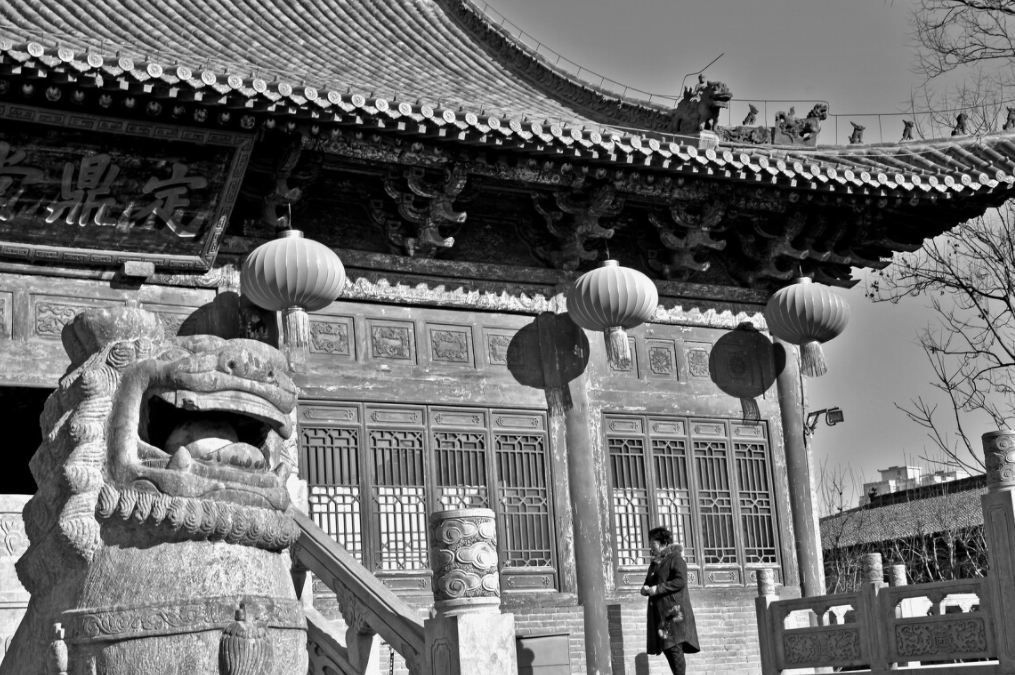
Treated carefully, the story of the oldest temple in China is more interesting than the simplified version — it’s a layered record of institutional memory, periodic destruction, and patient reconstruction, not a single frozen moment from the first century. That layered reading is also the version that holds up under scrutiny from historians and architectural specialists alike.
Preparing a citation, lecture, or travel itinerary around this site and want a second check on your sourcing? Send us your draft notes or site itinerary, and we’ll help you flag any claims worth double-checking before you publish or travel.
