 By
By How to Decode China Luoyang’s Buddhist, Imperial, and River Heritage Zones
Most first-time visitors to china luoyang face a confusing puzzle. The city spreads across a wide valley, and its famous landmarks sit far apart. A traveler might spend a morning at the Longmen Grottoes, then wonder why the old town feels so distant from the river that shaped the city’s fate. The confusion comes from treating Luoyang as a single destination. It is not. It is a cluster of distinct heritage zones, each tied to a different era and a different logic of settlement.
Understanding these zones before you arrive changes everything. You stop seeing a list of disconnected sites and start seeing a coherent historical map. You can plan routes that respect geography instead of fighting it. This guide breaks china luoyang into three functional zones: the Buddhist zone, the dynastic-capital zone, and the river-geography zone. Each has its own character, its own must-see landmarks, and its own practical constraints.
Comparison: Buddhist, Dynastic-Capital, and River-Geography Zones
The most useful way to organize china luoyang is to think in terms of historical function. Why did people build here? What did the landscape offer? What survives today? The table below maps the three zones against those questions.
| Zone | Historical Function | Signature Landmarks | Best For | Practical Notes |
|---|---|---|---|---|
| Buddhist Zone | Religious patronage, cave carving, monastic life | Longmen Grottoes, White Horse Temple | Art history, religious heritage, photography | Longmen is 12 km south of the old city; White Horse Temple is 12 km east. Do not combine them in one morning. |
| Dynastic-Capital Zone | Imperial administration, ritual, elite residence | Luoyang Old Town, Lijing Gate, Sui-Tang Luoyang City ruins | Urban history, imperial architecture, food culture | Compact and walkable. Best in late afternoon and evening when the old streets come alive. |
| River-Geography Zone | Transport, flood control, agricultural settlement | Yi River, Luo River confluence, Xiaolangdi Reservoir | Landscape context, engineering history, quiet walks | Often overlooked. Requires a car or taxi. Best for travelers with a second day. |
The mistake most travelers make is mixing zones by proximity on a map. A hotel near the old town is not close to Longmen. A taxi ride from White Horse Temple to the Luo River is not short. Zone-based planning solves this.
What Each Zone Actually Affects in Practice
A technical breakdown helps here. Each zone imposes real constraints on your itinerary. Ignore them, and you lose hours to traffic, miss opening windows, or arrive at a site with no context to appreciate it.
Buddhist Zone: Distance and Light
The Longmen Grottoes are carved into cliffs along the Yi River. The site runs roughly north-south. Morning light hits the western cliffs, where the most famous carvings sit. Afternoon light flattens the reliefs and makes photography difficult. The practical conclusion: visit Longmen at opening time, enter from the north gate, and walk south along the western bank before crossing the river to return.
White Horse Temple operates differently. It is an active monastery, not a dead archaeological site. Monks still practice there. The atmosphere shifts by hour. Early morning is quiet and contemplative. Midday brings tour groups. Late afternoon softens the light across the courtyards. If you want the temple’s meditative quality, go early. If you want to see it as a living religious institution, go during a ceremony.
The limit of this zone: it demands transport planning. There is no metro line to Longmen from the old town. A taxi takes 30 to 40 minutes depending on traffic. A public bus takes longer. Budget half a day for Longmen alone, and do not schedule White Horse Temple on the same day unless you start at 7:00 a.m. and are comfortable moving fast.
Dynastic-Capital Zone: Density and Layering
The old town of china luoyang is misleading. What you see today is largely reconstructed. The Lijing Gate, the old city walls, the rebuilt streets — they evoke the Ming and Qing commercial city, not the Han or Tang imperial capitals. The actual Sui-Tang palace ruins sit further west, mostly as archaeological parks with low, reconstructed foundations.
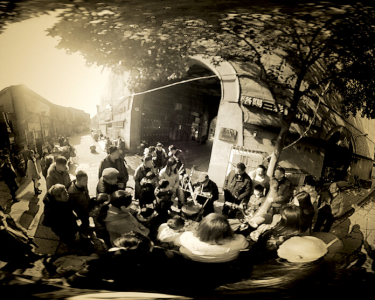
This matters for expectation management. If you come looking for intact Tang dynasty architecture, you will be disappointed. If you come to understand how the imperial city was layered — rebuilt, destroyed, rebuilt again — the zone rewards careful attention. The old town is best experienced as an evening district: street food, lanterns, crowds, and a sense of the city’s commercial continuity. The archaeological parks are best visited with a guide or a good map, because the ruins are subtle.
The practical conclusion: do not spend your only full day in the old town. It fills an afternoon and evening well, but it cannot replace Longmen or the river. Use it as your base for food and accommodation, then radiate outward.
River-Geography Zone: Context and Quiet
The rivers explain why china luoyang exists at all. The Luo River and Yi River provided water, transport, and a natural defensive line. The confluence area was the city’s original anchor. Today, the riverbanks are parkland. The Xiaolangdi Reservoir, further north, shows the modern engineering response to the Yellow River’s silt and flood cycles.
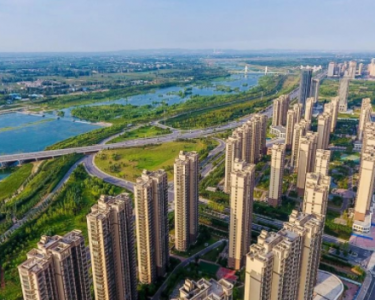
This zone is not a list of marquee attractions. It is a context layer. Walking the Luo River embankment at dusk, you see the city’s shape emerge: the old town to the north, the modern sprawl to the south, the hills framing the valley. A visitor who skips the river leaves with a flat, postcard image of Luoyang. A visitor who includes it understands why the city endured despite repeated destruction.
The limit: this zone requires time and, ideally, a local driver. Public transport does not serve the best viewpoints well. If you have one day, skip it. If you have two, add a late-afternoon river walk and a morning drive to Xiaolangdi.
Common Mistakes When Planning Around Luoyang’s Zones
These errors appear again and again in traveler forums and tour itineraries. Each one costs time or money or both.
- Grouping Longmen and White Horse Temple in one day. They are on opposite sides of the city. You will spend four hours in transit and see neither properly.
- Assuming the old town is the Tang capital. It is not. The Tang capital lies in ruins to the west. The old town is a later commercial layer.
- Ignoring the river. The Yi River is part of the Longmen experience. The Luo River explains the city’s location. Skipping both leaves a gap in understanding.
- Visiting Longmen in the afternoon. The light is wrong for the main carvings, and the crowds peak. Morning is non-negotiable for serious visitors.
- Underestimating distances. Luoyang is a sprawling valley city. A map can be deceptive. Always check actual driving times, not straight-line distances.
A Worked Itinerary for Two Days
Here is a concrete plan that respects the zones and avoids the mistakes above. It assumes you arrive the evening before and stay near the old town.
Day 1 — Buddhist Zone, Full Day
- 7:30 a.m. — Taxi from old town to Longmen Grottoes. Arrive before 8:00 a.m. opening.
- 8:00–11:30 a.m. — Walk the western cliffs, cross the river, walk back along the eastern side. See the Fengxian Temple, the Binyang Caves, and the smaller niches.
- 12:00 p.m. — Lunch near the Longmen entrance. Simple noodle shops serve the tourist traffic.
- 1:30 p.m. — Taxi to White Horse Temple. 40 minutes.
- 2:15–4:30 p.m. — Explore the temple courtyards, the pagoda forest, and the international temples section.
- 5:00 p.m. — Return to old town. Evening free for street food on Cross Street.
Day 2 — Dynastic-Capital and River Zones
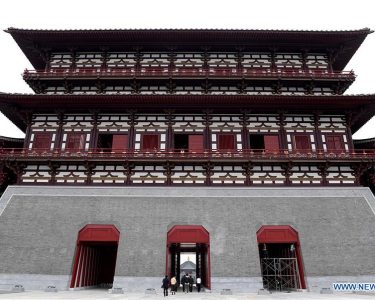
- 8:30 a.m. — Visit the Sui-Tang Luoyang City National Heritage Park. The reconstructed Mingtang and Tiantang halls give a sense of imperial scale.
- 11:00 a.m. — Walk through the old town’s Lijing Gate and the surrounding lanes. Shop for local crafts.
- 1:00 p.m. — Lunch: Luoyang water banquet dishes or a simple mutton soup.
- 3:00 p.m. — Walk the Luo River embankment south of the old town. Cross a pedestrian bridge for the view back toward the city.
- 5:00 p.m. — Optional: taxi to Xiaolangdi Reservoir for sunset. This is a 90-minute round trip from the city center. Skip it if you are tired.
This itinerary is not for everyone. If you have only one day, choose Longmen in the morning and the old town in the evening. Accept that you will miss White Horse Temple and the river. Better to see one zone fully than three zones superficially.
Buyer’s Decision Checklist
Use this checklist before booking anything. It forces you to match your interests to the right zones.
- Primary interest is Buddhist art and carving? Prioritize the Buddhist zone. Book a hotel near Longmen or budget for taxis. Accept that the old town is secondary.
- Primary interest is imperial history and urban life? Stay in the old town. Visit the Sui-Tang ruins and the Luoyang Museum. Add Longmen only if time allows.
- Primary interest is landscape and context? Rent a car or hire a driver. Spend time on the river and at Xiaolangdi. Use Longmen as a half-day anchor.
- Traveling with children or elderly companions? Avoid the full two-day itinerary. Longmen involves stairs and long walks. The old town is more accessible. The river is flat and easy.
- Visiting in summer? Start Longmen at 7:30 a.m. sharp. Heat builds fast. Carry water. The river walk is best after 5:00 p.m.
- Visiting in winter? Light is softer and crowds are thinner. Longmen in late morning works. The river can be cold and windy — dress accordingly.
Why the Zone Approach Works
The zone framework is not an academic exercise. It is a practical tool. China luoyang rewards travelers who understand the relationship between landscape and history. The Buddhist zone sits along the Yi River because the cliffs offered a carving surface and the river offered transport. The dynastic-capital zone sits on the higher ground north of the Luo River because that ground was defensible and flood-safe. The river-geography zone ties the two together, explaining why people kept returning to this valley despite repeated destruction.
When you see these connections, the city stops being a list of attractions. It becomes a coherent story. And that story is what makes china luoyang worth the effort.
If you are planning a trip and want help matching your interests to the right zones, contact a local guide or a travel planner who knows the city well. Ask specifically about transport times between zones and current opening hours for the heritage parks. A well-planned zone-based itinerary will save you hours and deepen what you see.