
Blog
How White Horse Temple Blends Four Buddhist Styles

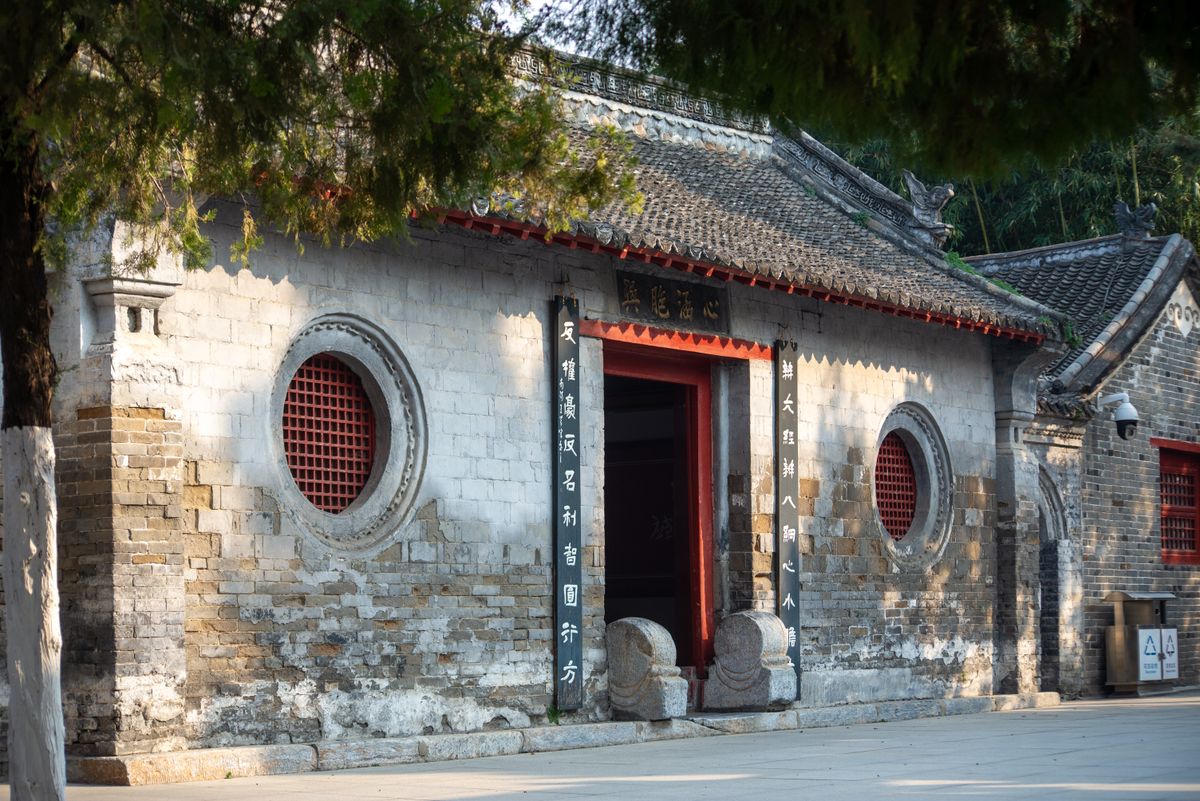
How white horse temple blends four Buddhist styles
How can one temple complex communicate several Buddhist traditions without making them feel disconnected? That is the central question for visitors researching white horse temple before adding it to a Luoyang itinerary. The answer lies in the way different precincts use architecture, sculpture, spatial movement, and devotional purpose to express distinct cultural interpretations of Buddhism.
White horse temple is not best understood as a single visual style. Its historic Chinese temple environment sits alongside later precincts associated with Indian, Thai, and Myanmar Buddhist traditions. For cultural travelers, this creates an unusually useful comparison site: rather than studying regional Buddhist architecture in separate countries, visitors can observe contrasting design languages within one broader sacred landscape.
The practical lesson is simple. Do not visit only for a quick photograph of a famous hall or pagoda. Walk the complex as a sequence of architectural arguments. Notice how each precinct directs the eye, organizes movement, frames sacred images, and creates a different emotional response.

Read the site as a meeting point of Buddhist architectural traditions
The most useful way to approach white horse temple is to separate its shared religious identity from its different cultural forms. All precincts relate to Buddhist devotion, but they do not communicate that devotion in the same way. Chinese temple planning commonly emphasizes a formal approach through aligned courtyards and halls. Indian-inspired structures often draw attention toward monumentality, sacred symbolism, and sculptural surfaces. Thai and Myanmar precincts use their own rooflines, stupas, decorative rhythms, and visual hierarchies.
The conclusion for a first-time visitor is clear: compare the spaces by function, not merely by color or ornament. Decorative details can be striking, but their meaning becomes clearer when you ask what the architecture asks a visitor to do. Does it lead you inward through a processional route? Does it place a sacred monument at the center? Does it create an open setting for circumambulation, prayer, or contemplation?
This approach fits travelers interested in religion, art history, photography, or cultural exchange. It is less useful for visitors with very limited time who only want to see the oldest Chinese structures. In that case, prioritize the historic temple axis first, then choose one additional precinct that offers the strongest contrast.
Understanding Buddhist architecture helps prevent a common mistake: assuming that every Buddhist temple should look alike. Buddhist belief traveled across regions, but builders adapted sacred forms to local materials, established craft traditions, climate, royal patronage, and artistic preferences. The precincts at white horse temple make that adaptation visible.
Compare the Chinese, Indian, Thai, and Myanmar temple precincts by architectural features and religious purpose
For itinerary planning, this comparison is the key differentiator. The precincts should not be treated as interchangeable photo stops. Each one highlights a different relationship between religious purpose and built form.
| Precinct tradition | Architectural features to observe | Religious purpose expressed through design | What visitors misunderstand if they get it wrong |
|---|---|---|---|
| Chinese | Axial planning, successive courtyards, halls arranged along a formal route, layered roofs, restrained progression from gate to inner sacred spaces. | The route organizes approach, respect, and gradual entry into a sacred environment. Movement itself becomes part of the experience. | If visitors only look for one dramatic object, they can miss the logic of the whole complex. The important feature is often the sequence between buildings rather than a single façade. |
| Indian | Monumental forms, sculptural emphasis, imagery associated with Buddhist sacred history, and a stronger visual focus on symbolic mass and surface treatment. | The architecture can make Buddhist narratives and sacred associations visually immediate, encouraging reflection on the wider origins and transmission of Buddhism. | If the precinct is judged only as “different-looking,” its narrative and symbolic role disappears. Look for how form and imagery direct attention toward Buddhist memory and teaching. |
| Thai | Distinctive roof profiles, decorative edge treatment, strong vertical accents, polished visual surfaces, and an expressive silhouette. | The design creates a ceremonial and uplifting setting in which ornament supports reverence and public visibility. | If visitors focus only on bright decoration, they may overlook how the roofline and vertical elements establish hierarchy. The composition is designed to be read from a distance as well as up close. |
| Myanmar | Stupa-oriented forms, layered sacred geometry, decorative detailing, and a visual emphasis on monuments associated with Buddhist veneration. | The precinct foregrounds devotion centered on a sacred monument and invites attention to the spiritual value of encircling, viewing, and honoring it. | If visitors treat the structure as a sculpture without considering movement around it, they miss its practical devotional meaning. Observe the open space and pathways around the monument. |
The comparison leads to a practical conclusion: start with the Chinese precinct when you want to understand the historic setting, then move to the Indian, Thai, and Myanmar areas to identify contrast. This order works because the formal Chinese axis provides a baseline. Once you have seen its measured progression, differences in monument form, roof expression, ornament, and devotional focus become easier to recognize.
This order does not apply if your primary interest is a particular national architectural tradition. A visitor researching Thai religious design, for example, may reasonably begin with the Thai precinct and return to the Chinese area afterward for comparison.

Use a structured walking method instead of rushing between landmarks
A successful visit to white horse temple depends less on memorizing names and more on observing consistently. Use the same questions in every precinct. This turns a general sightseeing stop into a coherent architectural study.
- Identify the approach. Ask whether the space is entered through a straight axis, a gate sequence, an open court, or a monument-centered area. The approach reveals how the precinct manages anticipation and respect.
- Find the visual center. It may be a hall, a Buddha image, a stupa, a roofline, or a sculptural façade. This tells you what the design wants to make spiritually dominant.
- Look at the roof and upper silhouette. Roof shape is not a minor decorative detail. It affects how the precinct is recognized from afar and how its tradition is visually distinguished from adjacent areas.
- Study visitor movement. Notice whether the architecture leads forward, encourages lingering, or leaves room to move around a sacred object. Movement patterns are closely tied to devotional use.
- Compare surface treatment. Observe whether walls and structures are plain, highly carved, brightly decorated, or shaped into layered forms. Surface treatment affects whether a building feels contemplative, ceremonial, narrative, or monumental.
- Record one contrast immediately. After each precinct, write one sentence such as “this area emphasizes a processional hall sequence, while the next centers on a sacred monument.” This prevents all four traditions from blending together in memory.
This method is especially suitable for independent travelers, students, photographers, and families with older children who want context beyond a standard guided route. It is less suitable during a rushed visit, heavy crowd conditions, or poor weather, when careful observation may be difficult. In those cases, choose two comparisons only: Chinese versus Indian for spatial and sculptural contrast, or Thai versus Myanmar for a focused study of Southeast Asian Buddhist forms.
Plan your Luoyang visit around the experience you want
There is no single best route through white horse temple. The right choice depends on whether your priority is history, architecture, religious culture, or visual documentation. Planning around an objective reduces the risk of seeing many structures without understanding why they differ.
| Visitor goal | Best focus | Recommended observation priority | Limit of this approach |
|---|---|---|---|
| Historic understanding | Chinese temple setting | Follow the main spatial sequence and identify how courtyards and halls create a formal sacred route. | This focus may leave limited time for the international precincts. |
| Comparative architecture | All precincts | Use the same checklist for each tradition and compare approach, roofline, monument, ornament, and visitor movement. | Requires a slower pace and careful note-taking. |
| Photography | Silhouettes and decorative contrast | Look for roof profiles, stupa forms, framed views, and differences between open and enclosed spaces. | Images alone may not capture religious purpose or spatial sequence. |
| Buddhist cultural study | Purpose behind design | Pay attention to how each precinct supports reverence, procession, viewing, or movement around sacred forms. | Architecture cannot explain every doctrinal or historical detail by itself. |
For most discovery-stage travelers, the best choice is the comparative architecture route. It gives the clearest answer to why white horse temple stands apart from a conventional single-style temple visit. The reasoning is straightforward: the site’s distinctive value comes from visible dialogue among traditions, not from treating each precinct as an isolated attraction.
Avoid the mistakes that flatten the cultural meaning of the site
Visitors often arrive at white horse temple with an understandable desire to see famous Buddhist landmarks. The risk is that quick visual judgments can reduce a complex site to a collection of exotic-looking buildings. The following mistakes are avoidable.
- Mistake: calling every structure a pagoda. A hall, shrine, stupa, gateway, and decorative tower can serve different purposes. Use “pagoda” only when the form and function genuinely fit; otherwise, describe what you see more carefully.
- Mistake: assuming newer precincts replace the historic Chinese setting. The different traditions are best read as comparative additions within the broader temple landscape. They do not erase the importance of the Chinese architectural sequence.
- Mistake: treating ornament as purely decorative. Roof edges, gilded surfaces, sculptural programs, and monument shapes influence hierarchy, visibility, ritual atmosphere, and cultural identity.
- Mistake: photographing without walking the full approach. A front-facing image may be attractive, but it cannot show whether the design relies on procession, enclosure, or circulation around a sacred center.
- Mistake: expecting identical religious practice in every precinct. Shared Buddhist themes do not mean identical ritual emphasis. Observe the architectural clues before making assumptions about purpose.
The conclusion is that white horse temple rewards patient comparison. Its value for a Luoyang itinerary is not simply that it contains several recognizable styles. Its deeper value is that it shows how a shared religious tradition can be expressed through different architectural languages while remaining part of one sacred destination.
For visitors planning a more informed stop, prepare a short list of architectural details you want to compare before arriving, then use the precincts at white horse temple as your field guide to Chinese, Indian, Thai, and Myanmar Buddhist design.
Need help shaping a culture-focused Luoyang itinerary? Submit your travel interests for selection advice.
About LyWOW Tours
LyWOW is a locally based travel agency in Luoyang, specializing in private tours for international travelers across Luoyang, Shaolin, Xi’an and Central China. English-speaking guides, flexible itineraries and door-to-door service.
Learn more about us or browse all our tours.
