
Blog
Plan Luoyang White Horse Temple Hall Circuit

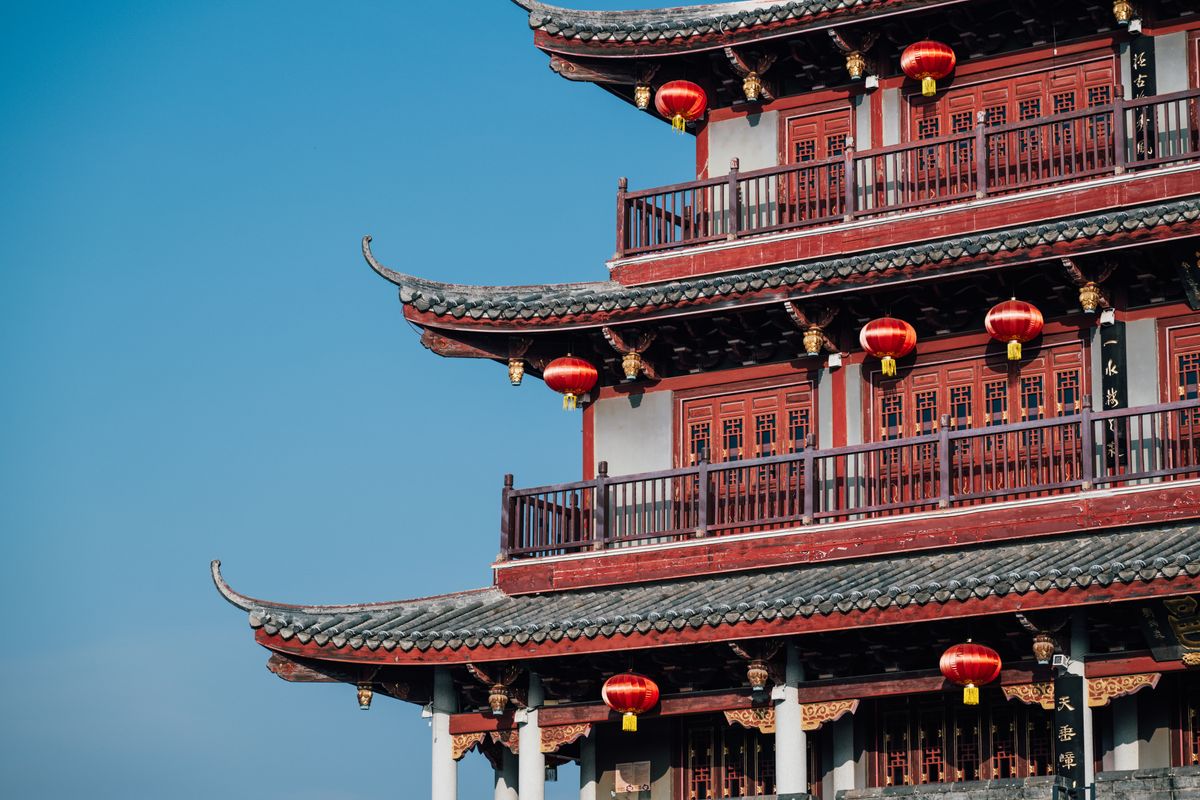
Plan Luoyang White Horse Temple’s Hall Circuit
How can an independent visitor see the major religious and architectural areas without walking back and forth or treating every hall as the same? A practical luoyang white horse temple visit depends on following the site in a deliberate sequence, beginning with the Chinese temple setting and then moving through the international-style complexes with clear visual checkpoints.
This guide is designed for independent travelers, tour planners, and itinerary builders who need to decide how much attention to give each section. The aim is not simply to collect photographs. It is to understand why the Chinese, Indian, Myanmar, and Thai-style halls belong in the same visit while retaining very different architectural identities.

Set the right scope before entering Luoyang White Horse Temple
The best approach is to treat luoyang white horse temple as a multi-part cultural site rather than a single hall visit. The Chinese temple area provides the historical and spatial foundation, while the later international-style halls require a different viewing method. Visitors who rush directly toward the most visually striking buildings often lose the context that makes the contrast meaningful.
Recommendation: Start with the traditional Chinese section, then continue toward the Indian, Myanmar, and Thai-style areas in a single outward circuit. This sequence works best for visitors who want architectural comparison as well as a coherent walking route. It is less suitable for travelers whose only goal is a short devotional stop at one specific hall; in that case, confirm the current access path on arrival and visit that area first.
| Planning choice | Best for | Why it works | Limit or caution |
|---|---|---|---|
| Chinese section first | First-time visitors and cultural itineraries | It establishes the axial, courtyard-based setting before stylistic comparisons begin. | Do not assume every building is open for entry or photography. |
| International halls as a separate second phase | Architecture-focused visitors | It prevents the foreign-inspired halls from being viewed as isolated photo stops. | Allow room in the itinerary for slower observation and route adjustments. |
| Single continuous circuit | Independent visitors with limited flexibility | It reduces unnecessary retracing and keeps the visual story logical. | Follow current signs and staff guidance if areas are temporarily restricted. |
| Focused single-area visit | Visitors with a narrow religious or research purpose | It directs attention toward the relevant hall or complex. | It does not provide a full comparison of the site’s architectural range. |
For a tour planner, the key decision is whether the group needs interpretation or simply orientation. A group interested in religious architecture should pause at transitions between zones. A group following a broader Luoyang heritage itinerary may prefer a shorter circuit with only the most distinct checkpoints. Neither choice is automatically better; the correct choice depends on whether the visit is about historical context, photography, devotional interest, or general sightseeing.
Follow a logical route through the Chinese, Indian, Myanmar, and Thai-style halls
A successful luoyang white horse temple circuit should move from the Chinese halls into the Indian, Myanmar, and Thai-style complexes without skipping the architectural transition between them. The conclusion is simple: follow the traditional temple sequence first, then compare each international-style area as its own architectural statement. This route fits visitors who want to understand the site rather than merely locate individual landmarks. It does not apply if current entrances, maintenance work, ceremonies, or staff instructions require a different order.
- Begin at the Chinese temple area. Read the site as a traditional temple environment before seeking contrast. Look at how gates, courtyards, halls, rooflines, and processional movement work together. The checkpoint is whether you can identify a main forward route rather than wandering between side spaces.
- Pause before leaving the Chinese hall sequence. Ask what makes the setting feel ordered: alignment, enclosed courtyards, repeated roof forms, and a gradual approach toward significant halls. This is the baseline for the rest of the circuit. Do not rush this stage if architectural comparison is your main purpose.
- Move to the Indian-style complex next. Treat it as a change in architectural language, not as an extension of the Chinese temple layout. Compare massing, surface treatment, silhouette, and the way the building presents itself from a distance. The checkpoint is whether you can describe one difference from the preceding Chinese halls without relying only on color.
- Continue to the Myanmar-style halls. Observe the profile of the roofs, decorative emphasis, and the overall relationship between hall form and ornament. The practical reason for this stop is comparative: it helps visitors avoid grouping all non-Chinese buildings into one vague “foreign” category. Do not assume that a single decorative detail represents all architecture from Myanmar.
- Finish with the Thai-style halls. Look for the contrast in roof expression, façade treatment, decorative rhythm, and visual formality. This final comparison is useful because the Thai-style buildings can appear especially distinct after the Chinese, Indian, and Myanmar stages. The limit is that visual similarity alone should not be treated as proof of a specific religious practice or historical period.
- Review the circuit before leaving. From a suitable open point, mentally retrace the route: Chinese foundation, Indian contrast, Myanmar variation, Thai conclusion. This short review turns a walk into an itinerary record that can be used for future tour planning.

Use architectural checkpoints instead of relying on quick photographs
At luoyang white horse temple, the most useful comparison is not “which building looks most impressive?” A better question is “what visual system is each hall using?” This approach gives independent visitors a repeatable method and helps tour leaders explain the route in plain language.
| Area in the circuit | What to observe | Useful interpretation | Common error to avoid |
|---|---|---|---|
| Chinese halls | Courtyards, aligned movement, roof form, and hall placement | These establish the traditional temple context for the visit. | Seeing each hall as a separate object instead of part of a sequence. |
| Indian-style area | Overall building mass, exterior presentation, and departure from the Chinese setting | It introduces a different visual reference point within the same site. | Reducing the comparison to one photograph or one surface detail. |
| Myanmar-style area | Roof profile, ornament, and layered visual treatment | It should be considered independently rather than merged with other international styles. | Calling it generically “Southeast Asian” without closer observation. |
| Thai-style area | Roof expression, decorative emphasis, and formal silhouette | It provides a final contrast to both Chinese halls and the other international buildings. | Assuming all Thai architecture follows one uniform design pattern. |
This method is particularly effective for planners preparing notes for a small group. Instead of giving a long lecture at every stop, assign one observation task per area. For example, ask participants to identify how a building guides the eye upward, how its roofline differs from the previous section, or whether the building is organized around an approach, a courtyard, or an external visual impact.
The limit is clear: exterior observation can explain style, but it cannot replace specialist historical research. If your itinerary requires formal architectural attribution, conservation details, or religious interpretation, verify those points through official on-site material or qualified local guidance.
Allocate your visit according to purpose rather than a fixed timetable
There is no single correct duration for luoyang white horse temple. A short visit can cover the essential Chinese temple sequence and a selective look at the international-style halls. A longer visit is better for travelers who want to compare layouts, photograph details, pause in courtyards, or plan future group routes.
Recommendation: Allocate time by observation tasks, not by a rigid clock. This is more reliable when arrival conditions, crowd levels, weather, access rules, and walking pace are unknown. It suits independent travelers especially well. It is less useful for a tightly scheduled coach itinerary, where a guide should set clear meeting points and protect the group’s departure time.
- Essential route: Choose this when White Horse Temple is one stop among several. Prioritize the Chinese halls, then complete a direct pass through the Indian, Myanmar, and Thai-style sections.
- Architecture route: Choose this when the site is a main destination. Pause at every transition, compare rooflines and spatial organization, and make notes before moving on.
- Photography route: Choose this when composition is the priority. Walk the full circuit first without stopping too long, then return only to areas that remain accessible and suitable for respectful photography.
- Group-planning route: Choose this when coordinating visitors with different interests. Establish a shared route through all four architectural contexts, then allow a controlled period for individual observation if site conditions permit.
A practical itinerary should also include a buffer for navigation. The luoyang white horse temple grounds contain distinct visual zones, and visitors can lose time by doubling back after realizing they missed a hall or misunderstood an exit direction. The remedy is simple: confirm your return path at each major transition and keep the Chinese, Indian, Myanmar, and Thai-style areas in the same planned sequence.
Avoid the route mistakes that weaken a Luoyang White Horse Temple visit
Most planning failures at luoyang white horse temple come from poor sequencing, not from lack of interest. The following checklist is useful for solo visitors and itinerary coordinators because each item has an immediate correction.
- Mistake: Starting with the most photographed-looking structure. Correction: begin with the Chinese temple setting. This preserves the reference point needed for comparison. Skip this only if access conditions make the normal route impractical.
- Mistake: Treating all international halls as one category. Correction: make separate notes for Indian, Myanmar, and Thai-style architecture. Each stop should have its own visual observation. Do not overstate conclusions based on a single feature.
- Mistake: Moving too quickly through transition spaces. Correction: stop briefly when the architectural language changes. These moments explain the route better than a collection of disconnected building images.
- Mistake: Planning only for photographs. Correction: pair every photo stop with one architectural question. This works for casual visitors and serious planners alike, though it should never interfere with worshippers or site rules.
- Mistake: Assuming a pre-planned route cannot change. Correction: adapt to current signs, staff directions, and visitor flow. A logical route is a framework, not permission to ignore on-site guidance.
Use this final checklist before leaving the site
Before you consider your luoyang white horse temple circuit complete, check whether the visit delivered the purpose you set at the entrance. This final review helps independent visitors decide whether another pass is worthwhile and helps tour planners improve future routes.
- Have you seen the Chinese halls as a connected temple sequence rather than isolated buildings?
- Can you identify a visible difference between the Chinese setting and the Indian-style complex?
- Have you treated the Myanmar-style and Thai-style halls as separate architectural contexts?
- Did you follow a route that avoided unnecessary backtracking?
- Did you leave enough flexibility for current access conditions and respectful movement through the grounds?
- Do your notes or photographs record the order of the circuit for future itinerary planning?
If you can answer yes to these questions, your luoyang white horse temple visit has done more than cover landmarks. It has created a clear comparative route through several architectural traditions within one destination.
Use this hall circuit as the basis for your next Luoyang itinerary plan.
About LyWOW Tours
LyWOW is a locally based travel agency in Luoyang, specializing in private tours for international travelers across Luoyang, Shaolin, Xi’an and Central China. English-speaking guides, flexible itineraries and door-to-door service.
Learn more about us or browse all our tours.