 By
By Luoyang City Henan Can Mean an Old City or a Wider Municipality
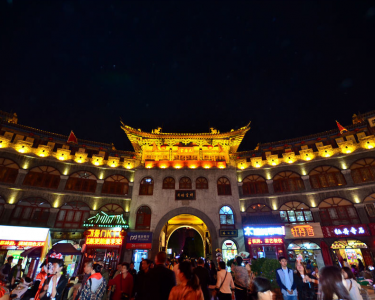
Does luoyang city henan mean the historic Old City shown near ancient gates and traditional streets, or does it mean a much larger administrative area? The honest answer is that it can mean either one. Maps, travel guides, census references, hotel listings, and attraction pages often use the same city name while referring to different boundaries.
This matters before booking transport, estimating travel time, comparing population figures, or planning a history-focused visit. A destination described as being “in Luoyang” may be inside the traditional urban core, in a newer built-up district, or in a county governed by the wider municipality.
What does Luoyang City Henan mean in normal use?
Luoyang city henan is usually used in three different ways: as a historic place name, as the modern urban area, and as an administrative municipality. The correct interpretation depends on the source and the purpose of the information.
For history and sightseeing, “Luoyang” often means the ancient capital area and the traditional Old City. For hotel searches, rail connections, restaurants, and local transport, it usually means the built-up urban districts. For government records, regional maps, population comparisons, or county attractions, it may refer to the entire prefecture-level city administration.
- Choose the historic meaning when researching old gates, traditional streets, imperial history, museums, and heritage districts. This is useful for culture-led travel plans, but it does not cover every major attraction associated with Luoyang.
- Choose the urban meaning when arranging hotels, metro or road travel, dining, business meetings, and city sightseeing. This works for practical trip planning, but the urban area is not a fixed line on every travel platform.
- Choose the municipal meaning when reviewing official statistics, county-level destinations, regional infrastructure, or administrative references. This is the broadest definition and can include locations far beyond the central city.
A common error is treating these three meanings as interchangeable. They are related, but they are not the same geographic unit.
How do the Old City, urban districts, and wider municipality compare?
The table below provides the boundary comparison needed to interpret search results for luoyang city henan. It is especially helpful when an attraction page gives only “Luoyang, Henan” as its location.
| Meaning in a search result | What it normally covers | Best use case | Key limitation |
|---|---|---|---|
| Historic Old City | The traditional historic core, often associated with old streets, city walls or gates, and heritage-focused visitor areas. | Researching the old town atmosphere, traditional architecture, and historic landmarks. | It does not represent all of modern Luoyang or all sites connected to Luoyang’s long history. |
| Built-up urban districts | The contiguous or closely connected modern city districts where many hotels, transport hubs, commercial areas, universities, and museums are located. | Planning accommodation, daily transport, meetings, and a short city itinerary. | Urban expansion can make the practical city area broader than a simple central-map boundary. |
| Wider prefecture-level municipality | The full administrative area governed under Luoyang, including urban districts and outlying county-level areas. | Checking administrative data, regional attractions, rural destinations, and long-distance travel within the municipality. | A place may be officially in Luoyang while being unsuitable for a same-day visit from a central hotel. |
Practical conclusion: use the attraction’s exact address, district, or county before deciding where to stay. A listing that says only “Luoyang” gives a city association, not necessarily a walkable location from the Old City.
This approach fits travelers building a multi-stop itinerary and researchers comparing sources. It does not apply when a source clearly provides precise coordinates, a district name, or an official site map; in those cases, use the more specific location rather than the broad city label.
Why can maps and population figures show different versions of Luoyang?
Search results for luoyang city henan can look inconsistent because maps and datasets answer different questions. A road map generally emphasizes the dense urban area. A historical map may center on ancient settlement zones. An administrative map includes the municipality’s full jurisdiction.
Population figures vary for the same reason. One source may describe residents in the built-up area, while another may count the wider administrative population. Neither figure is automatically wrong. They may simply use different boundaries.

Use the label attached to the figure
Before comparing any population, land-area, or visitor statistic, check what the source actually measures. Look for terms such as “urban area,” “district,” “municipality,” “administrative area,” or “metropolitan area.” If the source does not define its boundary, treat the figure as incomplete rather than directly comparable.
- Urban-area data is most useful for understanding city density, transport demand, and the practical scale of central Luoyang.
- Municipal data is most useful for regional planning and comparisons between Chinese administrative cities.
- Historic-area descriptions are most useful for heritage research, but they should not be used as modern administrative statistics.
The same principle applies to travel distances. A map pin inside a county-level area may still be within the wider municipality of luoyang city henan, yet require a separate travel day.
How should travelers check an attraction location before booking?
The best decision is simple: do not rely on the city name alone. Confirm the exact district or county, then compare it with your hotel and planned transport route.
- Identify the attraction’s formal name. Search for the official attraction name rather than only “Luoyang attraction.” Similar names can appear in different districts.
- Check the district or county. This tells you whether the site is in the historic core, the modern urban area, or a broader municipal location.
- Review the map route from your intended hotel. Use the actual travel route, not a straight-line map distance.
- Group nearby sites together. Plan Old City locations together when possible, and avoid combining distant county attractions with central-city sightseeing without allowing extra travel time.
- Check opening information from the venue itself. Historical sites, museums, scenic areas, and religious locations can have different entry rules or seasonal arrangements.
This process is most valuable for first-time visitors, academic groups, and tour planners. It may be unnecessary for a single attraction beside a confirmed hotel, but it remains useful whenever a listing only says “Luoyang, Henan.”
Which Luoyang locations are often confused with one another?
Several types of places are frequently grouped under luoyang city henan even though they serve very different travel purposes. The historic Old City is often treated as the whole city, while famous heritage sites may be located elsewhere in the urban area or beyond it.
| Travel planning question | Best boundary to use | Reason | When not to rely on it alone |
|---|---|---|---|
| Where should I stay for traditional streets and evening walks? | Historic Old City and nearby central districts | This focuses the search on heritage-oriented urban areas. | Do not assume every major museum or scenic attraction is nearby. |
| How large is the practical city for transport planning? | Built-up urban districts | Hotels, stations, commercial zones, and many city services are concentrated here. | Do not use this boundary for county attractions or municipal statistics. |
| Is an outlying scenic area still officially part of Luoyang? | Wider municipality | Administrative boundaries answer this question. | Official inclusion does not mean central-city convenience. |
For historical context, Luoyang is widely associated with several periods of Chinese history and multiple ancient capital sites. That history is geographically layered. A visitor should not expect every historic reference to point to one compact old-town district.
What mistakes should researchers and visitors avoid?
- Mistake: using one population figure as a measure of the Old City. Population datasets often cover a broader boundary. Check whether the figure refers to an urban area or the municipality.
- Mistake: booking accommodation solely because it says “Luoyang city center.” “Center” can be a marketing label. Confirm the hotel’s district and route to the attractions you want to visit.
- Mistake: assuming every site in Luoyang municipality is close to the railway station. The administrative area is wider than the central transport network.
- Mistake: treating the Old City as the only historic part of Luoyang. The city’s heritage extends across multiple locations and periods.
- Mistake: comparing map labels without checking the map scale. A regional map and a neighborhood map can both say “Luoyang” while showing very different extents.
The most reliable rule is to match the boundary to the question. For heritage walking, use the Old City boundary. For hotel and transport decisions, use urban districts. For administrative research, use the municipal boundary.
Frequently asked questions about Luoyang City Henan boundaries
Is Luoyang City Henan the same as Luoyang Old City?
No. Luoyang city henan can refer to the full modern city or the wider municipality, while Luoyang Old City normally refers to a historic core area. The Old City is part of the broader Luoyang context, not a complete substitute for it.
Are all attractions described as being in Luoyang close together?
No. Some attractions are located in central urban districts, while others may be in outlying parts of the municipality. Check the attraction’s district or county and its route from your accommodation.
Why does one map show a small Luoyang and another show a much larger area?
The smaller map may show the built-up city or historic center. The larger map may show the prefecture-level municipality. Both can be accurate if they use different geographic boundaries.
Which definition should I use for a history study?
Use the historic boundary relevant to the period or site you are studying. Modern municipal boundaries are useful for locating a site today, but they do not define the full extent of ancient Luoyang in every historical period.
For group travel, research visits, or itinerary planning, request location-selection advice before confirming accommodation and transport.