Lo Yang China Traces an Ancient Capital Into Today’s Henan Province
Anyone exploring Chinese history may encounter the names “Lo Yang” and “Luoyang” and wonder whether they refer to the same place. The short answer is yes: Lo Yang China is an older romanization of Luoyang, a city in central Henan province that served as a capital across multiple dynasties. Today, Luoyang is one of China’s most important historical and cultural destinations.
This article explains the connection between the older name and the modern city, traces Luoyang’s dynastic history, and highlights the places and historical details travelers should know before visiting.
Why the Name “Lo Yang” Still Appears in English-Language Records
Before China standardized the Pinyin romanization system in the late 20th century, Chinese place names were transliterated in several different ways. Under Wade-Giles conventions, the city’s name appeared as “Lo-yang” or “Lo Yang.” Pinyin later standardized it as “Luoyang.” Both forms refer to the same place — they are not two different cities or two separate historical periods. The spelling difference is a transliteration change, similar to how “Peking” and “Beijing” refer to the same capital.
Travelers may still see “Lo Yang” in older books, maps, museum materials, and historical accounts. Recognizing both spellings makes it easier to understand references to Luoyang’s long history and connect older descriptions with the modern city.
Historical Timeline Connecting Lo Yang’s Dynastic Role to Its Present-Day Henan Identity
Luoyang’s role as a capital spans a longer stretch of Chinese history than almost any other city. The timeline below connects its dynastic importance with the heritage travelers can experience in and around the modern city.
| Period | Role of Lo Yang / Luoyang | Present-Day Relevance |
|---|---|---|
| Eastern Zhou dynasty | Served as the royal capital after the court relocated eastward | Marks the city’s earliest recorded capital status |
| Eastern Han dynasty | Functioned as the imperial capital, a major political and cultural center | Numerous historical and archaeological sites in modern Luoyang date to this era |
| Wei and Western Jin dynasties | Continued as capital, consolidating administrative institutions | Referenced heavily in classical Chinese historiography |
| Northern Wei dynasty | Rebuilt and expanded as capital, including notable religious and artistic patronage | Connected to nearby heritage sites still visited today |
| Sui and Tang dynasties | Served at times as an eastern capital alongside Chang’an | Reinforced the city’s role along early overland trade routes |
| 20th century to present | Developed into a major city within Henan province | Functions today as an important cultural and tourism center in Henan |
The throughline is continuity of place, not continuity of government. Dynasties rose and fell, capitals shifted between cities, and Lo Yang China cycled in and out of its capital role multiple times — but the geographic location remained the same. Today it sits in western Henan province, roughly equidistant between the Yellow River to the north and the Funiu mountain range to the south.
Key Details to Know When Visiting or Learning About Lo Yang China
A few basic details help travelers place Luoyang correctly on a map and understand its historical significance.
Spelling and romanization
“Lo Yang,” “Lo-yang,” and “Luoyang” all refer to the same city. Modern maps, train schedules, and travel websites almost always use “Luoyang,” while older historical sources may use one of the earlier spellings.
Provincial attribution
Luoyang is in Henan Province, not Shaanxi. This distinguishes it from Xi’an, another famous former capital in central China. Both cities have important connections with Chinese history, but they are in different provinces and offer distinct cultural experiences.
Historical period labeling
Luoyang’s capital status belongs to several distinct periods rather than one uninterrupted era. When visiting historical sites, check which dynasty or period each site represents to appreciate the city’s changing role over time.
Modern administrative status
Modern Luoyang is a prefecture-level city in Henan Province, not China’s current national capital. Its importance today comes from its history, cultural heritage, scenic landscapes, and attractions such as the Longmen Grottoes and White Horse Temple.
Common Mistakes When Learning About Lo Yang China
- Treating “Lo Yang” and “Luoyang” as separate cities. They are the same location under different romanization systems.
- Confusing it with Xi’an. Both are historical capitals in central China, but they sit in different provinces: Henan and Shaanxi.
- Assuming unbroken capital status. The city’s dynastic role developed across separate historical periods rather than one continuous era.
- Calling it China’s current capital. That status belongs to Beijing; modern Luoyang is a historic city in Henan.
- Ignoring the spelling in older sources. Historical books and maps may use “Lo Yang,” while contemporary travel information uses “Luoyang.”
A Practical Checklist for Understanding Luoyang’s History
When you encounter a reference to “Lo Yang” in an older book, map, or historical account, use the following checklist:
- Confirm that the location is in Henan Province.
- Remember that “Lo Yang” and “Luoyang” are alternative spellings for the same city.
- Check which dynasty or historical period the reference describes.
- Distinguish the ancient capital from the modern city and its present-day attractions.
- Compare older descriptions with a current map when planning visits to historical sites.
This simple approach helps connect Luoyang’s ancient history with the modern destination travelers can explore today.
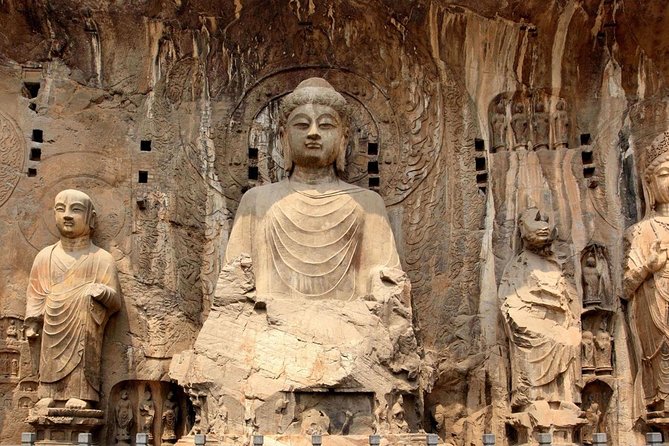
Luoyang offers an exceptional combination of imperial history, Buddhist art, ancient temples, traditional culture, and scenic landscapes. Visiting its major sites with a clear understanding of the city’s historical timeline can make the experience even more rewarding.
About Luoyang Joy Tours
Luoyang Joy Tours is a locally based travel agency in Luoyang, specializing in private tours for international travelers across Luoyang, Shaolin, Xi’an and Central China. English-speaking guides, flexible itineraries and door-to-door service.
Learn more about us or browse all our tours.