
Blog
Longmen Caves AP Art History Analysis Guide

How to Analyze Longmen Caves AP Art History Through Visual Evidence
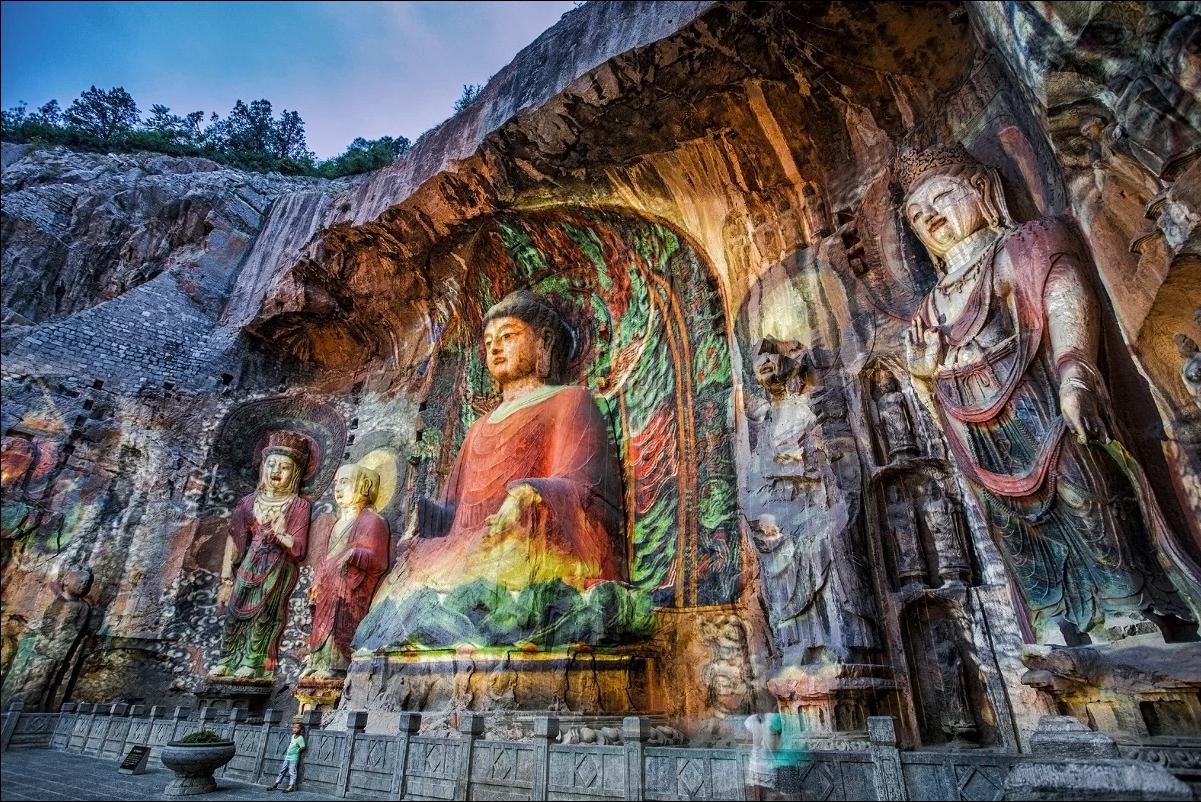
What should you say when an AP Art History prompt shows a monumental Buddhist sculpture at the Longmen site but does not tell you exactly what to write? The strongest longmen caves ap art history responses do not begin by listing dates or naming a dynasty. They begin with visible evidence: the size of the figures, the carved stone setting, the Buddha’s expression, the surrounding attendants, and the political purpose behind such a vast religious commission.
The site commonly called the Longmen Caves is more accurately known as the Longmen Grottoes, a major Buddhist cave-temple complex near Luoyang, China. For AP Art History, students often focus on the Tang-dynasty Fengxian Temple group, including the monumental Vairocana Buddha. Your goal is not to memorize every cave. Your goal is to connect form, function, context, and meaning in a defensible argument.
Identify the Work Before You Build an Argument
A reliable longmen caves ap art history answer starts by identifying the work with the level of precision you can support. If a question asks for analysis rather than simple identification, give the essential facts quickly and spend most of your response explaining why those facts matter visually.
| Identification Point | Useful AP Art History Language | Why It Matters | Limit |
|---|---|---|---|
| Site | Longmen Grottoes near Luoyang, China | Establishes the work as part of a large Buddhist cave-temple landscape. | Do not treat the entire site as one single artwork with one patron or one date. |
| Period | Tang dynasty | Connects the sculpture to an era of powerful imperial rule and Buddhist patronage. | Do not imply every carving at Longmen was made during the Tang dynasty. |
| Material and process | Stone carved directly into a limestone cliff | Explains why the architecture, sculpture, and natural setting work together. | Do not call the figures freestanding statues removed from their setting. |
| Religious subject | Vairocana Buddha with bodhisattvas, disciples, and guardians | Provides a foundation for iconographic interpretation. | Do not merely name figures without explaining their roles. |
| Patronage | Imperial patronage associated with Emperor Gaozong and Empress Wu Zetian | Helps explain the project’s scale and political significance. | Avoid claiming that every facial feature is a confirmed portrait of a ruler. |
For longmen caves ap art history, use identification as a launch point. A weak sentence says, “This is a Buddhist sculpture from China.” A stronger sentence says, “The Tang-dynasty Fengxian Temple group at the Longmen Grottoes uses monumental cliff-carved Buddhist imagery to join religious devotion with imperial authority.” The second statement gives you an argument that can be developed with visual evidence.
Build a Visual-Analysis Response From Scale, Iconography, Patronage, and Site Setting
This is the core method for a high-quality longmen caves ap art history response. Treat each category below as a separate piece of evidence, then connect all four to one central claim. The most effective conclusion is that the Fengxian Temple sculptures make Buddhist sacred power visible on an imperial scale.
| Analytical Lens | What to Observe | What You Can Argue | Common Failure Reason |
|---|---|---|---|
| Scale | Monumental central Buddha, large surrounding figures, broad cliff façade | Large scale creates awe and makes the religious image feel authoritative and public. | Students say “it is big” but do not explain how size affects a worshipper or visitor. |
| Iconography | Central Buddha, serene expression, bodhisattvas, disciples, guardians | The hierarchy of figures presents the Buddha as spiritually supreme and surrounded by a sacred community. | Students identify a Buddha but ignore the attendants that establish rank and meaning. |
| Patronage | Imperial support during the Tang dynasty | Elite sponsorship allowed a highly visible religious monument that could also communicate political legitimacy. | Students claim “religion and politics are connected” without naming visual evidence or patronage. |
| Site setting | Figures carved into a cliff within a larger cave-temple complex | The natural rock becomes part of the sacred environment, making the site feel permanent and integrated with the landscape. | Students discuss the sculpture as if it were displayed in a modern museum gallery. |
Step 1: Begin with scale and the viewer’s experience
In longmen caves ap art history, scale is not decorative information. It is evidence. Start by stating that the central Buddha dominates the façade, while the attendant figures reinforce a clear visual hierarchy. Then explain the effect: a visitor approaching the site would encounter a religious image too large to experience as an ordinary human presence.
This approach fits prompts asking about function, religious experience, or political authority. It does not apply when a prompt asks only for a technical comparison between artistic media. In that situation, still mention scale, but focus more directly on the consequences of carving into a cliff.
Step 2: Read iconography as a hierarchy, not a vocabulary quiz
Use iconography to explain how figures communicate meaning. The central Vairocana Buddha is calm and frontal, creating a stable focal point. Bodhisattvas and disciples frame the central figure, while guardian figures add force and protection. Together, these figures do more than populate the space. They direct attention toward the Buddha’s supreme spiritual position.
A useful longmen caves ap art history sentence is: “The placement of serene attendants near more forceful guardian figures establishes a sacred hierarchy, directing the viewer toward the composed authority of the central Buddha.” This works for visual-analysis prompts because it moves from observation to interpretation.
Step 3: Connect imperial patronage to visible choices
Patronage matters because major cave-temple projects required substantial resources, planning, and labor. In a longmen caves ap art history essay, explain that imperial association gives the monument political weight. A ruler’s support for a grand Buddhist site could present the court as a protector of Buddhism and as a source of order.
Keep the claim measured. The site can be read as linking Buddhist devotion and imperial authority; it should not be described as mere political propaganda. Religious function remains essential. The images were part of a sacred environment, not simply a royal monument with Buddhist decoration.
Step 4: Treat the cliff as part of the artwork
The site setting is a decisive feature of longmen caves ap art history. The figures are carved from the rock face, so sculpture and landscape cannot be separated. The cliff provides a monumental frame and makes the Buddha’s presence seem embedded in the natural world. This differs from a portable bronze or a sculpture placed independently inside a building.
Use this point when comparing Longmen with freestanding religious sculpture or with architecture that encloses worshippers. Do not claim that the natural setting alone determines meaning; the carved figures, their arrangement, and their patronage also shape interpretation.

Use an Executable Essay Procedure Under Exam Conditions
Students preparing for longmen caves ap art history should practice a repeatable sequence instead of waiting for a perfect memory of details. The following procedure works for short-answer questions, image analysis, and longer comparative responses.
- Name the site and period. Write “Longmen Grottoes near Luoyang, China, developed across several periods, with important Tang-dynasty sculpture at Fengxian Temple.” This establishes context without turning your opening into a fact list.
- Choose one visual thesis. State that the monument uses monumental scale and a hierarchical arrangement of sacred figures to express Buddhist authority within an imperially supported setting.
- Give two visible details. Use the immense central Buddha and the ordered ranks of attendants. Describe what the viewer can see before explaining meaning.
- Add one contextual detail. Connect Tang imperial patronage to the project’s public grandeur and religious importance.
- Return to function. Explain that the site supported Buddhist devotion while also presenting a vision of spiritual and worldly order.
- Qualify your claim. Avoid presenting political meaning as the site’s only purpose. State that imperial support and religious practice operated together.
This method is especially useful when an image is unfamiliar or cropped. You may not recognize every attendant figure, but you can still analyze the hierarchy, scale, and cliff setting. It is less useful when a prompt requires a named doctrinal concept; then review the specific terminology requested before writing.
Compare Longmen With Other AP Art History Works Carefully
Comparison can improve a longmen caves ap art history response only when it clarifies a meaningful difference. Do not compare works merely because both are religious or both are made of stone. Select a comparison point that changes how viewers encounter the work.
| Comparison Question | Longmen Grottoes | How to Use the Difference |
|---|---|---|
| How is sacred space made? | A cliff face is carved into a monumental sculptural setting. | Argue that nature and sculpture are fused rather than separated. |
| How does scale shape meaning? | The central Buddha dominates a large façade and is reinforced by attendant figures. | Explain how monumentality produces reverence and visual authority. |
| How does patronage matter? | Imperial association gives the Buddhist commission broad public significance. | Discuss how elite sponsorship can shape religious art without reducing it to politics. |
| How does the viewer engage? | Visitors encounter images within a larger cave-temple and landscape environment. | Contrast this with objects designed for a smaller interior, altar, or private devotional setting. |
When writing longmen caves ap art history comparisons, make the comparison serve your thesis. For example, you can contrast the site-specific cliff carving at Longmen with a portable sacred object to show how location affects function. Do not claim that one format is automatically more religious than another. Different materials and settings create different forms of access, not a simple hierarchy of spiritual value.
Avoid the Errors That Weaken Otherwise Accurate Responses
Many longmen caves ap art history answers lose strength because they contain correct facts but fail to analyze them. Review these errors before a class discussion or exam.
- Listing facts without a thesis: Naming the Tang dynasty, Buddhism, and Empress Wu Zetian is not analysis. Fix this by linking each fact to a visible feature, such as monumentality or figure hierarchy.
- Calling all figures “Buddha”: The ensemble includes different categories of sacred figures. Fix this by identifying the central Buddha and referring more generally to bodhisattvas, disciples, and guardians when uncertain.
- Ignoring the rock setting: The cliff is not a neutral backdrop. Fix this by explaining that carving into the landscape integrates sculpture, architecture, and place.
- Making unsupported portrait claims: Some interpretations connect the central Buddha’s appearance with Empress Wu Zetian, but do not state this as unquestioned fact. Fix this by using cautious language such as “has often been associated with.”
- Reducing the work to politics: Imperial patronage is important, but the monument also served Buddhist devotion. Fix this by discussing both religious and political significance.
- Using scale as a vague adjective: “Huge” is incomplete. Fix this by explaining how an oversized sacred image shapes a viewer’s sense of reverence and authority.
The final checkpoint for longmen caves ap art history is simple: every paragraph should move from something visible to an interpretation. If you cannot point to a figure, arrangement, expression, material condition, or site feature, revise the sentence until the claim has visual support.
Practice With a Short Model Response
Use this model as a structure, not as a script to memorize. A strong longmen caves ap art history response might state:
“The Tang-dynasty Buddhist sculptures at Fengxian Temple in the Longmen Grottoes use monumental scale and a hierarchical arrangement of figures to establish the spiritual authority of the central Vairocana Buddha. Carved directly into a cliff, the ensemble transforms the natural landscape into a sacred setting. The calm central figure contrasts with the active guardians and surrounding attendants, directing viewers toward the Buddha as the dominant source of order. Because the project was associated with imperial patronage, its grandeur also connects Buddhist devotion with the authority of the Tang court.”
This response works because it identifies the work, names visible evidence, addresses setting, and incorporates patronage. Its limit is that it does not answer every possible prompt. If the question asks about artistic exchange, gender, or a comparison with another work, add evidence that addresses that specific task rather than repeating the same paragraph.
Bring this analysis checklist to your next AP Art History study session and test it against a new image of the Longmen site.
About LyWOW Tours
LyWOW is a locally based travel agency in Luoyang, specializing in private tours for international travelers across Luoyang, Shaolin, Xi’an and Central China. English-speaking guides, flexible itineraries and door-to-door service.
Learn more about us or browse all our tours.
