 By
By Longmen Caves China: A Complete Guide to Its History and Highlights
Longmen Caves China is a vast collection of Buddhist grottoes, stone sculptures, inscriptions, and religious monuments carved into limestone cliffs beside the Yi River near Luoyang in Henan Province. The site appeals to travelers, historians, architects, and cultural-tourism planners because it brings together layers of Chinese artistic and religious development in one remarkable landscape.
A visit becomes far more rewarding when you know what to look for. The caves are not simply a row of statues beside a river. They form an extensive cultural record shaped by imperial patronage, Buddhist practice, craftsmanship, changing artistic preferences, and centuries of weathering. This guide covers the site’s background, major areas, practical viewing tips, and details that can help visitors plan a more informed experience.
What Makes Longmen Caves China Significant
The Longmen grottoes are a cliff-carved heritage landscape rather than a single enclosed cave. Artists and patrons created niches, temples, inscriptions, and statues directly in the rock faces. Some works are intimate and finely detailed, while others span broad cliff surfaces and make a striking impression from across the river.
The site is closely associated with the development of Chinese Buddhist art during major historical periods. Its sculptures show how religious imagery adapted to local materials, artistic traditions, clothing styles, facial features, and compositional approaches. Together, these features create a distinctive record of cultural exchange and artistic transformation.
Longmen is also recognized as a World Heritage site. That designation helps explain why preservation, visitor management, and responsible photography are central to the experience. The value of the grottoes lies not only in the largest sculptures, but also in the thousands of visual details, inscriptions, settings, and relationships between monuments.
A landscape shaped by the river
The Yi River gives the site much of its character. Looking across the water helps visitors see how the carved cliffs form a unified landscape. At close range, the details of individual niches become clearer. From wider viewpoints, the scale and density of the complex are easier to grasp.
This changing perspective matters. Visitors who focus on only one direction may miss the relationship between the eastern and western cliffs, the river corridor, and the surrounding temple and mountain setting. Take time to move between viewpoints and observe how the sculptures change at different distances.
A Brief Historical Overview
Construction and carving at Longmen developed over successive periods rather than during a single short campaign. Early work is linked to the Northern Wei, when the capital was located at nearby Luoyang. Later patrons added to or expanded important sculpture groups, particularly during the Tang period. Further work and inscriptions continued in later eras.
This long period of development gives the site an unusually broad visual range. Early sculptures can appear slender and formal, while later works may have fuller bodies, stronger volume, and different treatments of drapery and expression. These differences reflect changes in artistic language, religious interpretation, court culture, and technical practice.
Inscriptions add another layer of evidence. Carved texts can identify patrons, record religious intentions, commemorate events, or offer clues to the history of a particular niche. Even when visitors cannot read the characters, the density of writing suggests that the site served purposes beyond visual display. It was also a place of remembrance, devotion, and public expression.
Why the sculptures look different from one another
Variation may result from several factors. A niche could have been commissioned by an imperial household, an official, a religious community, or a private donor. Different workshops may have worked at different times, and artists adapted designs to the available rock surface and intended visual effect.
Some figures were carved as part of carefully arranged groups, while others occupy smaller spaces with less room for elaborate composition. Surface erosion also affects what visitors see today. Missing details do not necessarily indicate unfinished work; they may reflect age, exposure, past damage, or deliberate alteration.
Major Areas and Highlights to Look For
Longmen includes many caves and niches, so a planned route can be helpful. You do not need to inspect every carving equally. Instead, combine the major landmarks with smaller details that reveal how the site was made and used.
Fengxian Temple area
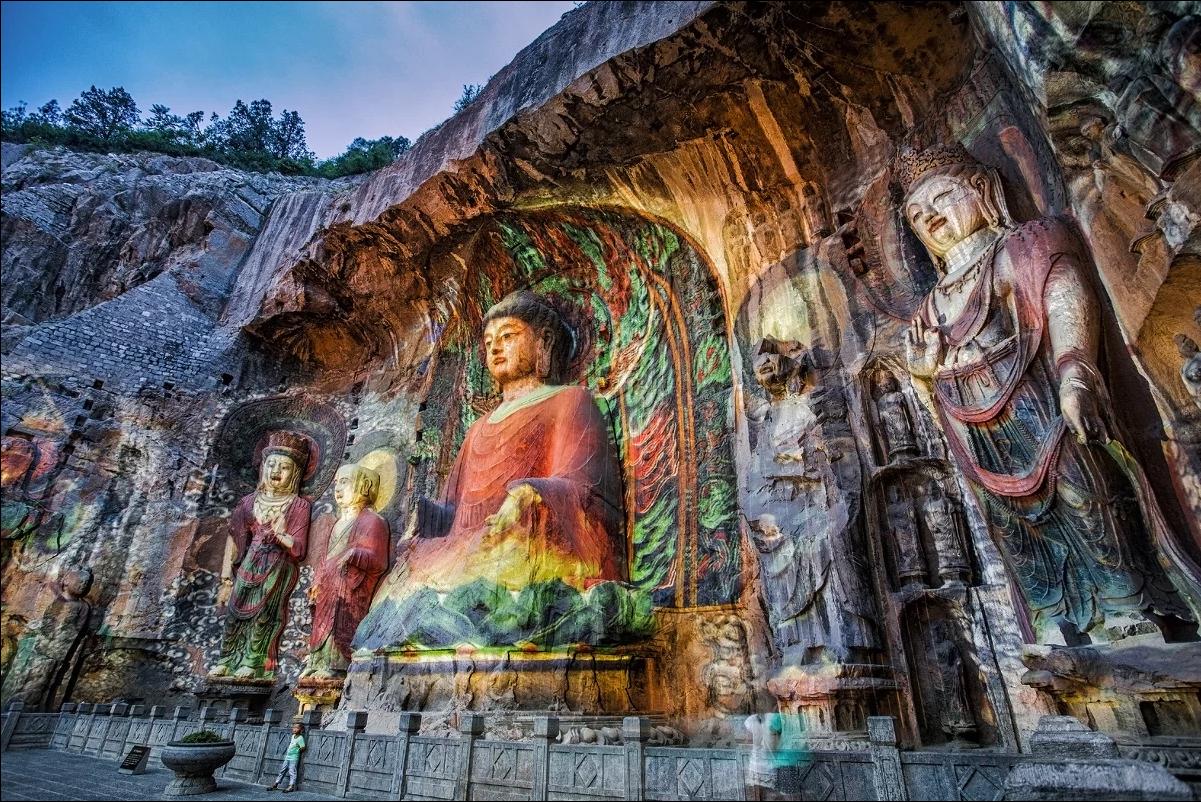
The Fengxian Temple area is often regarded as one of the visual highlights of the grottoes. Its large central Buddha and surrounding figures create a strong sense of scale and hierarchy. The composition is best appreciated from a position that lets you take in the full group rather than only the central face.
Look closely at the relationship between the main figure and the attendants, guardians, and surrounding images. Their placement creates balance across the cliff. Changing light can also alter the appearance of faces, robes, and recesses, so the same scene may look different in the morning and afternoon.
Guyang Cave
Guyang Cave is associated with early carving traditions at Longmen and is especially valuable for visitors interested in inscriptions and calligraphic history. The cave shows how writing and sculpture were integrated into a religious setting.
Rather than rushing through, view the lettering as part of the cave’s overall design. Compare the size, placement, and density of the inscriptions. These details help show that a grotto could function as a layered cultural space, not merely as a decorated chamber.
Binyang Cave and other carved spaces
Binyang Cave offers another opportunity to compare composition, figure style, and spatial arrangement. Other caves and niches throughout the complex reveal different scales of devotion and approaches to carving. Some are immediately dramatic, while others reward patience because their most interesting features are small inscriptions, attendants, halos, or traces of surface treatment.
Keep a broad viewing strategy. See the principal monuments, then allow time for less prominent niches. Smaller works often make the historical range of the site easier to appreciate.
How to Plan a Visit
Check official visitor information before departure. Opening arrangements, ticket procedures, access routes, transport options, and temporary conservation closures can change. Conditions may also vary by season, weather, public holidays, and special events.
Choose a comfortable pace
The site involves outdoor walking, steps, changing surfaces, and periods of standing. Comfortable footwear is more useful than formal travel clothing. Bring water and sun or rain protection appropriate for the season. A slower pace usually makes for a better visit because the grottoes reward careful observation.
Allow extra time for viewpoints. River-facing perspectives help explain the site’s layout, while close views reveal tool marks, inscriptions, facial details, and the condition of the stone. If you are traveling with older adults or children, plan rest stops and confirm accessible routes in advance.
Use a simple viewing sequence
- Start with a map or orientation point so you understand the relationship between the river and the cliffs.
- View the major sculpture groups from a distance before moving closer.
- Study selected caves and inscriptions rather than attempting to examine every niche.
- Pause at wider viewpoints to compare the eastern and western sides of the site.
- Review the route before leaving so you do not miss a major area.
A guide, museum resource, or reliable historical reference can add useful context. If you prefer independent travel, read about the Northern Wei and Tang periods before arriving. Even a basic understanding of these eras can make differences in sculpture style easier to notice.
Photography and Conservation Etiquette
Stone is durable, but carved stone is not immune to damage. Repeated touching, climbing, leaning against surfaces, or entering restricted areas can accelerate deterioration. Follow barriers and staff instructions, even when a niche appears accessible.
Photography rules may vary by location. Avoid flash where it is prohibited, and do not block narrow paths while taking pictures. A wide photograph can capture the relationship between the cliffs and the river, while a closer image can preserve the character of an individual niche. Respect other visitors and never place personal objects on a monument for a staged photograph.
Do not assume that every visible mark is part of the original carving. Some surfaces may show later damage, restoration, mineral staining, or environmental wear. Treat the entire area as a protected cultural site rather than a backdrop.
Common Questions About Longmen Caves China
Where are the Longmen grottoes located?
They are located near Luoyang in Henan Province, central China, along the Yi River. Their position near an important historic capital helped support the development of the site and shaped its connection with political and religious life.
How much time should visitors allow?
The right amount of time depends on your walking pace, interest in inscriptions, photography plans, and transport schedule. A rushed visit can cover the main path, but a more relaxed visit gives you time to compare viewpoints and examine smaller niches. Check current access information before deciding how much time to reserve.
What should visitors focus on first?
Begin with the overall landscape, then study a few major groups such as the Fengxian Temple area, Guyang Cave, and Binyang Cave. After that, look for smaller inscriptions and side niches. This approach balances the famous highlights with the quieter details that make the complex historically rich.
Is the site suitable for every traveler?
Many travelers can enjoy the site, but outdoor walking and uneven routes may require preparation. Visitors with mobility concerns should confirm current accessibility information and route conditions before arrival. Families should plan breaks, shade, and comfortable footwear.
Why are inscriptions important?
Inscriptions provide evidence about patrons, religious intentions, artistic culture, and historical memory. They also show how written language formed part of the visual experience. Even without reading the text, visitors can study its placement and relationship to the surrounding sculpture.
Final Takeaway
Longmen Caves China is best understood as a connected cultural landscape rather than a checklist of famous statues. Its importance comes from the interaction of river, cliffs, Buddhist imagery, inscriptions, architecture, and historical change. Plan around observation rather than speed. View the major monuments from different distances, look closely at smaller details, and follow conservation guidance throughout the visit.
With that approach, the grottoes become more than a historic attraction. They offer a lasting record of how belief, artistic skill, political power, and memory were expressed in stone across generations.