 By
By Longmen Grottoes: The Ultimate Guide to China’s Buddhist Masterpiece
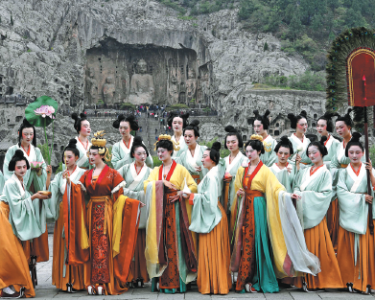
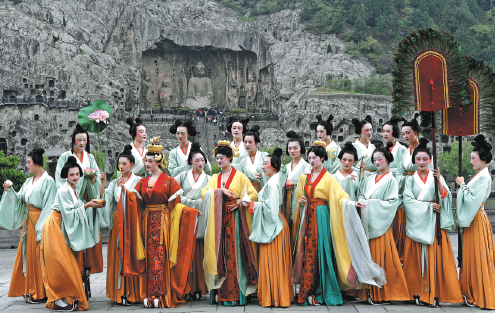
The Longmen Grottoes stand as one of the world’s most stunning collections of Buddhist art. Carved into limestone cliffs along the Yi River near Luoyang, this UNESCO World Heritage site contains tens of thousands of statues and more than 2,300 caves and niches. Walking through the site, you feel the weight of sixteen centuries of devotion. Every fissure holds a prayer, every worn face a story. We’ve visited in both misty spring mornings and the golden light of autumn afternoons — the mood shifts, but the sheer scale never fails to humble.
A Brief History of the Longmen Grottoes
Construction began in 493 AD when the Northern Wei dynasty moved its capital to Luoyang. The emperor, a devout Buddhist, ordered the carving of sacred images into the cliffs. Work continued through the Tang dynasty, peaking in the seventh and eighth centuries. More than 400 years of devotion shaped this three-kilometer stretch. The cliffs became a canvas for royalty, monks, and wealthy families who commissioned statues to earn merit.
From Northern Wei to Tang Dynasty
Early caves, like the Guyang Cave, show the slender, ethereal figures of the Wei style — elongated bodies, gentle smiles, robes flowing like water. A shift occurs. The Tang period brought robust, worldly forms. Muscles and folds reflect flesh and blood. The Binyang caves, started under the Wei and finished later, capture this transition. You see it in the facial expressions: from abstract serenity to human warmth.
The Patronage of Empress Wu Zetian
No one left a deeper mark than Empress Wu Zetian. She donated a fortune to carve the colossal Vairocana Buddha at Fengxian Temple, completed in 676 AD. Legends say the Buddha’s face was modeled after her own. True or not, the statue radiates imperial power. The grottoes became a statement — of faith and of political ambition. Today, that giant face remains the icon of the entire site.
Exploring the Three Core Areas
The site divides naturally into three zones. Most visitors stick to the West Hill; the East Hill and the Baiyuan garden reward the curious who cross the river.
West Hill (Xishan) Grottoes
This is the heart of the complex. Ninety percent of the caves sit here, including the Fengxian Temple with its giant Vairocana Buddha. The cliff rises 50 meters, honeycombed with openings. Stairs and walkways let you climb close to the carvings. We’ve seen visitors gasp when they round a corner and spot the 17.14-meter-tall Buddha suddenly looming above. Early morning light washes the limestone gold — arrive before 9 a.m. for near-solitude.
East Hill (Dongshan) Grottoes
Cross the bridge over the Yi River. The East Hill is quieter, with smaller niches and a different perspective. You look back at the West Hill and grasp the monumental scale. The caves here include the Kanjing Temple and the serene “Thousand-Armed Avalokitesvara” bas-relief. In our experience, the afternoon sun backlights the west cliff beautifully from this side. Don’t skip it.
Baiyuan (White Garden)
Tucked at the northern end, Baiyuan is a memorial garden for the Tang poet Bai Juyi. It’s a place of bamboo groves, stone paths, and inscriptions of his verses. After the sensory overload of the grottoes, this green refuge resets the mind. We like to sit by the small waterfall, listening to the same river that flowed past the carvers.
Top Must-See Masterpieces
With thousands of statues, choosing where to focus matters. These are the ones that leave a permanent stamp on your memory.
The Vairocana Buddha (Fengxian Temple)
You can’t miss it. The central Buddha sits 17.14 meters tall, flanked by disciples, bodhisattvas, and heavenly kings. The head alone is 4 meters high. What hits you first is the face — serene, eternal, yet somehow personal. Vairocana represents the cosmic Buddha, the embodiment of universal law. The carving’s precision after 1,300 years of exposure to weather is astonishing. Notice the delicate drapery folds, still crisp. This single work justifies the entire trip.
The Binyang Caves
Three caves — Middle, North, and South Binyang — showcase evolving styles. The Middle Binyang Cave took 24 years to complete and features a lovely Trinity of Sakyamuni Buddha with two disciples. The ceiling is carved with a lotus pond and flying apsaras, their ribbons forever swirling. The South Binyang Cave holds the famous “Emperor and Empress Worshipping Buddha” reliefs — Emperor Xuanwu and his empress leading processions. These reliefs are now displayed in museums, but the empty space still tells the story of patronage.
The Medical Prescription Cave
Less known, utterly fascinating. The Yaofang Cave contains inscriptions of over 140 medical prescriptions carved into the walls. They cover everything from infectious diseases to heart ailments. In the 6th century, monks used this as a public healthcare resource. Reading the treatments — some herbal, some spiritual — gives a rare glimpse into daily medieval life. It’s a quiet corner; you’ll likely have it to yourself.
The Guyang Cave
The oldest dated cave at Longmen, completed around 495 AD. It rewards close inspection. The calligraphy here is legendary — “Twenty Gems of Longmen,” inscriptions prized by Chinese calligraphers for centuries. The cave’s Central Buddhas sit in a style still close to Indian prototypes. Look at the small niches; each tells a donor’s story. Merchants, nuns, officials — they all left their mark.
Practical Visitor Information
These details come from multiple visits. Conditions can change, so check official sources before going, but this gives you a solid base.
Best Time to Visit
Spring (April–May) and autumn (September–October) offer clear skies and comfortable temperatures. Summer is hot and crowded, especially during Chinese school holidays in July and August. Winter brings fewer crowds and a stark beauty — sometimes the cliffs are dusted with snow. We’ve found late October ideal: aspens turn gold along the river, and the light angles soften the carvings.
Tickets and Opening Hours
The site opens at 8:00 a.m. and closes between 5:00 p.m. and 6:30 p.m. depending on the season. Adult entry is around 90 RMB, with discounts for students and seniors. A small additional fee covers the East Hill shuttle cart, but we recommend walking if you can manage it — the river path is scenic and gentle. Buy tickets at the official gate or via WeChat mini-programs.
How to Get There
Luoyang is the gateway. High-speed trains from Xi’an (1.5 hours) or Zhengzhou (40 minutes) drop you at Luoyang Longmen Station. From there, bus 71 runs directly to the grottoes. Taxis cost about 20 RMB. If flying, the nearest major airport is Zhengzhou Xinzheng, with bullet trains connecting to Luoyang. Plan on at least half a day to explore properly; a full day lets you soak in the details.
FAQ
How old are the Longmen Grottoes?
The earliest caves date to 493 AD, making them over 1,500 years old. Carving continued well into the Tang dynasty, with the most famous works completed by 676 AD.
Are the Longmen Grottoes a UNESCO site?
Yes, they were inscribed as a UNESCO World Heritage Site in 2000, recognized as an outstanding manifestation of human artistic creativity.
What is the best way to explore the grottoes?
Walk the West Hill first, taking the stairs to the main temples. Then cross the bridge to the East Hill for panoramic views. Finish with a quiet stroll through Baiyuan. Allow at least three hours, but five gives you time to stop and study the details.
Conclusion: Bringing the Legacy Home
The Longmen Grottoes are not just a history lesson — they’re a confrontation with human perseverance and beauty. After walking that riverbank, you’ll carry the images in your mind for years. To keep that connection alive, explore our collection of fine art replicas inspired by Buddhist sculpture. We offer museum-quality pieces that echo the elegance of those ancient carvers, right down to the serene smiles. Bring a fragment of that sacred cliff into your own space.