
Blog
Longmen Grottoes: Northern Wei vs Tang Sculpture Compared

How Northern Wei and Tang Dynasty Sculpture Differ at the Longmen Grottoes
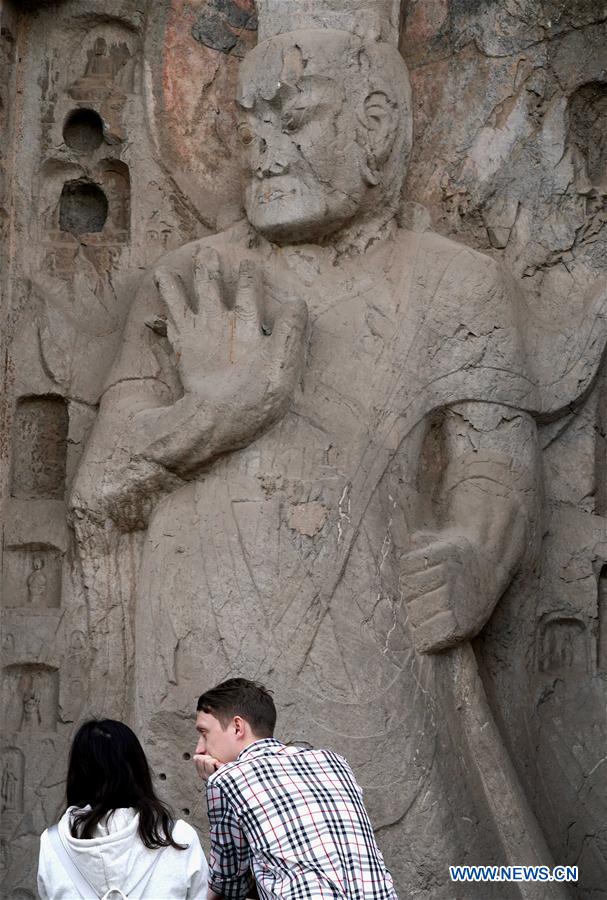
If you’re standing in front of a cave at the Longmen Grottoes and wondering why one Buddha looks lean and stiff while another nearby looks full-bodied and relaxed, you’re not imagining things. You’re looking at two different centuries, two different courts, and two very different ideas about what a divine body should look like. The Longmen Grottoes, carved into limestone cliffs along the Yi River near Luoyang, span roughly four hundred years of active work, but the two dominant phases — Northern Wei (late 5th to early 6th century) and Tang dynasty (7th to 8th century) — produced sculpture that a trained eye can tell apart in seconds. This matters for anyone studying Chinese Buddhist sculpture, and it matters even more for a heritage traveler who has one afternoon to walk the site and wants to know what to actually look for.
This guide breaks down the stylistic shift in practical terms: what changed, why it changed, and which specific caves show each phase most clearly.
Why the Style Changed Between Northern Wei and Tang Carving
The shift wasn’t accidental or purely artistic — it tracked political and religious changes at the imperial court. Northern Wei rulers, who were of Xianbei origin, sponsored the earliest major caves at Longmen after moving their capital to Luoyang. Their patronage favored an ascetic, otherworldly aesthetic, likely influenced by earlier Gandharan Buddhist art traditions that had traveled along trade routes into China. The emphasis was on spiritual transcendence over physical realism.
By the time the Tang dynasty took over patronage of Longmen — especially under Emperor Gaozong and Empress Wu Zetian in the second half of the 7th century — Buddhist sculpture had absorbed a century and a half of stylistic evolution. Tang China was wealthier, more cosmopolitan, and its rulers wanted imagery that projected imperial confidence and worldly authority, not just detachment. Empress Wu in particular used large-scale Buddhist commissions, including the famous Fengxian Temple complex, as a form of political legitimization. The result is sculpture that looks less like a spiritual abstraction and more like an idealized, powerful human being.
A Visual Comparison of Proportions, Drapery, Facial Features, and Patronage Signals
The clearest way to tell Northern Wei and Tang carvings apart is to check four things in sequence: body proportion, drapery style, facial modeling, and the scale or setting that hints at who paid for it. Here’s a side-by-side breakdown.
| Feature | Northern Wei (c. 493–534) | Tang Dynasty (c. 650–750) |
|---|---|---|
| Body proportions | Elongated, flat torsos, narrow shoulders, minimal sense of volume beneath the robe | Fuller, rounder bodies with visible mass under drapery, broader shoulders, more naturalistic weight distribution |
| Drapery style | Layered, symmetrical, sharply incised folds that fan out in stylized patterns — often called “linear” drapery | Thinner, clinging fabric that follows body contours, folds appear soft and irregular, closer to observed cloth behavior |
| Facial features | Long, thin faces, faint “archaic smile,” almond eyes, minimal cheek volume, serene but distant expression | Rounder, fuller faces, softer modeling around cheeks and chin, more relaxed and approachable expression |
| Patronage signals | Smaller votive niches, family or monastic donor inscriptions, modest scale reflecting private or local commissions | Monumental scale, imperial inscriptions, colossal figures tied directly to court sponsorship |
Why does this matter beyond aesthetics? Each of these four markers tells you something functional. Proportion and drapery tell you which stylistic lineage a carving belongs to, useful if you’re trying to date an undated niche. Facial modeling tells you about the workshop’s technical sophistication — deeper carving requires more stone removal and more skilled labor, which itself signals available patronage budget. And scale tells you who was paying: a two-foot niche funded by a local guild looks nothing like a colossal figure funded by an empress. If you mix these signals up — say, assuming a large statue is automatically Tang, or assuming a serene smile always means Northern Wei — you’ll misread the cave’s history. Scale alone isn’t a reliable single indicator; you need at least two of the four markers to agree before you draw a conclusion.
Which Longmen Caves Show Each Style Best
You don’t need to walk the entire two-kilometer cliff face to see both eras. A handful of caves are enough to build a clear before-and-after picture.
- Guyang Cave — the earliest major cave at the site, largely Northern Wei. Look for the tall, thin standing Buddhas and the densely carved donor inscriptions along the walls, which record hundreds of individual patrons.
- Binyang Central Cave — a textbook Northern Wei chamber, commissioned early in the 6th century. The seated Buddha here has the flat chest, symmetrical drapery folds, and elongated face typical of the period.
- Fengxian Temple (Fengxiansi) — the flagship Tang site, an open-air complex dominated by a colossal seated Vairocana Buddha. This is where the fuller face, relaxed posture, and imperial-scale ambition of Tang dynasty sculpture is most visible.
- Wanfo Cave — a Tang-period cave, notable for its thousands of small carved Buddha figures alongside more refined larger works, showing how Tang workshops handled both mass production and showcase pieces.
If your visit time is limited, prioritize Binyang Central Cave and Fengxian Temple. Walking between these two alone gives you the clearest side-by-side contrast the site offers.
Common Mistakes Visitors and Students Make When Reading Longmen Sculpture
Misreading the site’s chronology is easy if you rely on a single visual cue. Some frequent errors:
- Assuming size equals era. Not every large figure at Longmen is Tang, and not every small niche is Northern Wei. Always cross-check with facial modeling and drapery before dating a piece.
- Ignoring inscriptions. Many niches include donor texts with dates or reign names. Skipping these means missing the most reliable dating evidence available on-site.
- Treating “Buddhist art” as a single static style. Chinese Buddhist sculpture evolved continuously across dynasties; Longmen alone spans multiple sub-phases within Northern Wei and Tang patronage.
- Overlooking erosion and later restoration. Weathering and historical damage have altered surface detail on many statues, which can make period identification harder than it looks in photographs.
- Comparing Longmen only to Dunhuang or Yungang without noting material differences. Longmen’s limestone allowed for finer stone carving detail compared to some other cave-temple sites, which affects how drapery and facial lines were rendered.
A Practical Walking Checklist for Comparing the Two Styles On-Site
For learners and travelers who want a repeatable method rather than guesswork, use this sequence at each cave:
- Check the face first — long and narrow suggests Northern Wei, fuller and rounder suggests Tang.
- Look at the shoulder line and torso volume — flat and narrow points to Northern Wei; broad and modeled points to Tang.
- Examine the drapery folds — sharp, symmetrical, fan-like folds are Northern Wei; soft, clinging, irregular folds are Tang.
- Look for inscriptions near the base or side walls — reign names or donor lists often confirm the date directly.
- Note the scale and setting — an open-air colossal figure with formal architectural framing usually points to imperial Tang patronage.
Apply these five steps in order, not randomly. Facial and drapery cues are the most reliable; scale and setting should only confirm what the first two steps already suggest.
Why Longmen Buddha Statues Vary So Much in Size
The size variation across Longmen Grottoes statues isn’t stylistic preference alone — it reflects who commissioned each piece and what resources they had. Northern Wei niches were often funded by individual families, monks, or local associations, which kept most figures modest in scale, sometimes just large enough to fit a small votive chamber. Tang-era commissions, especially those tied to the imperial court, had access to far greater labor and material resources, enabling colossal works like the Vairocana Buddha at Fengxian Temple. In short: scale tracks funding source and political intent as much as it tracks artistic era.
What This Means for Studying or Visiting the Site
Understanding this stylistic timeline changes how you read the whole cliff face. Instead of seeing a wall of similar-looking Buddhas, you start noticing a documented shift in Chinese Buddhist sculpture — from the austere, otherworldly Northern Wei Buddhist art of the early 6th century to the confident, humanized Tang dynasty sculpture of the 7th and 8th centuries. That shift is one of the clearest visual timelines of religious and political change preserved anywhere in Chinese art history, and the Longmen Grottoes remain one of the few sites where you can trace it cave by cave, without relying on museum labels or reconstructed timelines.
Frequently Asked Questions
How does Northern Wei art differ from Tang art at Longmen?
Northern Wei sculpture favors thin, elongated bodies, symmetrical linear drapery, and narrow, serene faces. Tang sculpture favors fuller bodies, naturalistic clinging drapery, and rounder, more relaxed facial modeling. The shift reflects changing court patronage and artistic priorities over roughly two centuries.
Which Longmen caves show Tang style?
Fengxian Temple is the primary example, home to the colossal Vairocana Buddha commissioned under Tang imperial patronage. Wanfo Cave also shows Tang-period work, combining thousands of small figures with more refined larger carvings.
Why are Longmen Buddha statues different sizes?
Size differences mostly reflect patronage. Smaller Northern Wei niches were often funded by families or local groups, while the largest Tang-era figures were commissioned directly by the imperial court, which had far greater resources to dedicate to monumental carving.
If you’re researching Longmen sculpture for academic work, a heritage tour itinerary, or reference material for design and restoration projects, feel free to reach out for guidance on which caves and periods best match your focus area.
About LyWOW Tours
LyWOW is a locally based travel agency in Luoyang, specializing in private tours for international travelers across Luoyang, Shaolin, Xi’an and Central China. English-speaking guides, flexible itineraries and door-to-door service.
Learn more about us or browse all our tours.