
Blog
Luoyang China Explains Why 13 Dynasties Chose This Capital

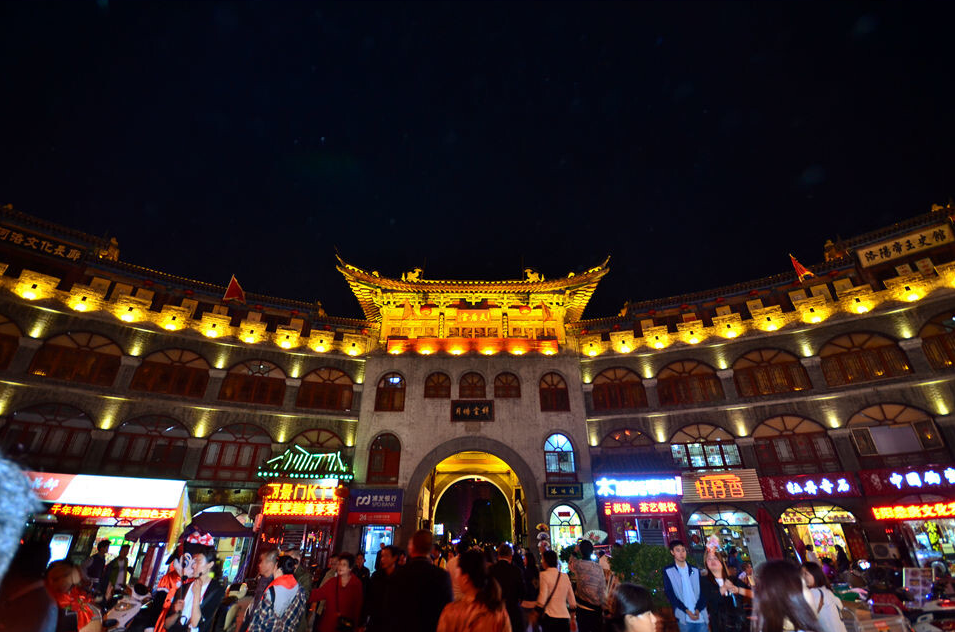
Luoyang, China Explains Why Thirteen Dynasties Chose the Same Capital
Why did ruling houses spanning more than a thousand years of Chinese history keep returning to the same stretch of the Yellow River valley to build their capitals? The answer sits in the landscape itself, not in coincidence or tradition alone. Luoyang, China’s ancient political center, sat at the intersection of four advantages that no rival site combined in the same way: defensible terrain, fertile farmland, river-based transport, and a politically neutral position between competing regional power bases. Historians generally count thirteen dynasties and regimes that governed from Luoyang across different eras, more than any other Chinese city claims. Understanding why requires looking past the dynasty list and into the practical mechanics of running an empire from this specific location.
The Geographic Logic Behind Luoyang’s Capital Status
Luoyang sits in a basin formed by the Yi and Luo rivers, shielded by the Mang Mountains to the north and hill ranges to the south. That basin geometry mattered for a reason planners rarely state outright: it let a capital city control access routes without needing to garrison an entire open plain. Compare this to a city built on flat, unguarded terrain — defense there requires more troops spread across more exposed ground, which drains the treasury faster than agricultural income can replace it.
The city also sat near a major crossing point on early trade corridors running toward Central Asia, a network later generations would call the Silk Road. A capital positioned on that corridor gained customs revenue and diplomatic leverage simply by existing where merchants already had to pass. Rulers who chose capitals far from these routes, by contrast, often had to build costly new roads or canals just to catch up.
Comparison of the Political, Transport, Agricultural, and Defensive Factors That Made Luoyang Viable Across Thirteen Dynasties
No single advantage explains thirteen separate dynasties making the same decision. The pattern only holds up when you compare all four factors side by side and ask what each one actually controlled in daily governance.
| Factor | What It Controlled in Practice | Consequence If Misjudged |
|---|---|---|
| Political centrality | Travel time for officials and tax reports between the capital and provincial governors | Delayed reports let regional warlords consolidate power before the court could respond |
| Transport access | Speed of grain and tribute shipments reaching the court via river and canal networks | Slow shipments caused grain price spikes and urban unrest in the capital itself |
| Agricultural capacity | Food self-sufficiency of the basin during siege or drought years | Dependence on distant farmland left the court vulnerable to supply cutoffs by rival forces |
| Defensive terrain | Number of chokepoints an attacking army had to break through before reaching the palace | Open terrain meant larger garrisons were needed, which raised ongoing military spending |
Political centrality: who actually benefited
Sitting roughly between the Yellow River’s upper basin and the North China Plain let a Luoyang-based government reach both the agricultural heartland and the frontier commanderies without excessive lag. The Eastern Han court, moving its capital to Luoyang after Chang’an’s infrastructure was damaged in the first century CE, found it easier to keep the eastern provinces under direct administration from this central point than from the western approach Chang’an offered.
Transport access: why river and canal links decided outcomes
Grain transport was the single largest logistics problem any pre-modern Chinese capital faced. Luoyang’s position on river systems feeding into the broader network later formalized as the Grand Canal meant tribute grain from the south could reach the court with fewer overland transfers. Fewer transfers meant lower spoilage and lower theft risk — a detail that sounds minor until a bad harvest year turns a transport delay into a famine in the capital itself.
Agricultural capacity: the basin’s quiet advantage
The Yi-Luo river valleys produced enough grain to feed a dense urban population without total reliance on long-distance shipments. This mattered during sieges or civil wars, when outside supply lines were the first thing cut. A capital that could feed itself for months bought its rulers negotiating time that a food-dependent capital never had.
Defensive terrain: what “natural fortress” actually meant
Mountain passes and river crossings around Luoyang forced any invading force to commit to a small number of predictable routes. Predictable routes are easier and cheaper to defend than open borders — this is the core military logic, and it’s why several dynasties kept Luoyang as a secondary or wartime capital even when they governed primarily from elsewhere.
Common Mistakes People Make When Researching Luoyang’s Dynastic History
- Confusing dynasty count with continuous rule: the thirteen dynasties did not rule from Luoyang back-to-back; some used it only during specific reigns or as a secondary capital alongside Chang’an or Kaifeng.
- Treating “Luoyang” as a fixed city footprint: the ancient capital’s physical location shifted several times across centuries; the modern city sits near, but not always exactly atop, every earlier capital site.
- Assuming defense was the only factor: readers often focus only on the mountain-and-river defense story and miss the agricultural and transport logic that made long-term governance sustainable.
- Overlooking periods when Luoyang was abandoned: several dynasties moved their capital elsewhere when transport routes shifted or when a rival region became more strategically urgent, which is itself informative about the site’s limits.
A Practical Research Checklist for Readers Exploring Luoyang, China
For anyone building a report, presentation, or sourcing briefing that references Luoyang’s historical status, a short verification pass avoids the most common factual slips:
- Confirm which specific dynasty and which century you are referencing — “Luoyang” spans well over a thousand years of intermittent use.
- Cross-check whether the source distinguishes between Luoyang as a primary capital versus a secondary or ceremonial capital.
- Note that Chang’an (modern Xi’an) and Kaifeng were Luoyang’s main rivals for capital status; many historical summaries conflate the three.
- Separate ancient capital sites from the modern administrative city when discussing geography or current infrastructure.
- When citing trade-route claims, verify whether the source refers to the overland Silk Road network or later canal-based systems, since the two served different logistics functions.
Luoyang Today: Why the Original Site Logic Still Matters
The same basin position that made Luoyang defensible and food-secure still shapes its role in Henan province today, as a transport and manufacturing node sitting between China’s coastal industrial belt and its interior provinces. The underlying geography did not change — only the technology layered on top of it did. For researchers moving from historical interest into current business context, that continuity is worth noting: the river and rail corridors modern logistics planners evaluate run through much of the same terrain that ancient court officials once tracked for exactly the same reason, moving goods and grain efficiently between the capital and the rest of the empire.
If your research or sourcing work touches this region and you need a clearer picture of how its historical logistics position connects to current industrial activity, reach out with your specific questions and we can point you toward relevant background material.
