 By
By Luoyang City: China’s Ancient Capital Timeline
Luoyang city has anchored Chinese civilization for millennia. It wasn’t just another capital—it was a crucible where dynasties rose, philosophies tangled, and stone-carved prayers still echo. The city’s timeline reads like a spine of central China’s history. Over 1,300 years across 13 major dynasties, Luoyang served as a political nerve center. We’ve traced that lineage on the ground, and the layers are breathtakingly literal. Dig anywhere in the old quarter, they joke, and you’ll hit a different century’s cobblestone.
The Eastern Zhou: A Strategic Choice
In 770 BC, King Ping of Zhou moved his capital east from Haojing to Luoyi—the early seed of Luoyang city. The choice wasn’t random. The location sat at the confluence of the Luo and Yi rivers, ringed by mountains that formed a natural fortress. This move marked the start of the Eastern Zhou period. Suddenly, the city became the pivot of a fractured kingdom. The royal court decamped to what they called “the center of the earth.” In excavated bronze inscriptions, you see the term “Zhongguo” (Central State) already tied to this region.
Establishing Luoyang as an Ancient Capital
The Zhou kings solidified Luoyang ancient capital status by building two walled compounds: Wangcheng (King’s City) and Chengzhou. The latter housed the vanquished Shang nobility, a ploy to keep rivals close. These twin cities stitched together ritual, military, and residential life in a blueprint later capitals would mimic. By 500 BC, Luoyang pulsed with markets, foundries, and scribes copying bamboo slips. The city’s grid plan, oriented to the cardinal directions, shaped urban design for centuries. Amble through the modern streets near the Zhou Gong Temple, and you walk the same axes surveyed 2,800 years ago.
Eastern Han: The Golden Era of Luoyang Dynasties
Jump to 25 AD. Emperor Guangwu reunified China and chose Luoyang as his base. What followed was a blistering cultural renaissance. The Luoyang dynasties now included an Eastern Han that expanded the city’s walls to enclose 10 square kilometers—a sprawling metropolis for its time. Silver-inlaid chariot fittings, silk route merchants, and the world’s first paper all converged here. The Imperial University lured 30,000 students by the 2nd century. In 68 AD, the White Horse Temple rose west of the city, birthing Chinese Buddhism. We stood in that temple courtyard last autumn. The incense and the peacocks’ calls haven’t changed much, we’d wager.
You can still catch Han-era brickwork in the Luoyang Museum. The city’s pulse back then was relentless. But fires, famine, and warlords eventually torched the imperial compound in 189 AD. The capital dimmed—temporarily.
Northern Wei: Carving Luoyang Historical Sites
The city resurrected in 493 AD under the Xianbei-led Northern Wei. Emperor Xiaowen forced his nomadic elite to abandon their steppe homeland and embrace Sinicization in Luoyang. His vision remade the city into a grid 20 kilometers across—impossibly ambitious. The real legacy, though, is the Luoyang historical sites hammered into limestone at Longmen. Along the Yi River, stonemasons sliced caverns and sculpted Buddha faces from 494 AD onward. The Guyang Cave still bears inscriptions that scholars treat as a dictionary of calligraphic evolution.
Walk the grottoes on a winter morning. The light rakes across 100,000 statues, from thumb-sized votives to the 17-meter Vairocana. It’s raw, devotional industry. Besides Longmen, Northern Wei Luoyang gave us the Baima Temple’s expanded scripture hall and a cosmopolitan stew of Sogdian traders and Central Asian monks. The city, for a brief blink, rivaled Constantinople in scale. But by 534, internal schisms fractured the dynasty. The capital split again, leaving half-built pagodas.
Sui and Tang: Ancient Capitals of China in Transition
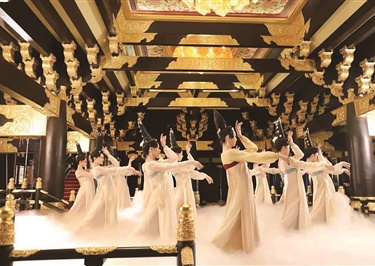
Luoyang’s next act came under the Sui (581–618). Emperor Yang connected the Grand Canal directly to the city, turning it into the empire’s grain basket and commercial aorta. The Sui built an impossibly opulent Western Garden—a pleasure park so vast it swallowed whole hills. Then the Tang dynasty inherited this ambition. While Chang’an held primary capital rank, Luoyang operated as the eastern capital, and at times, the de facto seat of power. Empress Wu Zetian adored the place. She moved her court here in 684 AD, launching an intense building spree.
The listing of ancient capitals of China always includes both Chang’an and Luoyang, but the latter had a unique rhythm. Its streets bulged with Persian apothecaries, Uyghur musicians, and Japanese envoys. Luoyang city during the Tang boasted three separate market districts, one operating past midnight—a rarity. We tasted the modern descendant of Tang imperial cuisine, the Luoyang Water Banquet, with its 24 soup courses threading pepper and vinegar. That banquet, locals insist, first emerged from Wu Zetian’s kitchens. The city’s power waned after the An Lushan Rebellion sacked it in 756, but its cultural gravity endured.
Later Dynasties: A Declining but Enduring Legacy
During the Five Dynasties and Ten Kingdoms chaos (907–960), Luoyang city briefly reclaimed full capital status under the Later Liang and Later Tang. These were short, brittle reigns. The city shrank. Its imperial palaces crumbled into mounds. Kaifeng eventually stole the spotlight. Still, Luoyang never fully vanished. Ming and Qing rulers patched its walls. The old town’s drum tower kept beating hours for peasants hauling cabbages. Today, those resurrected streets—Lijing Gate, the Drum Tower, mud-brick courtyard homes—feel like a palimpsest where every scratch reveals a dynasty.
FAQ
Why was Luoyang an ancient capital?
Geography locked in its fate. Luoyang city sits in a basin shielded by the Xiao, Mang, and Song mountains, with the Luo and Yi rivers providing water and defense. Ancient strategists called it “secure in the center.” Controlling this region meant dominating the fertile Central Plains, a crucial grain zone. The city’s location also straddled the east-west and north-south trade routes, making it a logistical hub long before the Grand Canal. That combination—defensibility, agriculture, and trade—drew king after king. It was simply the smartest seat for a continental empire.
Which dynasties made Luoyang their capital?
Thirteen major dynasties called it home, though the count varies. The heavyweights: Eastern Zhou (770–256 BC), Eastern Han (25–220 AD), Cao Wei (220–265), Western Jin (265–316), Northern Wei (493–534), Sui (581–618), and Tang (as eastern capital, 618–907, intermittently). Later, during the Five Dynasties, the Later Liang (907–923), Later Tang (923–936), and Later Jin (936–947) also ruled from here. Some lists add the Xia, Shang, and earlier Zhou capitals, given the Erlitou archaeological site nearby—possibly the legendary Xia dynasty. This deep lineage cements its reputation.
What is Luoyang known for historically?
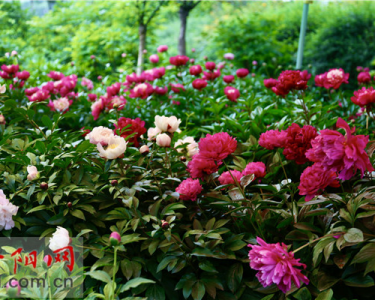
Four pillars: Buddhist transmission, imperial universities, crafts, and peonies. Luoyang’s White Horse Temple is China’s first Buddhist monastery, dating to 68 AD. The Longmen Grottoes house one of the world’s most significant collections of Buddhist art. In the Han, its Imperial University hosted the empire’s brightest minds and the first standardized Confucian texts carved in stone. The city also pioneered refined tri-color-glazed ceramics (Tang Sancai) that still dazzle museums. And each April, the Peony Festival floods Luoyang with blooms, a tradition stretching back to the Sui dynasty. There’s a saying: “To understand China, start in Luoyang.” The remnants justify the boast.
Connecting with Luoyang Today
Luoyang city today blends its staggering past with a gritty, mid-sized urban hum. The old capital’s grid still underlies the modern downtown. You can rent a bike at Lijing Gate and pedal to the Sui-Tang Luoyang City National Heritage Park, where restored towers hint at the Tang skyline. We’ve spent evenings drinking jasmine tea in a courtyard that once lodged a Tang poet. History here isn’t locked in glass cases—it’s a geology you can touch.
Bringing this heritage outward matters. Plenty of travelers want a piece of that layered story. To own an artifact-quality replica of a Tang Sancai horse or a silk scroll mapping the Eastern Zhou fortifications connects you to Luoyang’s timeline in a tangible way. Explore our curated collection of Chinese cultural export products that capture the city’s dynastic spirit. From artisan-carved Longmen-inspired stone tablets to hand-dyed textiles echoing Tang patterns, our goods bridge the ancient capital and your home. Walk through Luoyang’s history, and carry a fragment back.