How to Walk Luoyang Grottoes Longmen Without Doubling Back on the Same Path
First-time visitors to Luoyang Grottoes Longmen almost always ask the same question before they even book a train ticket: do you walk one side of the river and come back, or cross over partway through? Get this wrong and you end up crossing the Yi River three or four times, retracing the same stretch of riverside path twice, and arriving at the best carvings when your legs — and patience — are already spent. Get it right, and the whole site flows in one direction, river on your left or right the entire time, with a single crossing near the end.
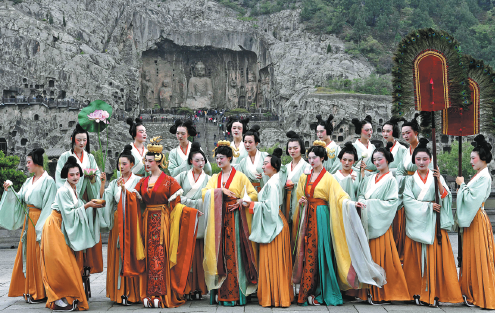
This matters because the Longmen Grottoes are not one compact cave complex. They stretch along both banks of the Yi River for roughly two kilometers, with the major carvings split unevenly between the West Bank and the East Bank. Most of the famous niches — including the large seated Buddha carvings most people picture when they think of Luoyang Grottoes Longmen — sit on the West Bank. The East Bank is quieter, with fewer must-see caves, but it offers the clearest photo angle looking back across the river at the West Bank cliffs. A route that ignores this imbalance wastes time on unnecessary crossings.
Why the Site Layout Causes Backtracking Problems
The entrance gate sits on the West Bank. A single bridge connects to the East Bank near the southern end of the site, and a second bridge sits closer to the middle, near the main cluster of large-scale carvings. Visitors who don’t know this layout in advance tend to make one of two mistakes: they cross too early and have to walk back, or they finish the West Bank, cross once, then realize they skipped something on the West Bank and cross back again. Either way, that’s an extra 15 to 20 minutes of walking on uneven riverside paths — not dangerous, just avoidable.
The fix is simple in concept: treat the visit as one continuous loop, not two separate out-and-back trips. Walk the entire West Bank south to north (or north to south, depending on your entry point), cross once at the bridge nearest the far end, then walk the East Bank back toward the exit. One direction, one crossing, no repeated ground.
Bank-by-Bank Walking Sequence That Avoids Repeat Crossings
This is the core planning decision for anyone visiting Luoyang Grottoes Longmen independently. The sequence below assumes you enter from the main West Bank gate, which is how most independent travelers and most tour groups arrive.
| Step | What to Do | Key Checkpoint | Common Failure |
|---|---|---|---|
| 1 | Enter from the West Bank gate and walk north along the riverside path, visiting each cave cluster as you reach it | Confirm you’re moving in one consistent direction before stopping for photos | Visitors backtrack a few meters to “catch” a cave they walked past, breaking the one-way flow |
| 2 | Reach the major West Bank carvings, including the large open-air Buddha niches, roughly two-thirds of the way along the path | This is the busiest section — expect the walking pace to slow down here | Rushing through earlier, smaller caves to “save time” for this section, then missing detail work along the way |
| 3 | Continue to the northern end of the West Bank path | Look for the bridge crossing point before you reach the very last cave cluster | Walking past the bridge without noticing it, then having to turn back |
| 4 | Cross the river once, at the northern bridge | This should be your only river crossing of the visit | Crossing at the southern bridge instead, which forces a longer East Bank walk against the flow of foot traffic |
| 5 | Walk south along the East Bank, viewing the West Bank cliffs from across the water | This stretch is shorter and less crowded — a good place to slow down for photos | Skipping this bank entirely, which means missing the only full-cliff view of the carvings |
| 6 | Exit near the southern end, close to where the East and West Banks meet | Confirm exit signage before committing — some paths loop back toward the West Bank | Re-entering the West Bank by mistake, adding an unplanned third crossing |
Following this sequence means you see every major carving cluster exactly once, cross the river exactly once, and never retrace a finished section. It typically keeps the visit to a single, steady loop lasting most of a morning or afternoon, depending on how long you linger at the larger niches.
Common Mistakes That Lengthen the Visit
- Starting from the East Bank instead of the West Bank. Some visitors arrive via a side entrance and start on the quieter East Bank first. This isn’t wrong, but it means crossing north-to-south instead, and the sequence above should be read in reverse to avoid confusion.
- Treating the two bridges as interchangeable. They’re not. Crossing at the wrong bridge adds unnecessary walking distance along one bank or the other.
- Stopping at every small niche on the way in. Many smaller carvings repeat similar themes. Pacing yourself for the major clusters first avoids fatigue before reaching the highlights.
- Not checking which exit corresponds to return transport. If you arrive by bus or arranged transport, confirm your pickup point matches the exit at the end of the East Bank walk — not the original West Bank entrance.
- Ignoring the riverside path condition in wet weather. Stone paths near the water can be uneven. This doesn’t change the route logic, but it does affect walking pace and footwear choice.
A Worked Example: Half-Day Independent Visit
Consider a traveler arriving at the West Bank gate in the morning with roughly four hours available before needing to return to central Luoyang. Following the one-way loop above, the first ninety minutes cover the southern and central West Bank sections, including smaller cave clusters that build context before reaching the major carvings. The next hour is spent at the main West Bank highlight zone, where most visitors naturally slow down. The crossing at the northern bridge takes a few minutes. The final hour covers the East Bank walk south, finishing near the original entrance area without needing to re-enter the West Bank at all. No section is walked twice, and no bridge is crossed more than once.
This pacing isn’t a fixed rule — a visitor with six hours might linger longer at each cluster, and one with two hours might skip some of the smaller East Bank sections. But the directional logic stays the same regardless of total time available.
Decision Checklist Before You Set Out
- Confirm which gate your ticket or transport drops you at — West Bank entrances are far more common than East Bank ones.
- Decide your total time budget before entering, so you know whether to walk the full East Bank or a shortened version.
- Identify your planned exit point in advance, especially if return transport is scheduled.
- Check weather conditions — riverside paths are the first area affected by rain.
- Plan for a single crossing only. If your route requires more than one, re-check the sequence above before proceeding.
Planning the walking direction before arrival is a small decision that has an outsized effect on how the visit feels. A one-way loop through Luoyang Grottoes Longmen turns a potentially tiring back-and-forth walk into a steady, logical progression — river on one side, cliffs on the other, and every major carving seen exactly once.
If you’re still finalizing your Luoyang itinerary and want help matching this walking sequence to your available time window, reach out for route notes tailored to your travel dates.