
Blog
Luoyang Grottoes Longmen: Complete Travel Guide

Luoyang Grottoes Longmen: A Complete Travel Guide
The luoyang grottoes longmen complex is one of China’s finest Buddhist art sites. Carved into limestone cliffs along the Yi River over more than 1,400 years, it contains thousands of statues, inscriptions, niches, and cave temples. The site lies south of Luoyang in Henan Province, where the river and steep rock faces create a striking setting for these ancient works.
A visit here is far more than a walk past old sculptures. Longmen traces the Northern Wei, Tang, and later dynasties, periods when Buddhism influenced art, politics, architecture, and daily life. Monumental Buddha figures draw the biggest crowds, but the smaller carvings can be just as revealing. Many were made as personal acts of devotion, and their changing styles tell a story that spans centuries.
Why Visit the Longmen Grottoes Luoyang?
The Longmen Grottoes Luoyang site is a UNESCO World Heritage Site and one of the defining landmarks of Chinese Buddhist sculpture. More than 2,300 caves and niches are spread across the West Hill and East Hill cliffs. Across the wider complex, researchers have recorded approximately 100,000 Buddhist images and more than 2,800 inscriptions.
Yet the statistics only hint at what it feels like to be there. One moment, you may be standing beneath a 17-meter seated Buddha; the next, you are leaning toward a narrow niche containing figures no larger than a hand. Some carvings retain remarkably fine details, while others bear the marks of erosion, weather, neglect, and the removal of sculptures during the nineteenth and twentieth centuries.
Longmen is also essential for understanding the evolution of Chinese art. Northern Wei figures are often slender, formal, and serenely stylized. Tang-period sculptures tend to be fuller in form, more natural in expression, and more assured in their stance. Seeing caves from different periods side by side makes the shift immediately apparent.
History of the Longmen Caves
Early construction during the Northern Wei
Work at Longmen began around 493 CE, after Emperor Xiaowen of the Northern Wei moved the capital from Datong to Luoyang. The limestone cliffs beside the Yi River offered workable stone and a setting suited to ambitious religious monuments. Early patrons included members of the imperial family, officials, monks, and wealthy local donors.
The oldest major section is Guyang Cave on the West Hill. Its inscriptions are especially important because they preserve names, dates, and examples of Northern Wei calligraphy. Rather than representing a single fixed artistic tradition, the cave shows how Buddhist imagery was adapted to Chinese visual culture.
The flourishing Tang dynasty
The best-known carvings date from the Tang dynasty, particularly the seventh and eighth centuries. Imperial support and a prosperous economy gave artists the resources to create works on a larger and more sophisticated scale. Fengxian Temple, completed in 672 CE, is the most celebrated example.
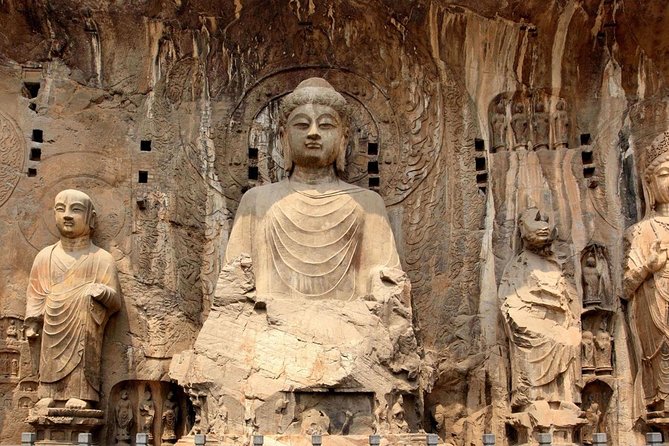
Empress Wu Zetian was associated with the dedication of Fengxian Temple, and the central Vairocana Buddha is often connected with Tang imperial ideals. The inscription at the site identifies the image as the Locana Buddha. Its serene expression, broad shoulders, and commanding scale make it one of the most memorable works of Chinese religious art.
Later history and preservation
Carving continued after the Tang dynasty, although the pace, scale, and artistic style changed. Over time, the site suffered from neglect, natural weathering, and human damage. Some heads and statues were removed and later entered overseas collections. Conservation today focuses on stabilizing the limestone, controlling water damage, monitoring visitor pressure, and safeguarding the carvings that remain.
What Are the Highlights of Longmen Grottoes?
Fengxian Temple and the Vairocana Buddha
Fengxian Temple is the must-see stop for first-time visitors. The central Vairocana Buddha stands about 17 meters high, including its lotus pedestal, and is surrounded by bodhisattvas, heavenly kings, and guardian figures. From the lower platform, the composition feels even more imposing than it does in photographs.
The face is often described as calm, dignified, and quietly human. It is not a rigid or distant icon. The lips curve slightly, the eyes look downward, and the proportions are carefully controlled. The figures around it add drama: some appear alert and powerful, while others are graceful and restrained.
Guyang Cave
Guyang Cave contains some of Longmen’s earliest major carvings. Its walls are densely covered with niches and inscriptions, making it a rewarding stop for visitors interested in history, calligraphy, or archaeology. This cave is less about a single monumental image than the sheer concentration of evidence left on the stone.
Lotus Cave
Lotus Cave is known for the large lotus flower carved into its ceiling. The lotus is a major Buddhist symbol of purity and spiritual awakening. Take a moment to look beyond the main chamber, as the ceiling decoration is easy to overlook when larger tour groups are passing through.
Wanfo Cave
Wanfo Cave, or the Cave of Ten Thousand Buddhas, takes its name from the many small Buddha figures covering its walls. Completed during the Tang period, the chamber also includes decorative musicians and lotus motifs. Its enclosed atmosphere offers an intimate contrast to the monumental open space of Fengxian Temple.
Xiangshan Temple and the East Hill
Across the river, Xiangshan Temple offers a quieter cultural stop. The East Hill has fewer major carvings than the West Hill, but it provides different views of the cliffs and generally less crowded walking routes. The area is also linked to Bai Juyi, the renowned Tang dynasty poet, who spent his later years in Luoyang and helped shape the site’s literary identity.

Location and How to Visit Luoyang Grottoes Longmen
The grottoes are about 12 kilometers south of central Luoyang. The main visitor entrance is on the northwest side of the complex, near the West Hill caves. As the site is extensive, allow at least half a day. Visitors hoping to study inscriptions, walk both hills, and take photographs should plan for five to six hours.
By taxi or ride-hailing car
A taxi or ride-hailing car from central Luoyang is usually the easiest option. The journey typically takes 25 to 40 minutes, depending on traffic and your departure point. Ask for the Longmen Grottoes scenic area entrance rather than simply saying Longmen railway station.
By public bus
Several city bus routes serve the scenic area, though route numbers and stopping patterns can change. Check a current Chinese map app or confirm the details with your hotel before setting out. Buses are inexpensive, but travel can be slow on weekends and public holidays.
By metro and onward transport
Luoyang Metro Line 2 reaches the Longmen area, which makes it useful for travelers coming from the city center or Luoyang Longmen Railway Station. The metro station is not directly beside the cliff carvings, so allow time for a taxi, local bus, or walk from the station area. Check current operating information on the day you travel.
Opening Hours, Tickets, and Time Planning
Opening hours can vary by season, public holidays, weather, and special events. In recent years, the scenic area has commonly opened from around 8:00 a.m. to 6:00 p.m., with final entry earlier than the official closing time. Use these hours as a planning reference rather than a guarantee.
Ticket prices also change from time to time. Standard adult admission has often been listed at around RMB 90, while children, students, seniors, and other eligible visitors may qualify for reduced prices. Electric shuttle services and other transport inside the scenic area may cost extra. Check the official ticket platform or visitor center before buying.
Arrive early for clearer views of Fengxian Temple. The first two hours after opening are usually cooler in summer and often less crowded. If you reach the site late in the afternoon, make sure there is enough time to cross to the East Hill before internal routes close.
When Is the Best Time to Visit Longmen Grottoes?
Spring and autumn are usually the most comfortable seasons. April and May bring mild temperatures and fresh greenery, while October is often ideal for walking and photography. September can also be pleasant, although conditions vary from year to year.
Summer provides long daylight hours, but exposed stone paths can become very hot. Temperatures in Luoyang may exceed 30°C in July, so carry water, use sun protection, and avoid the hottest part of the afternoon when possible.
Winter is quieter, and dry air can bring sharp views across the river. It suits travelers who prefer fewer crowds, though warm layers are essential because the riverside paths and stone surfaces can feel cold. Avoid major national holidays if possible. The May Day holiday and National Day holiday bring heavy visitor numbers to major attractions throughout Henan.
Practical Visitor Tips
- Wear comfortable shoes. The route includes steps, slopes, and uneven surfaces. Lightweight walking shoes are much more practical than fashion footwear.
- Carry water and sun protection. Several sections receive direct sunlight, especially around the main cliff areas.
- Start at the West Hill. This route includes Fengxian Temple, Guyang Cave, Wanfo Cave, and many of the site’s most important carvings.
- Allow time for the East Hill. Cross the river for broader views, quieter paths, and access to Xiangshan Temple.
- Bring a translation tool. English information is available in parts of the scenic area, but not every inscription or directional sign has been translated.
- Do not touch the carvings. Limestone is vulnerable to skin oils, moisture, and repeated contact. Stay behind barriers, even when a niche appears unguarded.
- Use a guide for deeper interpretation. A knowledgeable guide can explain Buddhist symbols, donor inscriptions, Tang court culture, and the differences between Northern Wei and Tang sculpture.
- Protect cameras and phones. Some caves are dim, and the sudden shift between bright sunlight and dark interiors can make photography tricky. A small camera or phone with reliable low-light capability is useful.
Understanding the Site’s Cultural Significance
Longmen matters not only because it contains such a large number of statues. It is a visual record of the relationship between religion, government, local society, and artistic practice in ancient China. Imperial commissions stand alongside works funded by officials, monks, families, and individuals seeking merit for themselves or deceased relatives.
The inscriptions are equally valuable. They preserve names, titles, dates, prayers, and literary forms, turning the cliffs into an outdoor archive of Chinese history. For researchers, Longmen provides evidence of religious devotion, political authority, language, calligraphy, and the movement of artistic ideas across East Asia.
As one of the leading China Buddhist grottoes, the site is often compared with Yungang and Mogao, but its character is distinct. Longmen’s riverside setting, dense Tang-period carving, and closeness to an imperial capital give it a particular historical atmosphere. It is a central part of Luoyang cultural heritage rather than an isolated monument.
Frequently Asked Questions
How to visit Luoyang Grottoes Longmen in one day?
Travel from central Luoyang in the morning by taxi, ride-hailing car, or public transport. Start on the West Hill with Fengxian Temple, Guyang Cave, Lotus Cave, and Wanfo Cave. If time allows, cross to the East Hill and visit Xiangshan Temple before leaving. A realistic one-day itinerary requires four to six hours at the site, excluding travel time and meals.
What are the highlights of Longmen Grottoes?
The main highlights are the Vairocana Buddha at Fengxian Temple, the early inscriptions in Guyang Cave, the lotus ceiling in Lotus Cave, the many small figures in Wanfo Cave, and panoramic views from the East Hill. Visitors interested in Tang culture should also look for links to Empress Wu Zetian and poet Bai Juyi.
When is the best time to visit Longmen Grottoes?
Spring and autumn generally offer the best balance of mild temperatures, comfortable walking conditions, and attractive scenery. Arrive early to avoid strong heat and the largest tour groups. If avoiding crowds is your priority, a winter weekday can be a good option, provided you check the weather and current operating notices first.
How long should I spend at the grottoes?
Three hours is enough for a brisk visit focused on the major statues. Four to six hours is better for travelers who want to see both riverbanks, read inscriptions, take photographs, and visit Xiangshan Temple. Remember to add transport time from central Luoyang when planning your day.
Is the site suitable for children and older travelers?
Yes, although visitors should expect walking, stairs, and uneven sections. Families should bring water and allow time for breaks. Older travelers or visitors with limited mobility may prefer the electric shuttle where available and should confirm accessible routes at the visitor center before beginning their visit.
Plan Your Luoyang Cultural Journey
The grottoes reward patience. Look beyond the largest Buddha and notice the smaller niches, lotus patterns, donor names, and weathered lines of text. Those details help explain why Longmen remains one of China’s most important Buddhist monuments.
For travel businesses, cultural tour operators, and buyers building China-focused itineraries, our China travel products and destination solutions can help support well-planned visitor experiences. Explore the available product range or contact our team to discuss your requirements for Luoyang and other heritage destinations.
About LyWOW Tours
LyWOW is a locally based travel agency in Luoyang, specializing in private tours for international travelers across Luoyang, Shaolin, Xi’an and Central China. English-speaking guides, flexible itineraries and door-to-door service.
Learn more about us or browse all our tours.