
Blog
Luoyang, Henan Explained Through Its Historical Names and Borders


How Luoyang, Henan Carries the Names Luozhou and Dongdu Through History
Anyone researching Chinese history quickly hits a wall: the same city appears under three or four different names depending on the century. A Tang dynasty record calls it Dongdu. A Song-era gazetteer uses Luozhou. A modern map simply says Luoyang, Henan. Are these the same place? Mostly yes, but the boundaries shifted enough over time that treating them as interchangeable will cause errors in research, translation, or travel planning. This article walks through what each name actually referred to, where the overlaps and gaps are, and how to verify a specific reference without guessing.
Why the Same City Shows Up Under Different Names in Historical Sources
Names change for administrative, political, and symbolic reasons — not just because scribes were inconsistent. Three terms account for most of the confusion:
- Luoyang — the core settlement name, used across multiple dynasties, referring to the city on the Luo River.
- Luozhou — a prefecture-level administrative designation used during certain imperial periods, roughly corresponding to the Luoyang area but including surrounding territory under a single governing unit.
- Dongdu, meaning “Eastern Capital” — a functional title applied when the city served as a secondary or co-capital alongside a primary capital such as Chang’an.
So Luoyang is a place. Luozhou is an administrative wrapper around that place. Dongdu is a political status assigned to that place during specific reigns. None of the three is wrong — they answer different questions. A document calling the city Dongdu is telling you about its political function at that moment, not giving you a new location.
Clarifying the Boundary Between Modern Provincial Geography and Historical Names
This is the part most research guides skip, and it is where mistakes compound. Modern Henan province is a fixed administrative unit with defined borders. Historical names like Luozhou and Dongdu were not tied to those same borders — they expanded, contracted, or were abolished entirely as dynasties changed. Below is a direct comparison to use as a reference point.
| Term | Type | Approximate Scope | Still in Use Today? |
|---|---|---|---|
| Luoyang | City name | Same core urban area, continuously used | Yes — current city name in Henan |
| Luozhou | Historical prefecture | Luoyang plus surrounding counties under one administrative seat | No — discontinued, replaced by modern prefecture-level city structure |
| Dongdu | Political/ceremonial title | Applied to Luoyang only during periods it held secondary-capital status | No — historical title only, not an administrative unit |
| Henan | Modern province | Fixed provincial border, includes Luoyang and many other cities | Yes — current provincial designation |
The practical takeaway: when a source says “Luozhou,” it is not automatically referring to the exact present-day city limits of Luoyang. It may include territory now assigned to neighboring counties, or exclude areas that were added to the city later. When a source says “Dongdu,” it is making a statement about status, not geography — don’t use it to infer city size or population. This distinction matters most when cross-referencing old maps with modern GIS data, where boundary mismatches of even a few counties change the interpretation of trade routes, troop movements, or population figures cited in historical texts.
A Step-by-Step Method to Verify a Historical Place Name Before You Cite It
Instead of assuming a name maps directly onto modern Luoyang, Henan, run it through this check:
- Identify the dynasty or time period the source refers to. Administrative names are period-specific, so a 20-year window matters more than you’d expect.
- Check whether the term is a city name, a prefecture name, or a title. Luoyang is a city; Luozhou is a prefecture; Dongdu is a title. Confusing these categories is the single most common error.
- Cross-reference with a secondary source from the same era if possible, rather than relying on a single gazetteer entry.
- Compare against modern Henan provincial boundaries only as a rough anchor point, not as proof of exact territorial match.
- Note the source’s purpose — a tax record, a travel diary, and a military dispatch may each use a different name for the same event, depending on formality and audience.
This sequence takes a few extra minutes per reference but prevents the kind of error that quietly propagates through translated texts and tourism materials — where “Dongdu” sometimes gets mistranslated as a separate city rather than a status applied to Luoyang itself.
Common Mistakes When Mapping Old Names to Present-Day Luoyang
- Treating Luozhou as a fixed city border. It was an administrative unit that could grow or shrink across reigns — not a static shape you can overlay on a modern map.
- Assuming Dongdu refers to a different location than Luoyang. It does not. It describes a role, applied to the same city during specific periods when it functioned as a secondary capital.
- Ignoring which dynasty a source belongs to. The same name can carry a different administrative meaning only one or two centuries apart.
- Confusing provincial-level Henan with city-level Luoyang. Henan is the province; Luoyang is one city within it, alongside others such as Zhengzhou and Kaifeng. A reference to “Henan” in an old text often meant something closer to a regional designation than the current provincial boundary.
- Relying on a single translated source without checking the original term. Translation layers sometimes flatten Luozhou, Dongdu, and Luoyang into one generic “Luoyang” label, erasing the distinction a careful reader needs.
A Quick Reference Checklist for Research and Travel Planning
If you are preparing a research citation, a travel itinerary, or a translated document referencing this region, run through this list before finalizing:
- Have you confirmed which dynasty or century the source name belongs to?
- Have you distinguished whether the term names a city, a prefecture, or a title?
- Have you checked the term against at least one independent historical reference?
- Have you avoided assuming the historical boundary matches the modern Henan provincial line exactly?
- If writing for a general audience, have you clarified that Luozhou and Dongdu both refer to the same city now known as Luoyang, Henan, rather than separate locations?
This checklist is most useful at the early research stage, before a name gets locked into a published document, map caption, or itinerary. It applies less once you are working from a single well-documented modern source that already states its geographic scope clearly — in that case, the historical cross-check adds limited value.

Where This Naming Pattern Fits Among China’s Ancient Capitals
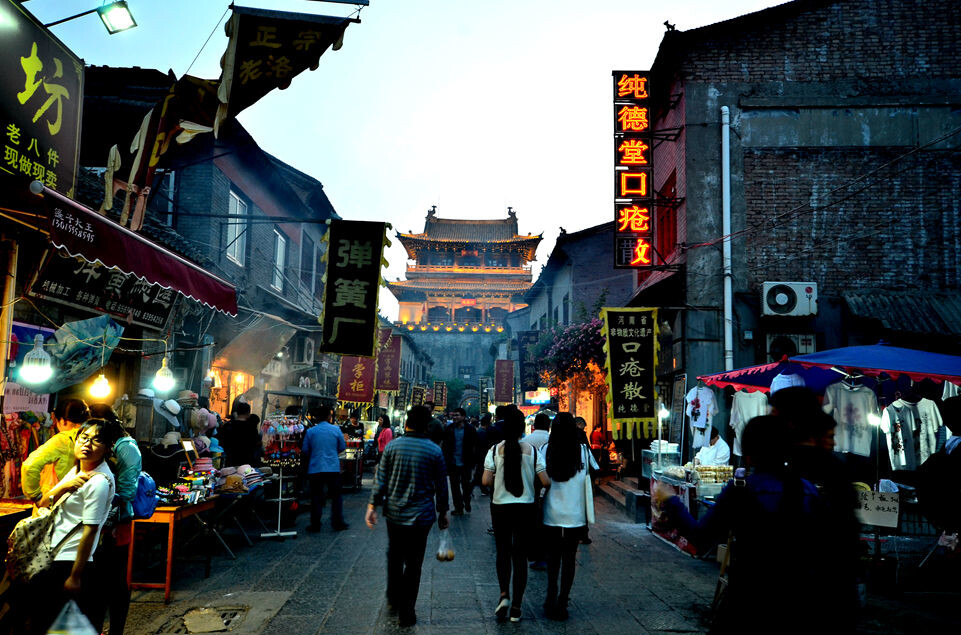
Luoyang is often listed among the Four Great Ancient Capitals of China, a grouping that helps explain why it accumulated so many names in the first place. Cities that served repeatedly as capitals or secondary capitals tend to pick up administrative titles reflecting their shifting political role, while smaller cities that never held capital status usually keep one stable name across centuries. This is a useful pattern to recognize when working through other Henan place names in historical sources — if a city has multiple names stacked across different eras, it is often a signal that the city once held elevated administrative or ceremonial status. Modern Luoyang, Henan, retains traces of that layered history in its museums, place names, and surrounding archaeological sites, even though its current administrative identity is simply a prefecture-level city within Henan province.
For readers assembling a research bibliography, a translated itinerary, or sourcing documentation tied to this region, cross-checking names against both the period and the administrative category — city, prefecture, or title — remains the most reliable safeguard against mismatched references.
If you’re compiling historical or geographic references on this region and want a second check on terminology before publishing, send over your draft or source list and we can help verify the naming details.
