
Blog
Luoyang in Chinese: Meaning, Spelling & Pronunciation

Luoyang in Chinese: Meaning, Spelling, and Pronunciation
When you encounter luoyang in chinese, you’re looking at a profound piece of history written in just two characters – 洛阳. This ancient city, nestled in Henan province, isn’t just a dot on the map. Its name carries layers of geography, culture, and linguistic nuance that trip up even seasoned learners. We’ve seen countless travelers miswrite it as “Loyang” or mangle the tones entirely. Let’s fix that right now, from the ground up.
The Chinese Characters for Luoyang
Luoyang in Chinese is written as 洛阳. Using simplified characters (the standard in mainland China), the first character is 洛 (luò), and the second is 阳 (yáng). In traditional script, still seen in Taiwan and Hong Kong, it remains 洛陽 – only the second character changes, with 陽 replacing 阳. The simplified 阳 is a common shorthand that retained the sun radical 日 on the left and a phonetic component on the right. Understanding this pair unlocks a lot about Chinese toponymy.
The character 洛 is far from generic. It specifically refers to the Luo River (洛河), a tributary of the Yellow River that flows right by the city. You’ll spot 洛 in names like 洛神 (Luòshén, the Goddess of the Luo River) and 洛水 (Luòshuǐ, the Luo waters). The city’s identity is tied to that river. Meanwhile, 阳 (yáng) means “sunny side” or “south of a river” in Chinese geographical naming. So 洛阳 literally means “on the sunny side of the Luo River.” For thousands of years, settlements north of rivers were considered yang, while those south were yin (阴). That’s why you have cities like 沈阳 (Shěnyáng, north of the Shen River) and 江阴 (Jiāngyīn, south of the Yangtze). Luoyang follows this exact rule: positioned north of the Luo, it basks in yang – the sunny, bright side.
Breaking Down 洛 (luò)
Students often stumble on 洛 because it looks like 落 (luò, to fall) or 络 (luò, net). But 洛 has the water radical 氵 (three drops of water) on the left, which screams “river.” The right side is 各 (gè), giving a phonetic clue. It’s a phono-semantic compound: water meaning + sound of gè/ge. The result? A character pronounced luò, with the fourth tone – sharp and falling. When you see 洛 on an ancestral tablet or an old map, it’s a direct link to that river, not a random syllable.
Breaking Down 阳 (yáng)
阳 is deceptively simple. In its full form 陽, it originally meant the sun shining on a hill – a composite of 阜 (mound, cliff) and 昜 (sunlight). The simplified 阳 keeps the sun radical 日 on the left. Its second tone rises, like asking a question. Combined with luò, the city name becomes a poetic image: sunlight hitting the water, a warm slope facing the river. No wonder Luoyang was chosen as a capital by 13 dynasties – the name itself radiates auspiciousness.
Meaning Behind the Name
So luoyang in chinese doesn’t “mean” anything random. It’s literally “the sunny side of the Luo River.” But the meaning goes deeper. In ancient feng shui and urban planning, a yang location was ideal – protected from cold winds, open to light, and nourished by water. The Luo River provided irrigation and trade. Luoyang, sitting in the fertile basin where the Luo meets the Yellow River, was a strategic gem. The name encapsulates geography, philosophy, and imperial ambition in one two-character compound.
Consider this: the idiom 洛阳纸贵 (Luòyáng zhǐ guì) means “paper is expensive in Luoyang.” It stems from a story about a literary work so popular that paper prices soared as everyone rushed to copy it. Today, the phrase describes a bestseller. The city’s name became shorthand for cultural fever. Similarly, 洛阳铲 (Luòyáng chǎn), the Luoyang spade, is an archaeological tool invented there for tomb exploration. The long, semi-cylindrical blade lets archaeologists extract soil cores. So luoyang in chinese isn’t just a place – it’s a prefix for tools, idioms, and even a type of peony. The Luoyang peony (洛阳牡丹) is legendary, with the annual festival attracting millions.
Pronunciation Guide for Luoyang in Chinese
Pronunciation trips people up constantly. We’ve heard “LOO-ee-yang,” “loy-YANG,” and even “loo-YANG-ee.” The correct Mandarin, written in pinyin, is Luòyáng. Let’s strip it down:
- Luò (洛) – fourth tone. It falls sharply, like a decisive “lwaw.” Start high and drop. The “luo” rhymes with “law” but with a shorter, punchier ending. Do not add an extra vowel. It’s one syllable. Compare with 落 (luò, to fall) – same sound.
- Yáng (阳) – second tone. It rises from mid-level to high, like asking “what?” The “yang” is open, bright, with a longer a sound, close to “yahng.” Push your tongue flat.
Together, it’s a two-beat name: Luò-yáng. The tone contour is 4-2 – falling then rising. If you say “Luò” with the wrong tone, you might end up with 啰 (luō, a nagging sound) or 裸 (luǒ, naked). For 阳, a flat first tone would turn it into 央 (yāng, center). In our experience, learners often flatten both tones out of nervousness. Record yourself; the fourth tone must drop decisively, and the second must ascend. Think of it as a quick downward step followed by an upward bounce. Luò-yáng.
A common error: treating the “y” as a consonant and saying “Lwoh-yang.” Actually, pinyin “y” is just a glide – the “yang” begins with a smooth “i” sound. So it’s closer to “Lwoh-eeahng” fused together. Listen to a native speaker from Henan, and you’ll notice the second syllable is slightly lighter, with the stress on the first. LuòYANG is incorrect; it’s LUò-yang, with primary stress on luò. Practice with audio clips or a good dictionary app. The tones are not optional – they’re the difference between “Loyang” and gibberish.
Historical and Cultural Context
Why does spelling and meaning matter? Because Luoyang was one of the Four Great Ancient Capitals. It served as the seat of power for over 1,500 years, predating Beijing by millennia. The characters 洛阳 appear in Tang dynasty poems, on oracle bones, and in the diaries of Buddhist pilgrims. When you see luoyang in chinese on a temple plaque, it’s often written in elegant calligraphy, with 洛 elongating the water dots. The city’s name hasn’t changed in over 2,000 years. That’s a testament to how tightly the Luo River’s sunny side defined this place.
Historical records from the Eastern Zhou dynasty (770–256 BCE) already refer to 洛邑 (Luòyì), the Luo settlement. Over centuries, the character 阳 replaced 邑 to reflect the city’s expansion north of the river. When you write 洛阳 today, you’re echoing the scribes of the Han dynasty. This isn’t just a name; it’s a fossil of ancient geographic reasoning. The Peony Festival advertisements, subway signs, and university names all use these two characters. And yes, the local Luoyang dialect pronounces it a bit differently – with a clipped “Lok-yong” – but the standard Mandarin prevails in writing and media.
Common Mistakes When Writing Luoyang
Even advanced students mess up the characters. The most frequent error? Writing 落阳 instead of 洛阳. Both exist as a word: 落阳 (luòyáng) means “setting sun,” a poetic but completely different phrase. It’s easy to slip because 落 has the same pronunciation and a similar look. Another blunder: miswriting the radical in 洛. Some substitute the grass radical 艹, creating a nonsense character. Then there’s the reversal: 阳洛 doesn’t mean anything. But we’ve seen it in travel blogs.
For pinyin, the trap is forgetting the tone marks. Luoyang without tones is ambiguous. Is it Luòyáng, Luóyāng? Also, capitalizing wrongly: “LuoYang” or “luoyang” in running text is sloppy. The correct pinyin is Luòyáng, with a capital L and the second syllable lowercased in most style guides. For formal documents, it’s often written as “Luoyang” without tones, but when teaching Chinese, always include them. One specific we’ve spotted: people write “Loyang” – that’s the old Wade–Giles or postal romanization, still appearing in some historical contexts, but today it’s outdated. Use Luoyang, and if you need to be precise, add the tones: Luòyáng.
FAQs on Luoyang in Chinese
Here are the questions we hear most often – with answers that get straight to the point.
What does Luoyang mean in Chinese?
Luoyang (洛阳) literally means “the sunny side of the Luo River.” It follows the traditional Chinese naming convention where 阳 indicates a location north of a river, receiving sunlight.
How do you pronounce Luoyang correctly?
Pronounce it as Luòyáng: a falling fourth tone on “luò” and a rising second tone on “yáng.” Say “Lwaw-yahng” with the first syllable stressed and a sharp drop, followed by an upward glide. Avoid “LOO-yang” or “loy-YANG.”
Is Luoyang the same as Luoyang in Henan province?
Yes, the standard reference to Luoyang in Chinese always points to the city in Henan province, one of China’s ancient capitals. There is no other major city with this name.
Why is Luoyang important in Chinese history?
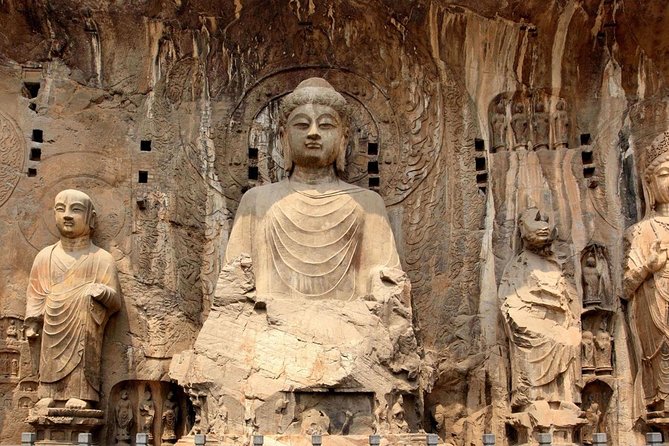
Luoyang served as the capital for 13 dynasties, including the Eastern Zhou, Eastern Han, and Tang (as a secondary capital). It’s the cradle of Chinese civilization, the eastern starting point of the Silk Road, and home to the Longmen Grottoes and the White Horse Temple, the first Buddhist temple in China.
What are the Chinese characters for Luoyang, simplified and traditional?
Simplified: 洛阳. Traditional: 洛陽. The first character remains the same; the second changes from 阳 to 陽.
Why do people sometimes write “Loyang” instead of Luoyang?
“Loyang” is an older romanization from the Wade–Giles system, commonly used before pinyin became standard. You’ll still see it in historical texts, but modern usage favors “Luoyang.”
Conclusion
Getting luoyang in chinese right – from strokes to tones – connects you to a deep river of history. You’re no longer just memorizing a city name; you’re unlocking a geography lesson, a tone-pair workout, and a gateway to ancient culture. Whether you’re planning a trip to see the peonies or diving into classical poetry, spelling and saying it correctly shows respect and clarity. Explore our blog for more insights into Chinese language, travel, and cultural tips that bring every character to life.
About LyWOW Tours
LyWOW is a locally based travel agency in Luoyang, specializing in private tours for international travelers across Luoyang, Shaolin, Xi’an and Central China. English-speaking guides, flexible itineraries and door-to-door service.
Learn more about us or browse all our tours.